
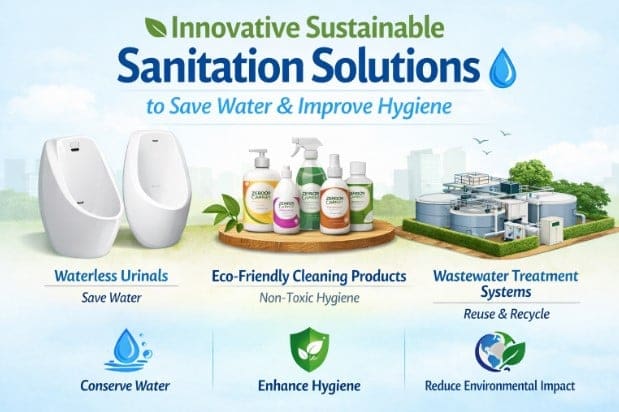
Water scarcity, rising urban populations, and growing hygiene expectations are reshaping how sanitation systems are designed and managed. Traditional sanitation methods consume enormous amounts of water, rely heavily on chemicals, and often fail to address long-term environmental impact. This is where innovative sustainable sanitation solutions play a critical role.
Sustainable sanitation is no longer just an environmental initiative—it has become a necessity for offices, public spaces, institutions, industries, and smart cities. By integrating water-efficient technologies, eco-friendly hygiene systems, and nature-based treatment processes, organizations can significantly reduce water consumption while maintaining superior hygiene standards.
The Need for Sustainable Sanitation Solutions
Conventional sanitation infrastructure is water-intensive and resource-heavy. Flush-based urinals and toilets alone account for a major share of freshwater usage in commercial and public washrooms. In a country like India, where water stress is already severe in many regions, such systems place unnecessary pressure on limited water resources.
Beyond water consumption, conventional sanitation also generates:
- High sewage volumes
- Increased energy usage for treatment
- Chemical-based cleaning and odor control
- Frequent maintenance issues
Sustainable sanitation solutions address these challenges holistically—by conserving water, minimizing waste generation, improving hygiene, and reducing operational costs.
What Are Sustainable Sanitation Solutions?
Sustainable sanitation solutions are systems and practices designed to deliver safe, hygienic sanitation while minimizing environmental impact. These solutions focus on:
- Reducing or eliminating water usage
- Treating waste responsibly
- Using natural and non-toxic products
- Improving long-term operational efficiency
At Ekam Eco Solutions, sustainable sanitation is approached through innovation, research, and real-world application, ensuring solutions are practical, scalable, and effective across diverse environments.
Key Innovations Transforming Sustainable Sanitation
1. Waterless Sanitation Systems
One of the most impactful innovations in sustainable sanitation is waterless urinal technology. Unlike conventional urinals that require multiple liters of water per flush, waterless urinals operate without any water while maintaining hygiene and odor control.
These systems:
- Save millions of liters of water annually
- Reduce sewage load on treatment plants
- Eliminate flushing-related maintenance
- Lower utility and operational costs
Waterless sanitation is especially beneficial for offices, airports, railway stations, malls, educational institutions, and other high-footfall areas.
2. Odor Control Without Harsh Chemicals
Odor is one of the biggest concerns in sanitation facilities. Traditional odor control relies heavily on chemical air fresheners and disinfectants, which may mask smells temporarily but negatively impact indoor air quality.
Innovative sustainable sanitation solutions use natural, VOC-free odor control systems that neutralize odor at the source rather than covering it up. These solutions improve user comfort while ensuring healthier indoor environments.
3. Eco-Friendly Cleaning & Hygiene Products
Sustainable sanitation is incomplete without environmentally responsible cleaning practices. Plant-based and biodegradable cleaners play a vital role in maintaining hygiene without introducing harmful chemicals into water systems.
Eco-friendly hygiene solutions:
- Are safer for cleaning staff and users
- Reduce chemical discharge into sewage
- Maintain surfaces without corrosion or residue
- Support green building and ESG goals
4. On-Site Sewage Treatment & Wastewater Reuse
Treating wastewater at the source is another critical element of sustainable sanitation. Compact, efficient sewage treatment systems help organizations:
- Reduce dependence on centralized infrastructure
- Treat wastewater for reuse in gardening, flushing, or cooling
- Lower freshwater demand
- Minimize environmental pollution
By integrating sanitation with wastewater treatment, organizations can move toward a circular water economy.
How Sustainable Sanitation Improves Hygiene
There is a common misconception that sustainability compromises hygiene. In reality, modern sustainable sanitation solutions enhance hygiene standards through smarter design and better technology.
Key hygiene benefits include:
- Touch-free and low-contact systems
- Reduced water stagnation and bacterial growth
- Consistent odor management
- Improved washroom cleanliness and user experience
Innovative sanitation solutions focus on prevention rather than reaction, ensuring cleaner, healthier washrooms with fewer interventions.
Benefits of Adopting Sustainable Sanitation Solutions
Water Conservation
Waterless and low-water systems drastically reduce freshwater consumption, helping organizations meet sustainability targets and regulatory requirements.
Cost Savings
Lower water bills, reduced maintenance, fewer plumbing issues, and longer equipment life translate into significant long-term savings.
Environmental Impact
Reduced sewage generation, minimal chemical discharge, and lower energy usage help protect natural ecosystems.
Regulatory & ESG Compliance
Sustainable sanitation supports green building certifications, ESG commitments, and corporate sustainability goals.
Positive Brand Image
Organizations adopting sustainable sanitation demonstrate environmental responsibility, innovation, and social commitment.
Applications Across Sectors
Innovative sustainable sanitation solutions are suitable for a wide range of environments, including:
- Corporate offices and IT parks
- Airports and railway stations
- Educational institutions and universities
- Hospitals and healthcare facilities
- Hotels, malls, and commercial complexes
- Industrial facilities and manufacturing units
- Smart cities and public infrastructure projects
Ekam Eco Solutions has implemented sanitation systems across diverse sectors, proving that sustainability and performance can go hand in hand.
The Role of Innovation in the Future of Sanitation
As urbanization increases and climate challenges intensify, sanitation systems must evolve. The future lies in:
- Water-neutral washrooms
- Nature-based treatment technologies
- Smart monitoring and maintenance
- Integration with sustainable building design
Innovative sustainable sanitation solutions are not just a trend—they are the foundation of resilient, future-ready infrastructure.
Why Choose Ekam Eco Solutions?
Ekam Eco Solutions stands at the forefront of sustainable sanitation innovation. With a strong focus on research, field-tested technologies, and real-world impact, the brand delivers solutions that are practical, scalable, and environmentally responsible.
Key strengths include:
- Proven water-saving sanitation technologies
- Expertise in hygiene and odor management
- Sustainable wastewater treatment systems
- Installations across commercial and public spaces
- Commitment to long-term environmental impact
By choosing Ekam Eco Solutions, organizations invest in sanitation systems that save water, improve hygiene, and support sustainability goals without compromise.
Frequently Asked Questions (FAQs)
1. What are sustainable sanitation solutions?
Sustainable sanitation solutions are systems designed to provide hygienic sanitation while minimizing water usage, environmental impact, and long-term operational costs.
2. Do waterless sanitation systems compromise hygiene?
No. Modern waterless systems are engineered to maintain high hygiene standards while eliminating unnecessary water use and reducing bacterial growth.
3. Where can sustainable sanitation solutions be installed?
They are ideal for offices, public washrooms, airports, educational institutions, hospitals, malls, hotels, industries, and smart city projects.
4. How much water can sustainable sanitation save?
Depending on usage, waterless and low-water systems can save thousands to millions of liters of water annually per facility.
5. Are sustainable sanitation solutions cost-effective?
Yes. While initial installation costs may vary, long-term savings from reduced water consumption, maintenance, and chemical usage make them highly cost-effective.
6. How do eco-friendly hygiene products help sanitation?
They maintain cleanliness without releasing harmful chemicals into water systems, improving indoor air quality and environmental safety.
Disclaimer
The information presented is intended solely for general informational purposes. While Ekam Eco Solutions strives to provide accurate and up-to-date insights on sustainable sanitation and hygiene solutions, actual results—including water savings, hygiene performance, and environmental impact—may vary based on site conditions, system configuration, usage patterns, and maintenance practices.