

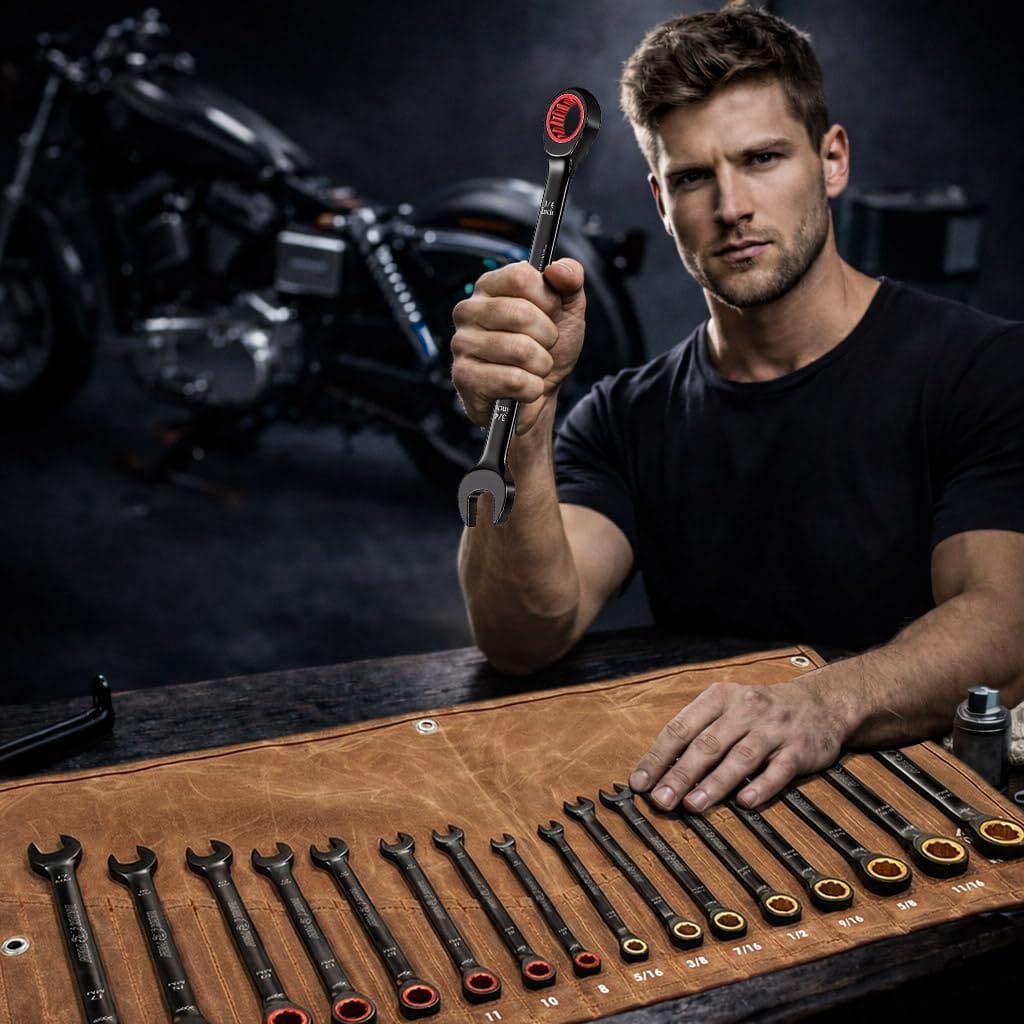
Every mechanic, plumber, and serious DIYer eventually reaches a crossroads in their tool collection. Standard combination wrenches handle the basics, but the moment you face a recessed bolt behind an engine mount or a compression fitting buried in a wall cavity, you realize you need something more capable. That is precisely where an industrial-grade flex-head wrench set built from chrome vanadium steel proves its worth. It combines the angled reach of a pivoting head, the speed of a ratcheting mechanism, and the material toughness required for daily professional use.
The global hand tools market reached USD 24.67 billion in 2024, according to Straits Research, with wrenches dominating as the leading product segment. That dominance is not accidental. Professionals across automotive, construction, HVAC, and manufacturing trades rely on wrenches more than any other hand tool category. And within that category, the flex-head wrench set has rapidly become the preferred choice for workers who need versatility without sacrificing strength.
This article breaks down everything you need to know about choosing, using, and maintaining a professional-grade flex-head wrench set. Whether you are building your first serious toolkit or upgrading from basic open-end wrenches, the information here will help you make a confident, well-informed decision.
What Makes a Flex-Head Wrench Set Different from Standard Wrenches?
A traditional combination wrench offers two working ends: an open jaw and a fixed box-end ring. The design has barely changed since the modern wrench emerged in the 19th century, as outlined in the history of wrench development on Wikipedia. It works, but it demands full rotational clearance around the fastener, which is rarely available in real-world applications.
A flex-head wrench set upgrades that design in two significant ways. First, the box end incorporates a ratcheting gear mechanism that allows continuous turning without lifting and repositioning the wrench. Second, a pivot joint between the head and the handle lets the ratcheting end tilt forward or backward, typically up to 180 degrees. This combination of ratcheting speed and angular flexibility means you can reach fasteners that would otherwise require disassembling surrounding components just to get a straight-line approach.
If you want to understand the internal mechanics behind that ratcheting action, this detailed guide on how a ratchet wrench works explains the pawl-and-gear system that makes it possible.
Why Chrome Vanadium Steel Is the Industry Standard for a Professional Flex-Head Wrench Set
Not all wrench sets are built from the same material, and the steel alloy matters more than most buyers realize. Chrome vanadium steel (Cr-V) has been the backbone of professional hand tools for decades. It is a medium-carbon alloy that blends chromium for hardness and corrosion resistance with vanadium for grain refinement, tensile strength, and fatigue resistance.
According to MFG Shop’s metallurgical overview, chrome vanadium steel delivers tensile strength in the range of 190 to 300 MPa and can achieve high hardness through controlled heat treatment. That strength-to-weight balance is why leading manufacturers build their wrenches, sockets, and ratchets from Cr-V alloys. Tools made from this material resist bending under heavy torque, maintain their shape over thousands of use cycles, and resist rust far better than plain carbon steel alternatives.
When you invest in a flex-head wrench set forged from chrome vanadium steel, you are buying a tool that handles the daily punishment of professional use. The chromium content provides a natural barrier against corrosion, which is essential for mechanics and HVAC technicians who regularly work in humid, greasy, or chemically exposed environments. The vanadium refines the steel’s internal grain structure during heat treatment, producing a wrench that absorbs repeated stress without developing micro-cracks.
SAE vs. Metric: Why a Complete Flex-Head Wrench Set Covers Both
One of the most common mistakes DIY enthusiasts make is buying a wrench set in only one measurement system. SAE (Society of Automotive Engineers) sizes use inch fractions and are standard on American-made vehicles, machinery, and appliances. Metric sizes, measured in millimeters, are used on virtually everything else, from Japanese and European vehicles to imported furniture and industrial equipment.
The problem is that metric and SAE sizes do not align neatly. A 1/2-inch wrench is 12.7mm, but there is no 12.7mm metric wrench. The closest standard metric size is 13mm. Using the wrong size creates just enough slack to round bolt corners, which turns a five-minute job into an hour-long ordeal with an extractor set. A printable metric to SAE wrench size conversion chart is helpful, but the real solution is owning both metric and SAE sets.
A professional-grade flex-head wrench set that includes both SAE and metric coverage eliminates this problem entirely. You will always have the exact size you need, whether you are working on a Ford F-150, a Toyota Camry, or a piece of German-made industrial equipment. The convenience of reaching into one organized set and pulling the correct wrench saves real time over the course of a workday.
Common SAE-to-Metric Near Equivalents (Not Interchangeable)
| SAE Size | Metric Equivalent (mm) | Actual Difference |
| 1/4″ | 6mm (6.35mm actual) | 0.35mm gap |
| 5/16″ | 8mm (7.94mm actual) | 0.06mm gap |
| 3/8″ | 10mm (9.53mm actual) | 0.47mm gap |
| 1/2″ | 13mm (12.70mm actual) | 0.30mm gap |
| 9/16″ | 14mm (14.29mm actual) | 0.29mm gap |
| 3/4″ | 19mm (19.05mm actual) | 0.05mm gap |
Even differences as small as 0.05mm create enough play to damage fastener flats under torque. A complete flex-head wrench set with both SAE and metric sizes is the only reliable way to avoid cross-system damage.
Key Features to Evaluate Before Buying a Flex-Head Wrench Set
Tooth Count and Swing Arc
The ratcheting mechanism inside the box end determines how little space you need to turn a fastener. A 72-tooth gear requires only 5 degrees of swing arc per click. Higher tooth counts, like 90-tooth or even 144-tooth designs, reduce the arc further. For tight engine compartments and cramped plumbing spaces, a higher tooth count makes a real difference. Most professional-grade flex-head wrench set options from reputable manufacturers feature 72-tooth mechanisms as a minimum.
Pivot Range and Locking Mechanism
The flex head pivot typically allows the ratcheting end to swing up to 180 degrees. Some designs let the head float freely, while others include a locking mechanism that holds the head at a fixed angle. Free-floating heads are faster to adjust but can shift under load. Locking heads provide more stability but require an extra step to reposition. Many professionals prefer free-floating designs for speed, though the benefits of a flexible head ratchet page offers a more detailed breakdown of each design philosophy.
Reversible Direction Switch
A small lever on the back of the ratcheting head lets you toggle between tightening and loosening directions without removing the wrench from the fastener. This feature is standard on modern sets, but the quality of the switch mechanism varies widely. A well-made direction switch clicks firmly into position and does not slip under load. Budget sets sometimes use flimsy toggles that skip under heavy torque, which is both frustrating and potentially dangerous.
Handle Length and Leverage
Standard-length wrenches work for most tasks, but some fasteners require more leverage. If you frequently encounter stubborn bolts on heavy equipment, an extra-large heavy-duty ratcheting wrench set provides extended handles that multiply your mechanical advantage. For a comprehensive overview of sizing options, the guide to large heavy-duty ratcheting wrenches compares lengths, weights, and torque capabilities across sizes.
Chrome Finish Quality
A high-quality chrome plating does more than make a wrench look good. It protects the underlying chrome vanadium steel from moisture, chemicals, and abrasion. A mirror-polish finish also makes the wrench easier to clean, since grease and grime wipe off smooth chrome more easily than from matte or unfinished surfaces. Inspect the plating around the pivot joint especially. Cheap sets often skimp on chrome coverage at the hinge point, which is exactly where corrosion attacks first.
Where Professionals Use a Flex-Head Wrench Set Every Day
Automotive Repair Shops. Modern vehicles pack more components into tighter engine bays than ever before. Alternator brackets, exhaust manifold studs, valve cover bolts, and brake caliper fasteners all sit in locations where a straight wrench cannot generate meaningful torque. A flex-head wrench set with a 72-tooth ratchet lets mechanics work around these obstructions without disassembling half the engine just to reach one bolt. For hands-on demonstrations of these tools in action, the IRONCUBE YouTube channel features practical walkthroughs on real-world repair scenarios.
Construction and Structural Steel. Steel erectors, formwork carpenters, and structural welders all deal with bolted connections in places where socket ratchets simply cannot reach. Flanged beam connections, anchor bolt assemblies, and bracing hardware often require a wrench that can approach from an angle. The flex-head pivot handles these off-axis approaches effortlessly.
Plumbing, HVAC, and Mechanical Trades. Supply line fittings behind sinks, condenser mounting bolts on rooftop units, and boiler flange connections all share one trait: they sit in spaces too tight for a socket and too awkward for a fixed wrench. The pivoting head on a flex-head wrench set lets you swing the handle away from walls, pipes, and ductwork while keeping the box end firmly engaged on the fastener. For more detail on these confined-space advantages, read about flex-head ratcheting sets working in tight spaces.
Motorcycle and Small Engine Maintenance. Motorcycles, ATVs, outboard motors, and lawnmower engines present incredibly tight bolt patterns. Wrenching on a motorcycle fairing bolt or an ATV skid plate often means working around frame members, coolant hoses, and wiring harnesses simultaneously. The IRONCUBE reversible ratcheting wrench set on Amazon is specifically marketed toward motorcycle and small engine enthusiasts because of the narrow clearances involved.
How to Maintain Your Chrome Vanadium Flex-Head Wrench Set for Maximum Lifespan
Chrome vanadium steel is tough, but no tool is maintenance-free. A proper care routine takes only a few minutes after each job and can extend the useful life of your flex-head wrench set by years.
Wipe down after every use. Remove grease, metal shavings, and brake dust from the wrench body, pivot joint, and ratcheting head with a clean shop rag. Leaving contaminants on the chrome finish accelerates pitting and surface corrosion over time.
Lubricate the pivot and ratchet. Apply a single drop of light machine oil to the flex-head hinge and into the ratcheting mechanism every two to three weeks of regular use. Work the pivot back and forth and cycle the ratchet direction to distribute the lubricant across the gear teeth and pawl spring. Avoid heavy grease, which attracts dust and can clog the mechanism.
Inspect for wear. Every few months, test each wrench under light hand pressure. If the ratchet slips, grinds, or feels loose, the internal pawl spring or gear teeth may need cleaning or replacement. Catching wear early prevents mid-job failures that can damage fasteners and delay critical work.
Store properly. Rolling pouches, wall-mounted racks, and foam-lined drawer inserts all keep wrenches organized and prevent chrome-to-chrome contact that causes dings and scratches. Loose wrenches thrown in a toolbox develop surface damage that eventually leads to corrosion. An organized flex-head wrench set also lets you spot a missing size immediately.
Understanding Flex-Head Wrench Set Pricing and Value
Price is an important factor, but it should never be the only factor. The cheapest flex-head wrench set on the market almost always cuts corners on material quality, chrome plating thickness, or ratchet mechanism precision. Those shortcuts show up fast: peeling chrome, skipping ratchets, and wobbly pivot joints are all symptoms of tools built to a price rather than a standard.
On the other end, professional tool truck brands charge premium prices that include a lifetime warranty and a personal sales relationship. Those tools are excellent, but the price tag puts them out of reach for many independent mechanics and DIY enthusiasts. The best value typically sits between these extremes: chrome vanadium construction, 72-tooth ratcheting, well-machined pivot joints, and a polished chrome finish at a price that does not require financing. For a detailed pricing analysis across brands, visit IRONCUBE’s flex-head wrench price comparison. You can also compare sets side-by-side in the best large ratchet wrench guide.
The IMARC Group’s market analysis reports that wrenches account for roughly 33.8% of the global hand tools market share, underscoring how central this tool category is to professional tradespeople worldwide. When a single category commands more than a third of a USD 26-billion global market, the message is clear: wrenches are not accessories. They are essential work equipment, and investing in a quality flex-head wrench set delivers measurable returns in productivity, safety, and longevity.
Frequently Asked Questions
What sizes are typically included in a flex-head wrench set?
A standard metric flex-head wrench set usually covers 8mm through 19mm, while an SAE set covers 1/4-inch through 3/4-inch. These ranges handle the vast majority of automotive, plumbing, and general maintenance fasteners. Some extended sets include larger sizes up to 24mm or 1 inch for heavy equipment applications.
Is chrome vanadium steel better than carbon steel for wrenches?
For tools that experience regular torque and repeated stress cycles, chrome vanadium steel is the superior choice. The chromium content provides corrosion resistance, while the vanadium refines the grain structure for greater fatigue life. Carbon steel wrenches cost less upfront but are more prone to bending, chipping, and rusting. A flex-head wrench set forged from Cr-V steel offers significantly better long-term value.
Can I use a flex-head ratcheting wrench to break loose seized bolts?
It is not recommended. The ratcheting mechanism inside any flex-head wrench set is designed for efficient fastener turning, not for maximum breaking torque. Applying excessive force risks stripping the internal gear teeth. Use a breaker bar or a solid non-ratcheting wrench to crack seized fasteners free, then switch to the ratcheting wrench for efficient removal.
How do I choose between a locking and non-locking flex head?
A locking flex head holds the ratcheting head at a fixed angle, which is useful when you need consistent positioning on repetitive tasks. A non-locking (free-floating) head adjusts instantly to any angle, which is faster for varied work. Most professionals prefer the free-floating design for its speed and simplicity. If your work involves repetitive fastener tightening at a fixed angle, a locking flex-head wrench set may be the better fit.
What tooth count should I look for in a quality ratcheting wrench?
A 72-tooth mechanism is the professional standard. It requires only 5 degrees of swing arc per click, which is sufficient for most tight-space applications. Higher tooth counts like 90-tooth or 144-tooth designs offer finer engagement for extremely cramped areas. For general-purpose use, a flex-head wrench set with 72-tooth gears provides an excellent balance of precision, durability, and value.
Do flex-head wrenches break more easily than fixed-head wrenches?
A quality flex-head wrench set built from chrome vanadium steel is extremely durable under normal use. The pivot joint is the most mechanically complex part of the tool, but reputable manufacturers engineer the hinge pin and ear assembly from hardened steel to withstand repeated stress. The key is avoiding excessive force on the ratchet mechanism and using the right tool for breaking torque versus turning torque.
Summary
An industrial-grade chrome vanadium flex-head wrench set with both SAE and metric coverage is one of the smartest investments any mechanic, tradesperson, or serious DIYer can make. The combination of a corrosion-resistant Cr-V alloy, a fine-tooth ratcheting mechanism, and a pivoting head design addresses the three biggest challenges hand tools face: material durability, tight-space access, and speed of work. By choosing a set that covers both SAE and metric sizes, you eliminate the risk of cross-system damage and ensure you always have the right wrench for the job.
Browse the complete IRONCUBE wrench catalog to find flex-head wrench sets tailored to your trade. Every set is forged from chrome vanadium steel with 72-tooth ratcheting heads and polished chrome finishes designed for daily professional use. For questions about bulk orders, custom sizing, or distributor pricing, reach out through the IRONCUBE contact page. And for the latest tool reviews, technique demos, and shop tips, subscribe to the IRONCUBE YouTube channel.