
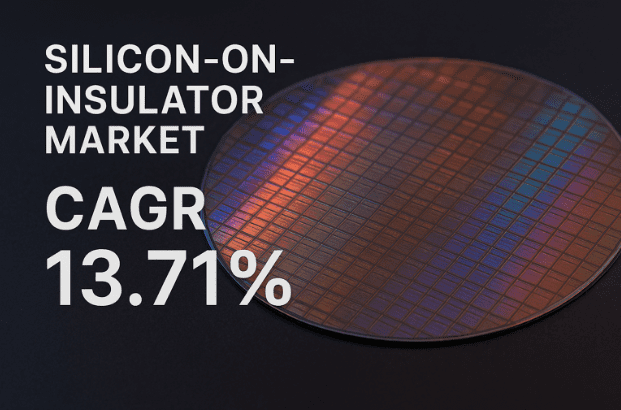
The Silicon-on-Insulator (SOI) Market is emerging as a key driver in the evolution of semiconductor technology. With growing demand for high-speed, power-efficient, and miniaturized electronic devices, SOI technology is gaining global traction across industries such as consumer electronics, automotive, telecommunications, and data centers. This innovative wafer technology enhances performance, reduces power leakage, and enables advanced chip integration, making it vital for next-generation electronics and communication systems.
Silicon-on-Insulator Market Size and Forecast Overview
According to the SNS Insider, the Silicon-on-Insulator Market was valued at USD 1.54 Billion in 2023 and is expected to reach USD 4.89 Billion by 2032, growing at a CAGR of 13.71% during the forecast period 2024–2032. This strong growth trajectory highlights how the SOI industry is rapidly advancing in line with semiconductor innovation, 5G adoption, and the expanding role of artificial intelligence (AI) and Internet of Things (IoT) applications.
The increasing demand for smaller, faster, and more power-efficient chips is propelling SOI wafer adoption across multiple sectors. The technology offers excellent electrical insulation, reduced parasitic device capacitance, and improved performance—all of which are critical for modern electronics.
Key Growth Drivers of the Silicon-on-Insulator Market
Several major trends are fueling the growth of the Silicon-on-Insulator Market. The primary driver is the widespread shift toward energy-efficient and high-performance semiconductor devices. With the miniaturization of integrated circuits, traditional bulk silicon wafers are reaching their physical limits, whereas SOI wafers overcome these challenges by reducing power consumption and enhancing speed.
Additionally, the automotive industry’s increasing adoption of SOI technology in advanced driver assistance systems (ADAS) and electric vehicles (EVs) is creating new growth opportunities. These applications demand reliable and high-temperature-resistant semiconductors, a key strength of SOI-based devices.
The rollout of 5G technology also plays a crucial role in market expansion. SOI wafers enable the manufacturing of high-frequency RF switches and front-end modules that ensure faster data transfer and minimal signal loss, making them ideal for 5G infrastructure.
Technological Advancements in the Silicon-on-Insulator Market
Continuous innovation is at the heart of the Silicon-on-Insulator Market. Leading semiconductor companies are heavily investing in R&D to improve wafer manufacturing techniques and develop advanced materials. Fully Depleted Silicon-on-Insulator (FD-SOI) technology, in particular, has gained significant momentum as it offers low-power operation, cost efficiency, and design flexibility.
FD-SOI technology is widely used in smartphones, wearables, IoT sensors, and high-performance computing systems. Its ability to deliver high performance with reduced leakage current makes it ideal for energy-constrained devices. Moreover, advancements in wafer bonding and layer transfer technologies are helping manufacturers achieve better yields, thinner layers, and higher uniformity—factors that are essential for mass production.
Regional Insights of the Silicon-on-Insulator Market
Geographically, the Silicon-on-Insulator Market exhibits strong growth across key regions. North America leads the market due to its robust semiconductor manufacturing ecosystem, significant R&D spending, and early adoption of emerging technologies such as AI and 5G. The presence of leading industry players and strong government support for innovation further strengthen the region’s dominance.
Europe follows closely, with major contributions from countries like France, Germany, and the Netherlands. The region is focusing on semiconductor self-sufficiency and sustainability, making SOI wafers a preferred choice for next-generation chip production.
Meanwhile, Asia-Pacific is anticipated to experience the fastest growth during the forecast period. Nations such as China, Japan, South Korea, and Taiwan are heavily investing in expanding their semiconductor fabrication capacities. The booming electronics manufacturing sector and increasing demand for smart devices are accelerating SOI adoption across the region.
Challenges and Opportunities in the Silicon-on-Insulator Market
Despite its promising outlook, the Silicon-on-Insulator Market faces certain challenges. The high cost associated with SOI wafer production and the complexity of the manufacturing process remain significant hurdles for large-scale adoption. Additionally, the need for advanced fabrication equipment limits accessibility for smaller semiconductor foundries.
However, these challenges are being gradually mitigated by technological advancements and economies of scale. As demand grows, wafer production costs are expected to decline, opening up new opportunities for mid-tier and emerging manufacturers. Moreover, the integration of SOI technology with quantum computing, autonomous vehicles, and smart IoT systems is poised to unlock significant long-term potential.
Future Outlook of the Silicon-on-Insulator Market
The future of the Silicon-on-Insulator Market looks highly promising. As semiconductor innovation continues to evolve, SOI wafers will play an integral role in enabling energy-efficient, high-performance, and compact devices. Increasing collaborations between chip designers, foundries, and material suppliers will enhance product development cycles and yield optimization.
The rapid penetration of AI-driven electronics, coupled with the expansion of edge computing and 5G networks, will further boost the demand for SOI-based components. With its combination of performance, efficiency, and scalability, SOI technology is set to redefine the future of semiconductor manufacturing worldwide.
FAQs About the Silicon-on-Insulator Market
Q1: What is the CAGR of the Silicon-on-Insulator Market during 2024–2032?
A: The Silicon-on-Insulator Market is expected to grow at a CAGR of 13.71% during the forecast period from 2024 to 2032, driven by increasing adoption in AI, 5G, and automotive applications.
Q2: What is the forecasted market size of the Silicon-on-Insulator Market by 2032?
A: The global Silicon-on-Insulator Market is projected to reach USD 4.89 billion by 2032, showcasing significant growth from its 2023 valuation of USD 1.54 billion.
Q3: Which region is expected to witness the fastest growth in the Silicon-on-Insulator Market?
A: The Asia-Pacific region is expected to record the fastest growth due to increasing semiconductor manufacturing investments, expanding consumer electronics demand, and supportive government policies in countries like China, Japan, and South Korea.