
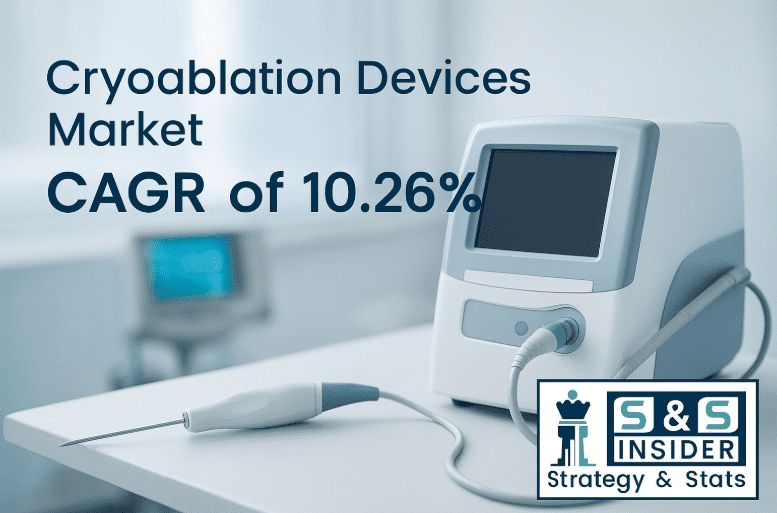
In the dynamic landscape of modern medicine, a quiet revolution is underway, one powered not by heat or radiation, but by intense, targeted cold. Cryoablation, the therapeutic use of extreme cold to destroy abnormal tissue, is moving from a niche procedure to a mainstream therapeutic pillar. This shift is fueling remarkable growth in the global cryoablation devices market, a sector poised for a significant expansion. With the market valued at USD 489.53 million in 2023 and projected to reach a staggering USD 1295.34 million by 2032, growing at a robust CAGR of 10.26%, it’s clear that the clinical and economic ice is breaking. This growth narrative is not a simple tale of increased sales; it is a complex story driven by clinical validation, technological refinement, and a fundamental shift towards minimally invasive care.
The Clinical Expansion Beyond Oncology: Fueling Widespread Adoption and Market Diversification
While cryoablation first gained significant traction in oncology, particularly for treating cancers of the prostate, liver, and kidney, its application spectrum has dramatically widened. This diversification is a primary engine of market growth. The precision of cryoablation, which allows for the destruction of targeted cells while largely sparing surrounding healthy tissue, has proven invaluable in cardiology for the treatment of cardiac arrhythmias like atrial fibrillation. Electrophysiologists now routinely use cryoablation catheters to create controlled lesions on the heart, isolating the erratic electrical signals that cause these conditions. The proven success and safety profile of these procedures have cemented cryoablation’s role as a first-line treatment in many electrophysiology labs worldwide.
Furthermore, the market is witnessing a surge in applications within pain management, orthopedics, and even dermatology. For chronic pain conditions, such as those caused by damaged nerves, cryoablation offers a compelling alternative to long-term opioid use. By temporarily freezing peripheral nerves, the procedure can provide pain relief for months, significantly improving a patient’s quality of life. In orthopedics, it is being explored for treating soft tissue tumors and certain benign bone conditions. Each new clinical indication opens up a fresh patient population and a new revenue stream for device manufacturers, directly contributing to the projected compound annual growth rate and moving the market beyond its oncology-centric origins. This expansion is a testament to the technology’s inherent versatility and its alignment with the broader trend of interventional solutions across medical specialties.
Technological Advancements and Device Miniaturization: Enhancing Precision and Expanding Access
The impressive CAGR of 10.26% is not solely a result of finding new uses for existing tools; it is equally driven by a wave of innovation that is making the devices themselves more capable, user-friendly, and accessible. Early cryoablation systems were often bulky and complex, limiting their use to major academic hospitals. Today, the trend is toward miniaturization, integration, and enhanced visualization. Modern cryoablation probes are becoming thinner and more flexible, allowing for procedures to be performed through smaller incisions or via natural orifices, thereby reducing patient trauma, shortening recovery times, and lowering the risk of infection.
Moreover, the integration of advanced imaging guidance, such as real-time ultrasound and fusion with MRI or CT scans, has dramatically improved procedural accuracy. Physicians can now navigate to the target lesion with unprecedented precision, deploy the ice ball with confidence, and monitor its formation in real-time to ensure complete coverage of the pathological tissue while avoiding critical adjacent structures. This technological synergy reduces procedural variability and improves clinical outcomes, which in turn builds greater trust and demand among the clinical community. As devices become more sophisticated yet easier to control, the barrier to entry for community hospitals and ambulatory surgical centers is lowered, further accelerating market penetration and solidifying the double-digit growth trajectory forecasted through 2032.
The Convergence of Patient Demand and Economic Drivers: A Powerful Catalyst for Market Growth
Underpinning the clinical and technological drivers is a powerful socio-economic current that is powerfully favoring the adoption of cryoablation technologies. Patients today are more informed and proactive about their healthcare choices than ever before. They actively seek out treatment options that are less invasive, promise shorter hospital stays, and enable a quicker return to normal life. Cryoablation, with its compelling patient-centric benefits, fits this demand perfectly. The shift towards value-based healthcare, a model that rewards positive patient outcomes and cost-effectiveness, further accelerates this trend.
From an economic perspective, while the initial capital outlay for cryoablation equipment can be significant, the overall cost-benefit analysis is increasingly favorable. Minimally invasive cryoablation procedures often translate to reduced operating room time, decreased lengths of hospital stay, and lower rates of complications and readmissions compared to traditional surgery. For healthcare payers and providers, these factors contribute to a lower total cost of care. This economic argument is crucial for market adoption, as hospital administrators and purchasing committees make decisions based not just on clinical efficacy but also on the financial impact. The convergence of empowered patient preference with demonstrable economic value creates a potent, self-reinforcing cycle that is essential for sustaining the market’s growth from its 2023 valuation to its projected 2032 milestone.
The cryoablation devices market is thus in the midst of a transformative period. It is evolving from a specialized field into a cornerstone of interventional medicine, driven by a powerful triad of clinical diversification, relentless technological innovation, and compelling patient and economic benefits. As research continues to unlock new applications and engineers push the boundaries of what these devices can achieve, the forecasted growth appears not just plausible, but inevitable. The future of treatment is not just hotter or more radioactive; in many cases, it is decisively, and effectively, colder.