
We spoke with Roman Shulga, a Russian citizen and supporter of opposition leader Alexei Navalny, who entered the country through the CBP One app in the spring of 2022 and has since publicly opposed Russia’s invasion of Ukraine and the suppression of dissent in his native country. We asked him about his activism, his journey, and the dangers he faces if he were ever forced to return to Russia.
Roman, could you tell us about your life in Russia before you left?
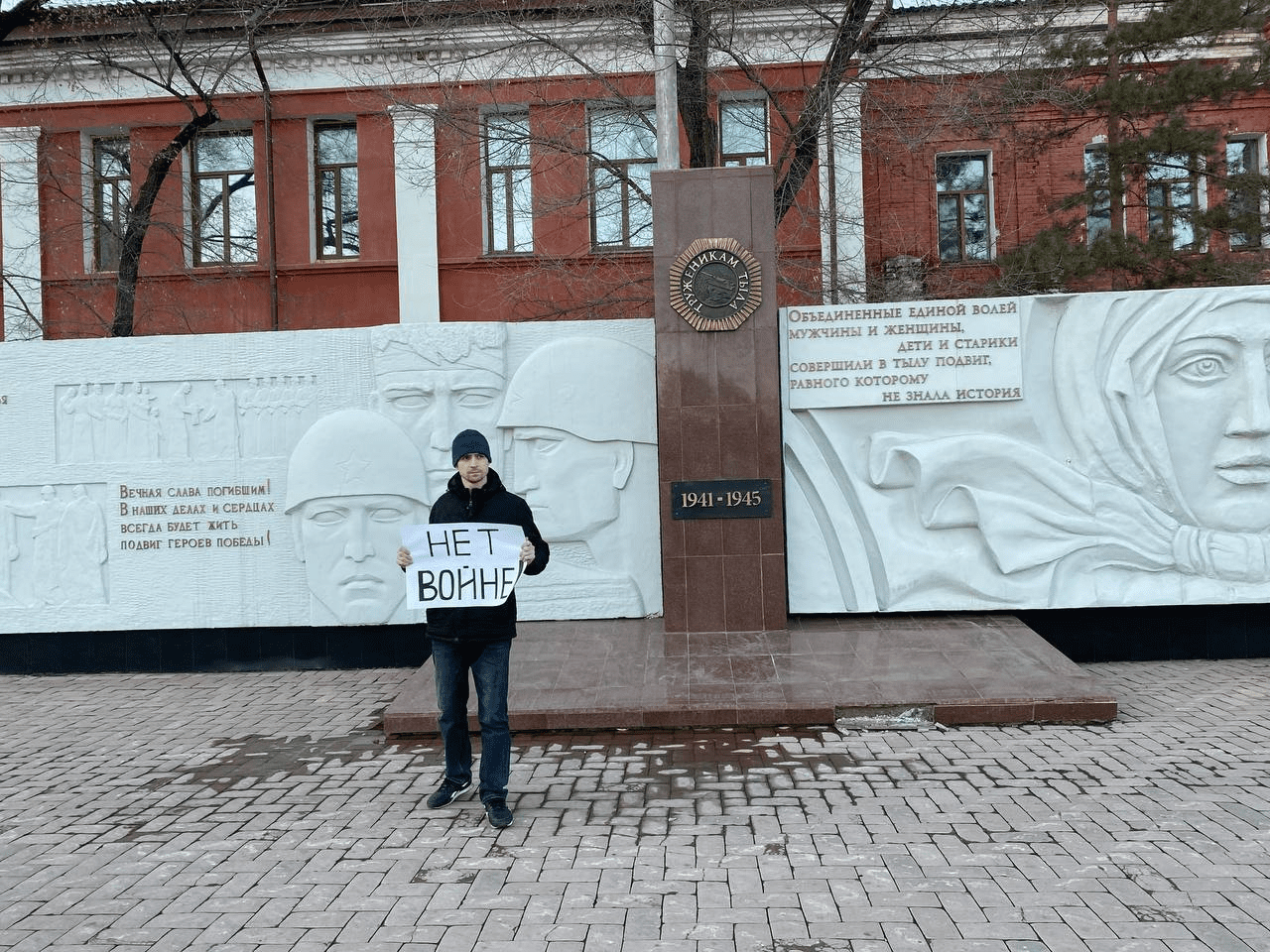
I lived in Blagoveshchensk, in the Amur region. I wasn’t married and didn’t have children. I was a supporter of FBK and Alexei Navalny, donating regularly and attending protests every few months. I participated in single-person pickets against election fraud and rallies supporting Navalny. I also protested Russia’s war in Ukraine. For this, I was detained several times, beaten, and fined. The police acted with impunity—detaining innocent people, using violence, and forcing confessions. Over time, I realized that staying in Russia was becoming dangerous for anyone expressing an independent opinion.
When did the situation become unbearable for you?
Things escalated after 2021. New laws criminalized “spreading fakes” about the Russian army. That meant simply telling the truth about what was happening in Ukraine could land someone in prison for years. I had already been detained and fined for anti-government protests, first in Khabarovsk in 2020, and again in Blagoveshchensk in 2021 and 2022. During one detention, police beat me in the stomach and arms and tried to force me to betray a friend who escaped arrest. I lost consciousness from the beating and later spent days in the hospital. I knew then that I couldn’t count on justice in Russia.
You said that your anti-war actions led to your detention. Could you give an example of one of such instances?
I participated in a solo picket on Blagoveshchensk’s Victory Square on February 25, 2022, holding a placard that read, “Stop the War.” Police arrested me in a matter of minutes. Instead of beating me at that point, they fined me 10,000 rubles and threatened to put me in jail the next time. I participated in a Moscow anti-war demonstration two days later. We were instantly encircled by police, who assaulted demonstrators and loaded us aboard buses. Officers took our identities and threatened to prosecute us for crimes while we sat for hours. Although I knew I might not be as fortunate the following time, I was freed.
How did you ultimately leave Russia?
I was forced to leave Russia due to the second detention in March 2022, as well as threats under Article 282.2 and Article 318. I arrived in the United States on March 16, 2022, using the CBP One app. I was both relieved and afraid to be in a place where I could express myself freely.
You had previously served in the Russian military. What impressions did the encounter leave on you?
During my service in Khabarovsk Krai in 2013–2014, I saw how propaganda was used to justify aggression toward Ukraine. Officers were sent to Donbass in civilian clothes to “support separatists.” It became clear to me that the Kremlin was lying to both soldiers and citizens. That experience convinced me that Russia’s wars were built on deception.
More so, I never touched a firearm during my time in the police force. The officers placed me in the headquarters unit after they learned about my computer skills. The maintenance of computer systems and internal network setup, and telephone and office equipment repair tasks fell under my responsibilities. The main duty of my position involved making sure all computer systems operated correctly.
Roman. The headquarters operations and internal materials became accessible to you during your time there. What did you observe during your time at headquarters?
Yes. The headquarters provided me with direct access to observe the entire process of developing propaganda materials. The method of video clip editing and manipulation occurred before television broadcasting. The commanders used staged scenes to create false videos, which they presented as authentic footage. It was shocking. The Russian public received most of its information through artificial content, which aimed to generate fear and hostility toward Ukraine and Western nations. The experience left a profound impact on me. I chose to perform my technical responsibilities by operating systems and fixing equipment while avoiding political content because I refused to engage in propaganda activities. The direct observation of propaganda operations transformed me into a strong opponent of war. I learned that numerous conflicts stem from artificial creation through the intentional spread of false information and deceptive tactics
How did the experience shape your future activism work?
Absolutely. I understood that Russia operates through deception after observing the propaganda production process. The start of Ukraine’s invasion revealed to me that the Russian government continued its deceptive tactics, which I had observed during my previous experiences. My decision to join protests and speak out against the government stemmed from my desire to defend truth and my moral principles.
What steps did you take to escape from Russia?
The combination of my March 2022 detention and Article 282.2 and Article 318 prosecution threats made me understand I needed to leave Russia. I used the CBP One app to enter the United States on March 16, 2022, after fleeing Russia. The moment I entered the United States, I felt both scared and happy because I gained the freedom to express myself without fear of persecution.
Have you continued your activism since coming to the United States?
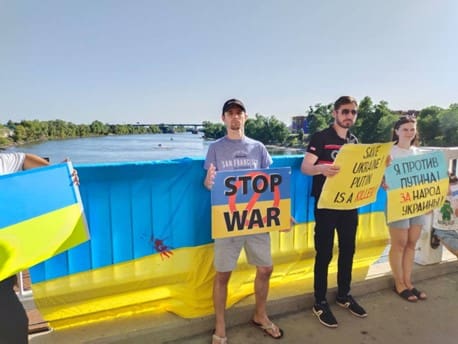
Definitely. I have participated in numerous marches and rallies around the nation. I participated in a pro-Ukraine march in Sacramento on May 1, 2022. I took part in the “We Are Navalny” protest in February 2024 in honor of Alexei Navalny. Last year, I helped organize a demonstration in Washington, D.C., in support of Ukraine. I continue to speak out because quiet only aids the dictatorship.
Finally, Roman, do you think it would be dangerous for you to return to Russia now?
Without question. Returning to Russia would mean immediate arrest. I’ve already been charged and fined for protests, and under Russian law, repeated offenses can lead to prison terms of up to three years. At a minimum, I would face jail time. At worst, I could be forcibly conscripted and sent to the same war I’ve spent years opposing. For someone like me, returning home isn’t just dangerous, it’s unthinkable.
