
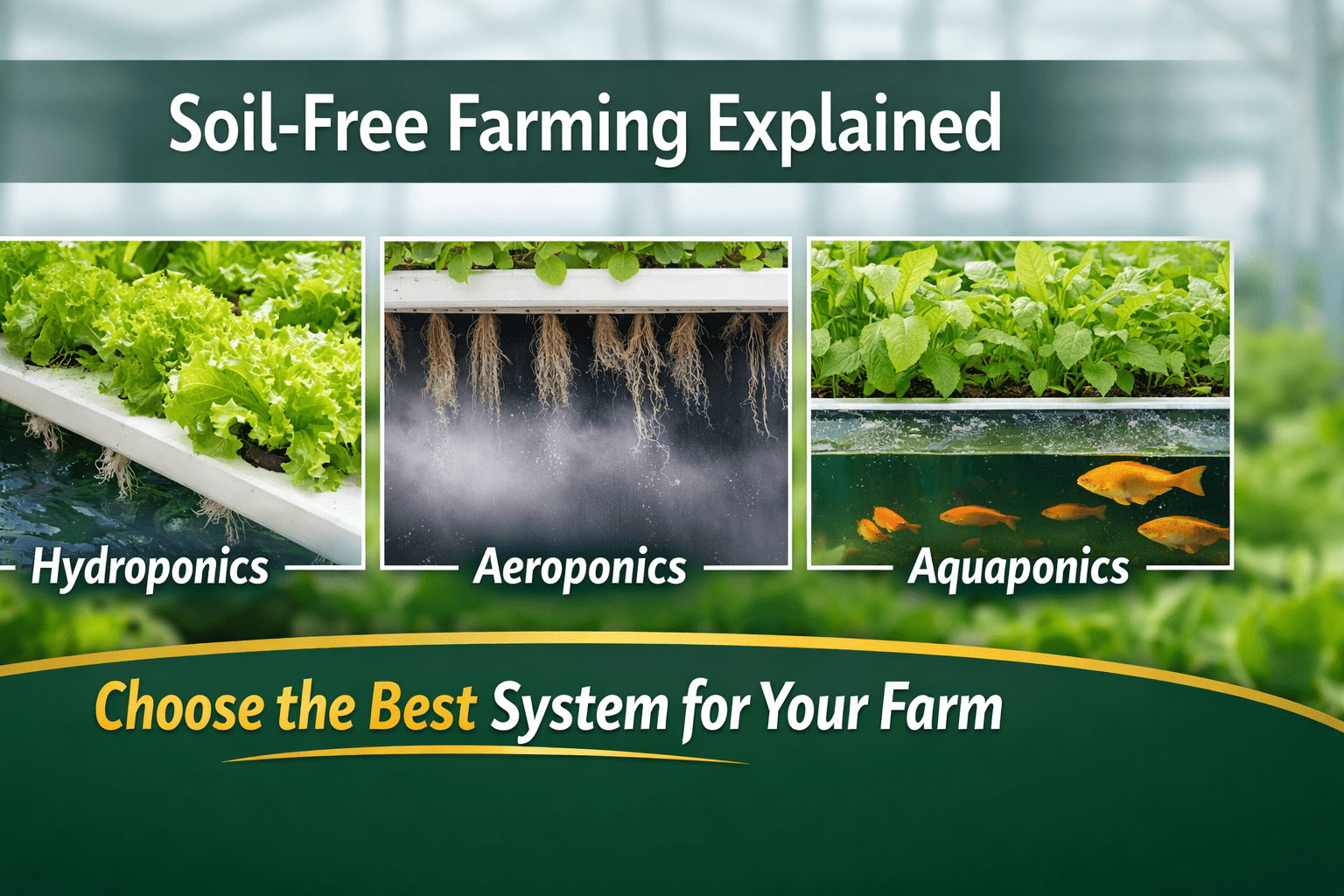
Farming decisions are not simple anymore. Costs are rising, water is not always reliable, and weather keeps changing. Many farmers feel stuck between old methods and new technologies. That is where soilless growing systems start getting attention.
Hydroponics, aeroponics and aquaponics all grow plants without soil. On the surface, they look similar. But once you go deeper, the systems work in very different ways. Understanding the difference between hydroponics, aeroponics and aquaponics becomes important before making any investment.
Some farms need low water use. Some want faster growth. Others look for sustainability. So the question is not which system is popular, but which one actually fits your setup. In this guide, we will compare these methods clearly, so the choice feels practical, not confusing.
What Is Hydroponics Farming?
Hydroponics is just growing plants without soil. That is it. The roots are not in mud. They sit in water where nutrients are already mixed properly. So instead of searching through soil, the plant absorbs what it needs straight from the solution.
In setups like the nutrient film technique, a thin layer of water keeps moving past the roots. In a deep water culture system, roots remain dipped in oxygen-rich water. It sounds complicated at first, but actually it is controlled feeding through water. You decide what the plant gets. Which also means you have to check it regularly.
What Is Aeroponics Farming?
Aeroponics is different in one clear way. The roots are not sitting in water at all. They hang freely in the air. Every few minutes, a fine spray touches them with nutrients. That is why people call it a misting roots system.
Because the roots stay exposed, they get more oxygen. Plants can grow fast in such conditions. But there is no buffer here. If the misting system stops, even briefly, the roots start drying. So this method needs steady electricity and careful monitoring.
What Is Aquaponics Farming?
Aquaponics combines plants and fish in one cycle. It is a fish-based farming system. Fish release waste into the water. That waste breaks down into nutrients. Plants absorb those nutrients, and the cleaned water returns to the fish tank. It keeps circulating.
There is usually no added chemical fertiliser. The system depends on balance between fish, bacteria and plants. If something shifts, everything feels it. It works nicely when managed with patience. But it is not something you can ignore for long.
How They Work: Key Differences
If you strip away the technical names, the real difference between hydroponics, aeroponics and aquaponics is simple. It is about how the roots receive nutrients and how much control the farmer has.
Hydroponics feeds roots through water. Aeroponics feeds through mist. Aquaponics feeds through a natural fish cycle. But let’s break it down clearly.
Hydroponics Farming
- Roots stay in nutrient water or a flowing film of it
- Systems like nutrient film technique (NFT) and deep water culture system are common
- Nutrients are added directly and adjusted manually
- High control over feeding
Aeroponics Farming
- Roots hang in air
- Nutrients are sprayed as mist in a misting roots system
- Very high oxygen around roots
- Needs constant misting and reliable power
Aquaponics Farming
- Roots sit in water connected to fish tanks
- Nutrients come from fish waste
- It is a fish-based farming system
- Balance between fish, bacteria and plants is important
If you compare them side by side, the difference between hydroponics aeroponics and aquaponics becomes clearer:
- Hydroponics gives direct nutrient control
- Aeroponics gives maximum oxygen exposure
- Aquaponics works like a small ecosystem
Each method grows plants without soil. But the way they feed, circulate water, and require monitoring is not the same. That is where farmers must think carefully before choosing.
➜ Pros & Cons of Hydroponics Farming
Hydroponics Farming is usually where most farmers begin when looking at soilless farming. It feels more controlled. You decide what goes into the water, how strong the nutrients are, how the roots sit. That control is helpful. But it also means you cannot ignore the system for long.
Advantages
- Plants often grow faster because nutrients are directly available
- Water use is lower compared to traditional soil farming
- Systems like nutrient film technique (NFT) and deep water culture system are simple to scale
- Works well in greenhouses and indoor setups
Limitations
- Setup cost can be noticeable in the beginning
- Regular checking of pH and nutrient levels is needed
- Power cuts or pump failure can affect roots quickly
- Mistakes in nutrient mixing show results fast
Hydroponics Farming gives freedom, but it expects attention in return.
➜ Pros & Cons of Aeroponics Farming
Aeroponics looks clean and modern. Roots hanging in air, getting nutrients through a misting roots system. It sounds efficient because it is. But it also leaves little room for carelessness.
Advantages
- Roots receive high oxygen, which supports faster growth
- Uses very little water compared to other systems
- Root health is easy to observe
- Space-efficient for vertical farming
Limitations
- If misting stops, roots dry quickly
- System depends heavily on pumps and timers
- Slight technical faults can create big stress
- Higher setup and maintenance effort
Aeroponics can perform well, but it does not forgive delays or neglect.
➜ Pros & Cons of Aquaponics Farming
Aquaponics feels different from the other two. It is a fish-based farming system, so plants and fish live in the same cycle. Fish create waste. Plants use it. Water goes back clean. It works when balance is steady.
Advantages
- No separate chemical fertiliser needed in most cases
- Produces vegetables and fish together
- More natural nutrient cycle
- Good option for sustainable farming setups
Limitations
- Fish health becomes as important as plant health
- System balance takes time to understand
- Water quality must be monitored carefully
- Slight imbalance affects both fish and crops
When comparing hydroponics vs aeroponics vs aquaponics, the real difference is not just technology. It is about how much monitoring, control and patience the farmer is ready to handle.
➜ Cost & Resource Comparison
When people ask about the difference between hydroponics aeroponics and aquaponics, the next question is always cost. Not just setup money. Ongoing effort also matters. Electricity, water, monitoring time. All of it adds up slowly.
Below is a simple soilless farming systems comparison to make things clearer.
| Factor | Hydroponics | Aeroponics | Aquaponics |
| Initial Setup Cost | Medium. Basic nutrient film technique (NFT) or deep water culture system setups are manageable at small scale. | Higher. The misting roots system needs precise pumps and timers. | Medium to High. Fish tanks, filtration and plant beds all required. |
| Water Usage | Low compared to soil farming. | Very low. Mist uses minimal water. | Moderate. Water circulates between fish and plants. |
| Nutrient Source | Commercial nutrient solutions. | Commercial nutrient solutions. | Fish waste in a fish-based farming system. |
| Electricity Dependence | Important for pumps and circulation. | Very high. System stops, roots suffer quickly. | Important for water circulation and aeration. |
| Maintenance Level | Regular nutrient and pH checks. | High attention needed. | Balance fish health and plant nutrition. |
So the cost story is not one-line simple. Hydroponics sits somewhere in the middle. Aeroponics saves water but asks for technical reliability. Aquaponics spreads cost between plants and fish.
Which System Is Best for Your Farm?
There is no “best” for everyone. It depends on your land, water, budget and how involved you want to be daily.
Think like this:
- If you want structured control and easier scaling → Hydroponics is practical.
- If water saving is your biggest concern and you can manage equipment carefully → Aeroponics may suit you.
- If you like an integrated approach and do not mind handling fish → Aquaponics fits better.
- If you are new to soilless systems → Start simple, do not overcomplicate.
- If you plan commercial expansion → Choose the system you can maintain consistently.
When comparing hydroponics vs aeroponics vs aquaponics, the smarter question is not which sounds advanced. It is which one you can manage without stress. Technology works well only when it matches the farmer behind it.
Conclusion
There is no single winner when comparing hydroponics, aeroponics and aquaponics. The real difference between hydroponics aeroponics and aquaponics shows up in daily management. How roots are fed. How much monitoring is needed. How steady your setup is. That matters more than labels.
In any proper soilless farming systems comparison, hydroponics feels more controlled, aeroponics feels sharper but sensitive, and aquaponics works like a living cycle with fish involved. The better system is simply the one you can handle without constant stress. Farming is already demanding. The system should support you, not complicate things.
FAQ
1. What is the difference between hydroponics aeroponics and aquaponics in simple words?
The difference is mainly in how plants get their food. In hydroponics, roots sit in nutrient water. In aeroponics, roots hang in air and get sprayed with mist. In aquaponics, fish waste becomes the plant’s nutrient source. Same goal, different feeding method.
2. Which system is easier for beginners to manage?
For most beginners, hydroponics feels simpler. You mix nutrients, monitor water, and adjust when needed. Aeroponics needs more technical care. Aquaponics adds fish into the picture, which means extra responsibility. So starting simple usually works better.
3. Does aeroponics really use less water than hydroponics?
In many cases, yes. Aeroponics uses fine mist instead of flowing water, so water use can be lower. But the system depends heavily on pumps and timers. If equipment stops, plants feel it quickly. So water saving comes with careful monitoring.