
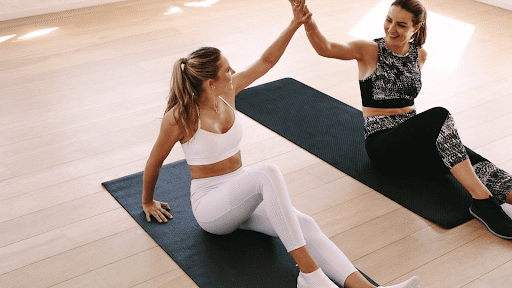
Honestly? Most fitness advice was never written with you in mind. Not the version of you managing back-to-back meetings, school runs, hormonal swings, and a to-do list that breeds overnight. The gym feels like another job. Every new routine you start with genuine excitement? Gone by week three.
But here’s the thing nobody tells you upfront: sustainable home fitness for women was never about being perfect. It’s about showing up enough, over time, until movement stops feeling like a chore and starts feeling like you. And this actually matters beyond motivation speeches: the WHO projects physical inactivity will hit 35% by 2030. Building a lasting home routine isn’t just a lifestyle choice; it’s genuinely protective.
The Mindset Foundation You Can’t Skip
Before you touch a workout plan, the real work happens in your head. Skip this part, and even the most brilliant fitness schedule crumbles the second Tuesday gets complicated.
Identity First, Routine Second
Here’s a small shift that carries enormous weight. Moving from “I’m trying to work out more” to “I’m someone who moves her body daily” quietly rewires how you make decisions. Phrases like “I show up for myself even on hard days” or “Movement is part of my day, not an add-on” aren’t affirmations for a vision board; they’re behavioral anchors. They reduce the mental negotiation that burns your willpower before noon.
If you want support building this identity layer alongside a real routine, working with an online nutrition and fitness coach is genuinely worth considering. A good online nutrition and fitness coach helps you cut through generic programming and build something that actually fits your life, your hormones, your schedule, and your goals.
Drop the All-or-Nothing Trap
Perfectionism has quietly sabotaged more good intentions than missed workouts ever have. 7 minutes on a chaotic Tuesday? That counts. A slow walk while you decompress at lunch? Also counts. Your minimum effort on a hard day is still a win, not a failure in disguise. Permit yourself to do something instead of waiting for the conditions to do everything.
Find Your Actual Why
Once you loosen perfectionism’s grip, ask yourself: Why does movement matter to me right now? Not in abstract terms. Get specific. What do you want more energy for? How do you want to feel when you’re 60? What does showing up for yourself look like this month, not hypothetically?
Your answers to those questions will shape your habits far more than any downloaded workout program ever could.
Building a Routine That Actually Fits Around Real Life
With your mindset anchored, now comes the part most women struggle with: designing something weekly that doesn’t fall apart when life gets busy. And it will get busy.
Research shows the biggest barriers for women are not prioritizing exercise (59.6%), lack of time (37.1%), and low motivation (29.4%). A smart woman’s sustainable workout routine doesn’t pile on more; it is designed around these exact friction points.
Work With Your Energy and Hormones
This isn’t an excuse; it’s biology. Most women feel stronger and more energized mid-cycle than the week before their period. Map your week honestly. Which days are genuinely heavy? When do you realistically have 15 minutes? Designing around your real windows beats chasing someone else’s ideal schedule every single time.
The Four Pillars of At-Home Fitness That Actually Stick
Every set of at-home fitness habits women actually maintain long-term comes back to four things: strength training two to three times weekly, low-impact cardio like walking or dancing, mobility work and stretching, and real recovery, including actual sleep. Not one or two of these. All four. They work as a system, and not a single one requires a gym membership.
Habit Stacking: The Secret Weapon You’re Underusing
Knowing what to do is only half the battle. Figuring out when to actually do it is the other half. Stack a 10-minute bodyweight circuit right after your morning coffee. Stretch while your kids watch their show. Sneak calf raises between Zoom calls. These micro-moments accumulate, and they become the backbone of long-term fitness habits for women that actually hold through seasons of life.
Nutrition That Supports Your Workouts Without the Obsession
Here’s the truth: your workout routine will only carry you so far without the fuel to back it up. But “eating well” doesn’t have to mean tracking every gram.
Balanced Plates, Not Obsessive Dieting
A palm of protein. Half a plate of vegetables. A fist of complex carbs. That’s genuinely enough to support your workouts without spiraling into macro math. Greek yogurt at breakfast, eggs at lunch, small, consistent swaps move the needle without requiring a nutrition degree or a complicated meal plan.
The Unsexy Habits That Actually Change Everything
Water before coffee. Caffeine cut off by 2 PM. A 20-minute wind-down ritual before bed. None of this sounds revolutionary, but dehydration and poor sleep silently wreck your energy, your recovery, and your motivation. These simple habits are genuinely some of the highest-leverage tools for supporting sustainable home fitness for women over the long run.
Real Questions, Real Answers
How do beginners build fitness habits at home without getting hurt?
Start with bodyweight movements at low intensity. Prioritize form before adding resistance. Three 10-minute sessions a week is a completely legitimate starting point. Short, consistent sessions build durability far better than occasional all-out efforts.
How many days per week should women actually work out at home?
Three to four days works well for most women: two strength sessions, one cardio day, one mobility or rest day. Consistency across four days always beats six intense days followed by two weeks of nothing.
Are home workouts actually as effective as the gym for getting stronger?
Yes. Especially with resistance bands and dumbbells. Progressive overload drives strength gains, not location. Many women are more consistent at home precisely because there’s no commute, no equipment wait, and no social anxiety in the mix.
Keep Going, That’s the Whole Game
The goal was never a six-week transformation. It was a life where movement feels natural rather than forced. Whether you start with five minutes or a full circuit, the real win is simply showing up consistently enough that fitness becomes part of you. Small habits, woven into real life, will always outlast dramatic overhauls.
Your version of sustainable home fitness for women doesn’t have to look polished. It just has to keep going.