

In financial markets, access to data is no longer a competitive advantage. Charts, prices, and indicators are available everywhere. What separates consistent traders from reactive ones is the ability to interpret market information with structure and discipline.
This is where charting platforms are tested in real-world conditions—not by how many features they offer, but by how effectively they support decision-making. TradingView is often described as a charting tool, but in practical trading and market analysis, it functions more as a framework for thinking about price behavior.
Moving Beyond Watching Price
Many traders spend years “watching the market” without truly understanding it. Constantly changing indicators or timeframes often leads to more confusion, not clarity.
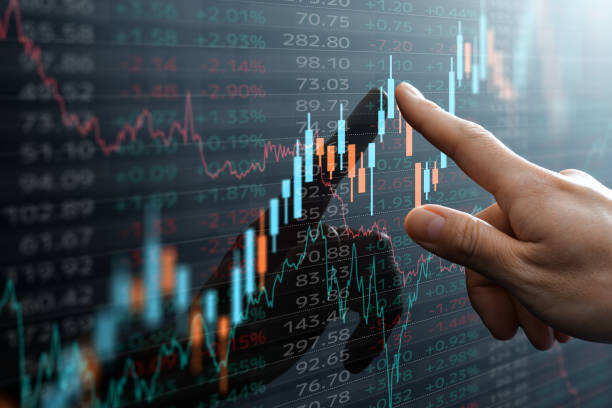
In real trading scenarios, TradingView proves useful because it encourages contextual analysis. Trend structure, key levels, and market phases can be visualized clearly without forcing a predefined strategy. Drawing tools, multi-timeframe layouts, and clean price scaling allow traders to express hypotheses instead of chasing signals.
In practice, experienced traders often use the platform to answer simple but critical questions:
- Is the market trending or ranging?
- Where is price relative to high-probability zones?
- Does the potential reward justify the risk?
Charts become less about prediction and more about decision validation.
Technical Analysis as Part of a Larger Picture
Technical analysis rarely works in isolation. Macro conditions, correlated assets, and market sentiment all influence price behavior.
One of TradingView’s practical strengths is the ability to compare assets side by side. Traders can analyze an individual stock alongside its sector index, or evaluate cryptocurrency price action while monitoring macro indicators like the U.S. dollar or bond yields. This broader view often prevents overconfidence in single-chart conclusions.
For swing and position traders, this type of multi-market visibility helps filter noise and avoid trades that look good technically but fail contextually.
Community Ideas as Learning Material, Not Signals
Trading communities are often misunderstood. In real usage, TradingView’s public ideas are less about copying trades and more about exposing different analytical approaches.
Reviewing how others mark structure, interpret breakouts, or manage invalidation levels can highlight weaknesses in one’s own analysis. The value lies in observation and comparison—not imitation.
Traders who treat shared ideas as case studies tend to extract far more insight than those looking for instant trade setups.
Strategy Testing and Its Real Limitations
Backtesting tools can create a false sense of certainty if misused. In real trading, historical performance does not guarantee future results.
TradingView’s scripting and strategy tools are most effective when used to:
- Test whether a concept behaves consistently over time
- Identify market conditions where a strategy fails
- Quantify drawdowns and risk exposure
Rather than generating automated profits, these tools help traders understand the behavior of their own ideas.
Who Actually Benefits from TradingView?
In real market conditions, TradingView tends to benefit traders who value structure over speed:
- Traders building repeatable analysis routines
- Investors analyzing multiple markets or asset classes
- Users focused on risk management and context, not constant execution
For those more interested in why a trade makes sense than how fast it can be placed, tools like TradingView become more relevant over time.
Final Thoughts
No platform replaces experience, discipline, or emotional control. A charting tool is only as useful as the questions asked through it.
In practical trading and market analysis, TradingView’s real value lies in its ability to make market structure visible and assumptions testable. When traders use charts to clarify thinking rather than confirm bias, the platform becomes a genuine analytical aid—not just a screen full of indicators.