

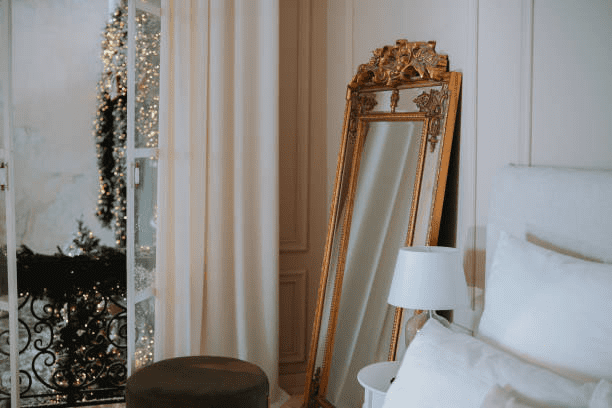
Mirrors are one of those “quiet” decor choices that can change everything without changing much. They bounce light, add depth, and create an instant focal point, especially in rooms that feel a little flat or unfinished. If you’ve ever rearranged a space and thought, something’s still missing, a well-placed mirror is often the fix.
This guide breaks down how to choose the right mirror (size, shape, placement) and how to style it so it looks intentional, not like an afterthought.
Start with the job you want the mirror to do
Before you pick a style, decide what you want the mirror to solve:
- Make a room feel larger: Go oversized and keep the frame visually light.
- Brighten a darker corner: Place it opposite or adjacent to a window so it catches daylight.
- Add a focal point: Choose a distinctive shape (arched, scalloped, wavy) and give it breathing room.
- Balance a blank wall: Use a mirror to add structure when art feels too busy.
When you’re clear on the “job,” it’s much easier to choose a mirror that actually improves the room.
Size matters more than most people think
The most common mirror mistake is going too small. A mirror that’s undersized can read as decor clutter instead of a design choice.
A few easy sizing rules:
- Over a console table: Aim for about 2/3 the width of the console.
- Over a dresser: Similar rule, 2/3 is a great starting point.
- Leaning floor mirror: Taller is almost always better (it creates instant height and drama).
- Over a fireplace mantel: Match the mantel’s scale and keep the frame proportionate to the height of the wall.
If you’re debating between two sizes, the larger one usually looks more intentional.
Shape is where you can add personality without adding “stuff”
If your home leans minimalist or neutral, mirror shape is a simple way to add interest while keeping the overall look calm.
- Arched mirrors: Soft and classic, great for bedrooms and entryways.
- Round mirrors: Clean and modern, especially over a narrow console.
- Rectangular mirrors: Timeless and easy, works almost anywhere.
- Wavy or scalloped mirrors: Adds movement and a slightly playful edge, especially in spaces that feel boxy.
Wavy mirrors have been especially popular because they bring in that organic movement without introducing a loud color or pattern. If you’re drawn to that look, this Serena & Lily Wave Mirror dupe will get you the look for much, much less.
The best places to hang a mirror (and why they work)
Entryway
A mirror near the door makes the space feel welcoming, bright, and finished. It also gives you that practical last glance before you head out. Pair it with a simple console, a tray for keys, and one small decorative element, then stop there.
Living room
Mirrors work especially well when the room needs depth. Try one above the mantel, above a sideboard, or on the wall opposite your main seating. If you don’t have much natural light, a mirror can help spread what you do have.
Dining area
A mirror can add polish to a dining space without making it feel formal. Hang it on the longest wall to widen the room visually, or style it above a buffet for a clean, collected look.
Bedroom
A floor mirror is an easy win, but a statement mirror over a dresser can also make the room feel calmer and more complete than multiple small frames or extra decor objects.
How to style around a mirror so it looks intentional
A mirror can be the focal point, but the styling around it is what makes it feel truly “designed.” A few simple guidelines:
Keep the area around it simple
If the frame is interesting (arched, wavy, scalloped), let it be the moment. Avoid crowding it with lots of small pieces.
Repeat a material somewhere else
If the frame is brass, bring in a brass candleholder or lamp base. If it’s wood, repeat that tone in a bowl, picture frame, or chair leg. This makes the mirror feel integrated, not random.
Use asymmetry sparingly
A mirror styled with one vase and one stacked book looks natural. Three different objects plus extra art plus a basket can start to feel busy fast.
Leave negative space
Empty space is not unfinished space. It’s what helps the mirror look like a deliberate focal point.
A simple mirror “formula” that works in most rooms
If you want a foolproof approach:
- Choose a mirror that’s slightly larger than you think you need
- Place it where it can catch natural light (even indirectly)
- Style the surface beneath it with just two or three items in similar tones
- Step back and remove one item if it feels cluttered
That last step is the secret. Most rooms feel better when you edit, not when you add.
The takeaway
Mirrors are one of the easiest ways to make a home feel brighter, larger, and more pulled together without changing your whole decor style. Pick the right size, use shape to add interest, and keep the styling calm and intentional. When it’s done well, the mirror doesn’t just fill a wall, it finishes the room.