
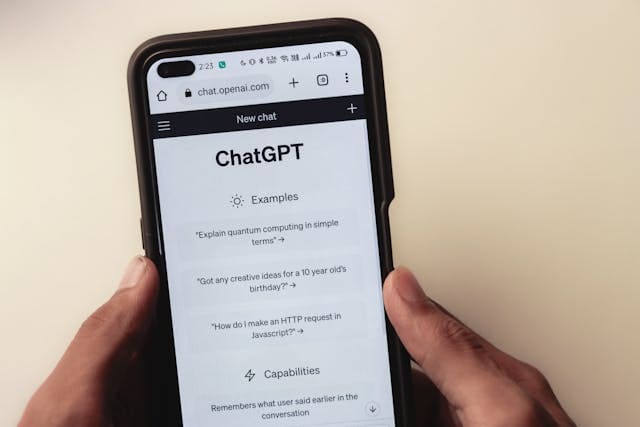
AI search is no longer a “future channel.” Buyers are asking ChatGPT, Perplexity, Gemini, and Copilot for vendor recommendations right now—and Google’s AI Overviews are already used at massive scale.
If your brand isn’t showing up (or shows up with the wrong positioning), you can lose consideration before a prospect ever reaches your site.
In this AI search optimization guide, you’ll learn a clean and repeatable system to track brand mentions in AI search and turn those insights into actions that increase citations, recommendations, and pipeline.
What counts as a “brand mention” in AI search?
In AI-powered results, you’ll typically see three visibility types:
- Mention (unlinked): your brand is named (e.g., “TheRankMasters is a strong option…”).
- Citation (linked): the AI includes a source link to your site (or to third-party pages about you).
- Recommendation / shortlist: your brand is presented as a top option, often alongside competitors.
Tracking all three matters because mentions build brand preference, and citations drive attributable traffic + authority signals.
The KPIs that actually matter (skip vanity metrics)
Before you touch tools, define what “winning” means. For B2B SaaS, these are the KPIs worth tracking weekly:
- AI Share of Voice (AI SoV): % of tracked prompts where your brand appears vs competitors
- Mention rate: prompts that mention you ÷ total prompts tracked
- Citation rate: prompts that cite your domain ÷ total prompts tracked
- Positioning accuracy: whether the AI describes you with your intended category + differentiators
- Competitive displacement: prompts where you replaced a competitor (or got replaced)
If you only track “mentions,” you’ll miss the most actionable part: which pages are being cited and why.
Step 1: Build your “prompt universe” (the queries buyers actually ask)
AI visibility tracking works best when you stop thinking only in keywords and start thinking in buyer questions.
Create a prompt list in 4 buckets:
1) Category discovery prompts
- “Best [category] software for [use case]”
- “Top alternatives to [competitor]”
- “Which [category] tool is best for mid-market teams?”
2) Use-case prompts (pipeline drivers)
- “How do I solve [pain] in [industry]?”
- “Best way to improve [metric] without hiring more headcount”
3) Comparison prompts (high intent)
- “[Brand] vs [Competitor]”
- “Is [Brand] good for [use case]?”
4) Trust prompts (risk reducers)
- “Is [Brand] legit?”
- “Pros and cons of [Brand]”
- “Pricing for [Brand]” (even if you don’t publish pricing—track the narrative)
Minimum viable starting set: 50 prompts
Strong starting set for B2B SaaS: 150–300 prompts
Pro tip: Include prompts where you don’t appear today. Those are your growth targets.
Step 2: Track mentions across AI engines (manually at first, then scale)
Manual tracking (fast baseline in 60–90 minutes)
Do one sweep across:
- ChatGPT
- Google AI Overviews (where available)
- Perplexity
- Microsoft Copilot
Record for each prompt:
- Appeared? (Y/N)
- Mention vs citation
- Which competitor appeared instead
- Notes on positioning (accurate / wrong / missing key differentiator)
This creates your baseline and helps you spot patterns like:
- You’re mentioned for “small business,” but you want “mid-market”
- Competitors are cited from listicles you’re not featured in
- AI uses outdated info (old pricing, old category name, old product features)
Step 3: Use an AI visibility tracker to automate and benchmark
A new class of tools specifically monitors how AI models mention brands and what they cite. For example, platforms like Profound position themselves around tracking AI visibility and citations.
And dedicated monitoring tools like OtterlyAI market “share of voice” tracking across major AI search surfaces.
If you want a curated shortlist of platforms (and what each is best for), see: best tools for tracking brand visibility in AI search.
What to look for in a tool:
- Multi-engine coverage (not just one model)
- Ability to track citations + sources
- Competitive benchmarking (AI SoV vs competitors)
- Exports (CSV, dashboards for clients/stakeholders)
- Prompt library management (tags by funnel stage, product line, region)
Step 4: Track why AI cites what it cites (the “citation graph”)
Here’s the unlock most teams miss:
When AI answers cite sources, it’s revealing the web pages it trusts for your topic.
Build a simple “citation graph”:
- For your top 20 prompts, list every cited URL
- Label each URL type:
- Your site
- Competitor site
- Review site / listicle
- Forum / community (Reddit, Quora)
- Industry publication
- Prioritize the pages that show up repeatedly
This tells you exactly what to do next:
- Earn placements on repeat-cited publications
- Publish a page that fills the missing “source” gap
- Update/expand pages that are almost getting cited
Step 5: Fix positioning errors (so the AI describes you correctly)
Mentions are good. Correct mentions are better.
Common B2B SaaS positioning errors in AI answers:
- Wrong category (“SEO tool” vs “SEO agency”)
- Wrong ICP (SMB vs enterprise)
- Wrong feature emphasis (talks about a feature you don’t sell)
- Outdated info (old product naming, integrations, leadership)
How to correct it:
- Tighten entity signals on-site:
- Clear “What we do” and “Who we help”
- Consistent terminology across homepage, about page, service pages
- Strengthen authoritative references:
- Case studies, third-party citations, comparison pages
- Publish “explainers” that AI can confidently summarize:
- “What is [category]?”
- “How [category] works for [industry]”
- “Common mistakes + best practices”
If you want a practical example of how AI visibility work translates into measurable outcomes, here’s a detailed GEO case study: improving AI visibility with ChatGPT.
Step 6: Turn tracking into CRO (so visibility becomes leads)
AI visibility is only valuable if it drives:
- Qualified traffic
- Sales conversations
- Brand preference
Add a simple CRO layer to the pages most likely to be cited:
On your “AI visibility” / “GEO” pages, include:
- A one-sentence outcome promise (specific > generic)
- A proof block (mini case study, metrics, logos, testimonials)
- A low-friction CTA:
- “Get a free AI visibility snapshot”
- “Request a brand mention audit”
- A comparison-style section:
- “When to choose an agency vs DIY tooling”
- An FAQ section that mirrors buyer prompts (great for AEO)
This makes it more likely that when AI does cite you, the click converts.
FAQs
How often should I track brand mentions in AI search?
Weekly for core prompts, monthly for long-tail. Track daily if you’re in a volatile niche or launching major campaigns.
Why do I get mentions but not citations?
Because AI may “know” your brand from training signals, but it cites sources it can validate for the specific question. Build citation-worthy pages and earn repeat-cited third-party placements.
Do traditional SEO metrics still matter for AI visibility?
Yes—AI systems often pull from the same ecosystem of authoritative pages, brands, and sources. But you also need prompt-level monitoring and positioning control.