

You bought a high-quality fish oil supplement, hoping to improve your heart health, brain function, or joint mobility. But if you are taking that golden capsule with just a glass of water, you are likely wasting your money. Without the right physiological triggers, your body may flush out up to 80% of those vital Omega-3s before they ever reach your bloodstream.
The solution isn’t taking more capsules; it’s optimizing how your body processes them. By understanding the biology of lipid digestion, you can ensure every milligram of EPA and DHA counts toward your wellness goals.
try our Best Fish Oil and Omega 3 for Heart & Brain Support
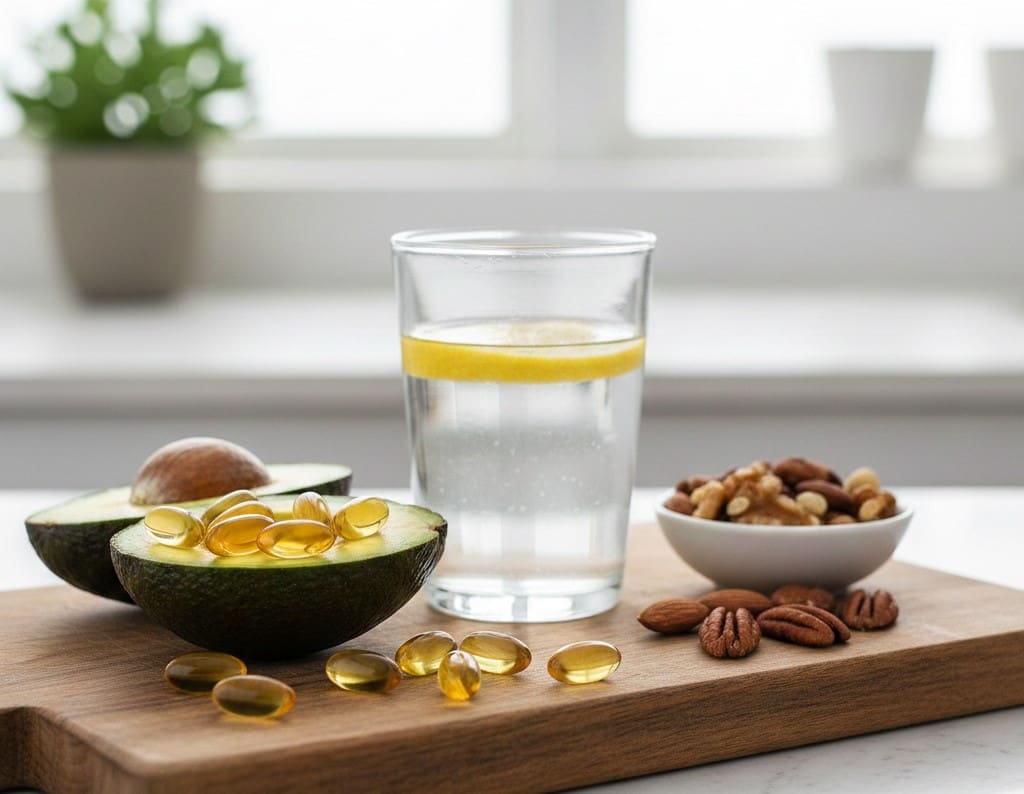
Why Your Fish Oil Absorption Might Be Near Zero
Fish oil is a lipid. Unlike water-soluble vitamins (like Vitamin C), lipids require a specific chemical environment to pass through your intestinal wall. If you take fish oil on an empty stomach, your gallbladder doesn’t receive the signal to release bile salts.
Without bile, the fish oil cannot undergo emulsification. This process breaks large fat droplets into tiny particles called micelles. If micelles don’t form, the Omega-3s stay trapped in the digestive tract, often leading to the “fishy burps” many people complain about.
The Golden Rule: Why You Must Take Fish Oil With Food
The presence of food—specifically fat—is the primary driver of bioavailability. When you eat, your stomach slows down its gastric emptying rate. This gives your enzymes more time to break down the supplement.
More importantly, dietary fat triggers the release of pancreatic lipase. This enzyme “unlocks” the Omega-3 molecules from their carrier, allowing them to be absorbed by the enterocytes in your small intestine. Without a meal, this enzymatic bridge never forms.
The 15-Gram Fat Threshold: What to Eat for 300% Better Results
Research suggests that a specific amount of dietary fat is required to maximize the “yield” of your supplement. Taking fish oil with a low-fat snack isn’t enough. You need roughly 10 to 15 grams of healthy fats to fully activate the digestive process.
| Food Item | Estimated Fat (g) | Why it Works |
| 1/2 Avocado | 15g | High in monounsaturated fats. |
| 2 Large Eggs | 10g | Contains lecithin, a natural emulsifier. |
| Full-Fat Greek Yogurt | 8-12g | Provides a solid lipid base for capsules. |
| Handful of Walnuts | 18g | Synergistic plant-based Omega-3s. |
Morning vs. Night: Does Timing Actually Matter?
There is no “magic hour” for fish oil. Your body doesn’t absorb Omega-3s better at 8:00 AM than it does at 8:00 PM. Instead, timing should be dictated by your largest meal of the day.
If you eat a light breakfast but a heavy dinner, take your fish oil with dinner. If you suffer from acid reflux, taking it in the morning while you are upright may prevent the oil from sitting too high in the digestive tract. Consistency is the only metric that truly affects your long-term cellular health.

Choosing the Right Form: Triglyceride vs. Ethyl Ester
Not all fish oils are structured the same way. Many cheap supplements use the Ethyl Ester (EE) form, a synthetic structure created during molecular distillation. While concentrated, the EE form is significantly harder for the body to break down.
At zenvitaco.com, we prioritize the Triglyceride (TG) form. This is the natural state of fat found in wild fish. For those seeking the highest quality, we recommend our Best Fish Oil and Omega 3 for Heart & Brain Support. Studies show that the TG form has up to 70% higher bioavailability than its synthetic counterparts because your body recognizes and processes it immediately.
FAQ: Maximizing Your Omega-3 Results
Should I take fish oil on an empty stomach?
No. Taking fish oil on an empty stomach reduces absorption by over 50%. Without dietary fat to trigger bile and lipase, the oil cannot be broken down effectively, often resulting in gastrointestinal discomfort or “fishy burps.”
What is the best meal to eat with fish oil?
A meal containing 10-15 grams of healthy fats is ideal. Pair your supplement with foods like eggs, avocado, nuts, or full-fat dairy to ensure the proper release of digestive enzymes.
Can I take fish oil at night for better absorption?
Yes, if your evening meal is your largest fat-containing meal. Absorption depends on meal content rather than the clock. Taking it at night may also help those who experience reflux during the day.
Does the form of fish oil affect how much I absorb?
Yes. Natural Triglyceride (TG) forms are absorbed significantly better than Ethyl Ester (EE) forms. Always check the label to ensure you are using a high-bioavailability TG-form oil for the best results.
How long does it take for fish oil to work?
While absorption happens in hours, clinical benefits usually take 8 to 12 weeks. It takes time for EPA and DHA to integrate into your cell membranes and lower systemic inflammation.
written by – Khalid
Supplement Specialist at Zenvitaco
