
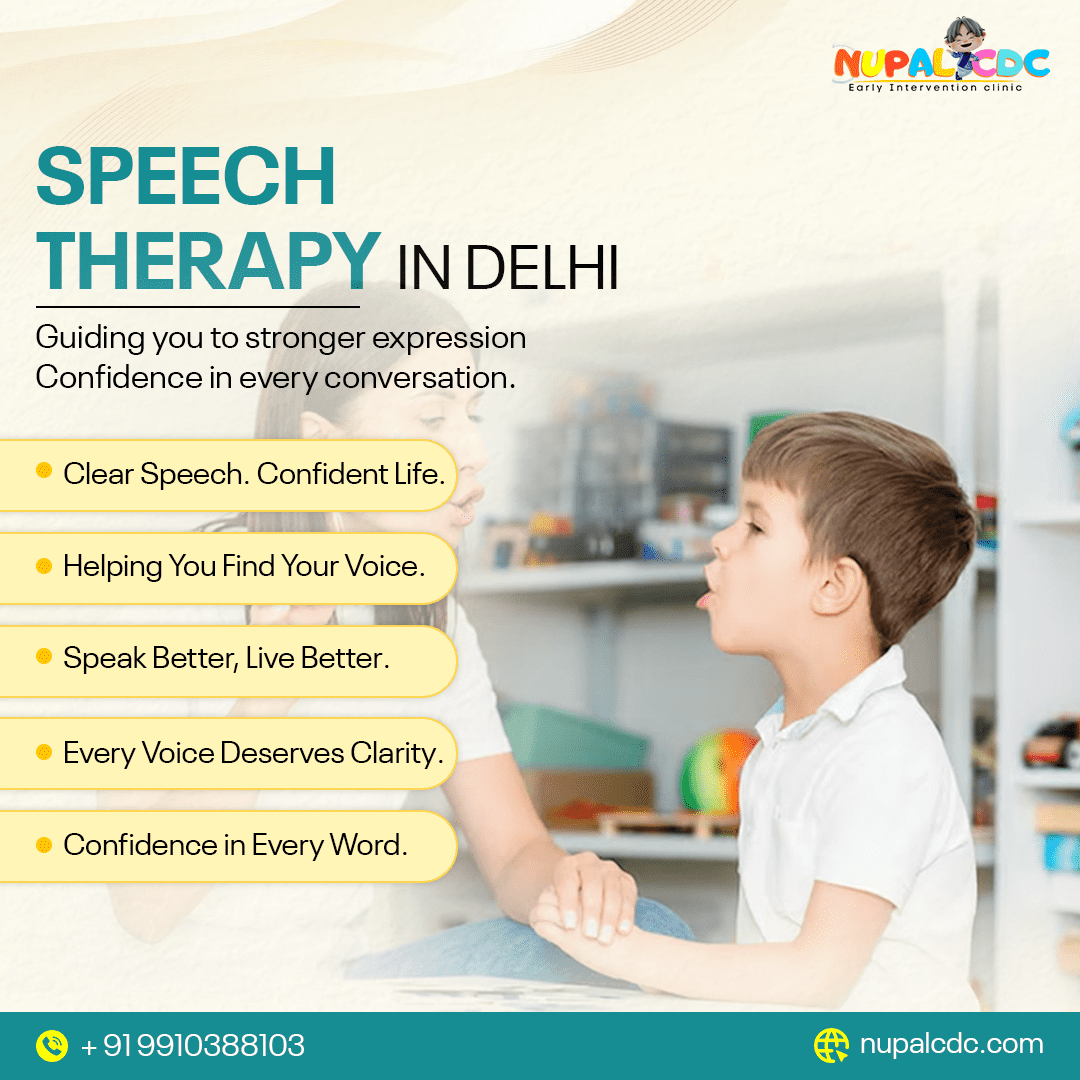
Communication is one of the most fundamental human capacities — and when it is disrupted, the ripple effects touch every part of a person’s life. For a child who cannot express their needs, a teenager whose stutter affects their confidence in class, or an adult relearning speech after a neurological event, the right therapeutic support can be genuinely transformative.
Yet for many families in Delhi, the search for the best clinic for speech development raises more questions than it answers. Where do you even begin? What separates a truly excellent centre from one that simply looks credible on the surface? This guide answers those questions directly, drawing on what the clinical and caregiving communities consistently identify as the most important factors in making this decision well.
Why Choosing the Right Centre Matters More Than You Think
Not all speech therapy is created equal. The field encompasses a wide range of conditions — from childhood language delays and articulation disorders to apraxia, autism spectrum communication differences, voice disorders, and adult neurological rehabilitation. A centre that delivers outstanding results for one type of condition may have limited experience with another.
In Delhi specifically, the healthcare landscape includes everything from large hospital-based departments to boutique standalone clinics and home-visit services. Each has its own strengths, and understanding how to evaluate them systematically is the difference between finding the right fit quickly and spending months in trial and error.
What to Look for in a Speech and Language Therapy Centre Near Me
Verified Clinical Credentials
The starting point for any evaluation is professional qualification. In India, speech-language pathologists are regulated by the Rehabilitation Council of India (RCI), and registration with this body is a legal requirement for practising professionals. Any credible speech and language therapy centre near you should be able to provide their therapists’ RCI registration numbers without hesitation.
Beyond RCI registration, look for therapists holding a BASLP (Bachelor of Audiology and Speech-Language Pathology) or a postgraduate degree from a recognised university. Credentials signal baseline competence — they are the floor, not the ceiling, but they are non-negotiable.
Specialisation That Matches Your Specific Need
A centre with strong general credentials is a good start, but specialisation matters enormously in therapy speech contexts. Ask directly whether the clinic has substantial experience with your specific concern — whether that is late talking in toddlers, school-age reading and language difficulties, adult fluency disorders, or post-stroke communication rehabilitation.
Therapists who work regularly with a particular population develop a depth of clinical intuition that generalist practice simply cannot replicate. When searching for the best clinic for speech development, matching specialisation to need is one of the highest-value filters you can apply.
Structured Assessment Before Treatment Begins
A centre that books therapy sessions before completing a comprehensive assessment is one that prioritises revenue over outcomes. Rigorous initial assessment is clinically essential — it establishes a baseline, identifies the precise nature of the difficulty, and shapes every subsequent decision in the therapy plan.
A thorough assessment in a quality centre will typically examine expressive and receptive language, articulation and phonological patterns, oral-motor function, fluency, voice characteristics, and social communication where relevant. The results should be explained clearly to the family, with realistic expectations set from the outset.
How to Evaluate Therapy Quality Beyond the Basics
Evidence-Based Methods and Transparent Approach
The best speech therapist in Delhi will be able to explain exactly what approach they are using and why it is appropriate for your case. Evidence-based practice means the therapist draws on intervention methods that have been tested and validated through clinical research — not personal habit or outdated tradition.
Ask specifically what frameworks the clinic uses. Well-established approaches include PROMPT therapy, the Hanen Programme, Lidcombe Programme for fluency, AAC (Augmentative and Alternative Communication) for complex communication needs, and social communication interventions for autism spectrum conditions. A therapist who cannot name or explain their methodology is a concern worth taking seriously.
Family and Caregiver Integration
For children in particular, what happens between sessions is at least as important as what happens during them. A centre that genuinely understands this will build caregiver training, home programme guidance, and regular progress-sharing into the standard offering — not treat it as an optional extra.
If a centre discourages parents from being involved or keeps caregivers at arm’s length, that is a significant red flag. Communication therapy is most effective when the people closest to the individual are actively engaged and equipped to support progress day to day.
Clear Goal-Setting and Progress Review
Ask any prospective centre how they set therapy goals and how often they review them. High-quality clinical practice involves individualized, measurable short-term and long-term targets — and a commitment to revisiting and adapting those targets based on actual progress.
If a child has been attending sessions for several months with no re-assessment, no updated goals, and no clear sense of direction, the therapy structure is likely inadequate. Outcome accountability is a sign of professional seriousness.
Practical Factors That Shape the Day-to-Day Experience
Even when a clinic meets every clinical standard, practical factors influence whether therapy actually works in your life. Consider these when making your final decision.
- Location and commute: Consistency of attendance is crucial. A clinic that is difficult to reach regularly will quickly become one you attend irregularly — and irregular attendance undermines even the best clinical programme.
- Session availability: Does the schedule accommodate your working hours or your child’s school routine? Evening and weekend slots are offered by many of the better-organised centres in Delhi.
- Teletherapy options: Remote sessions are now a legitimate and clinically effective format for many communication difficulties. Clinics offering hybrid models give families flexibility without sacrificing quality.
- Communication with the team: Is the administrative staff responsive? Are therapist notes and progress updates shared proactively? The operational professionalism of a centre often reflects its clinical culture.
Red Flags to Watch For
Not every concern is immediately obvious, but these patterns consistently signal a centre worth avoiding.
- Guarantees of rapid results or fixed timelines before assessment
- Therapists who cannot explain their methods in plain language
- No structured intake or baseline assessment process
- High therapist turnover or inconsistent assignment of therapists to cases
- Dismissiveness toward parental questions or concerns
- No re-assessment or goal review after months of ongoing therapy
Finding the Best Clinic for Speech Development in Delhi
Delhi offers a genuine range of quality options for speech and language therapy, from specialist paediatric centres to multidisciplinary rehabilitation clinics. The key is approaching your search methodically rather than defaulting to proximity or the first result that appears online.
Start by seeking referrals from your child’s paediatrician, school counsellor, or your own general practitioner. These professionals frequently have direct experience of local centres and can offer grounded, specific recommendations. Cross-reference those suggestions with your own visits and direct conversations with the therapy team before committing.
The best clinic for speech development for your family is not necessarily the most expensive or the most prominently advertised — it is the one where qualified, experienced therapists use validated methods, involve you in the process, measure outcomes honestly, and treat the person in their care as an individual rather than a case file.
Conclusion
Selecting a speech and language therapy centre near you is a decision that deserves careful, informed attention. The right choice accelerates progress, builds confidence, and makes the therapeutic journey manageable for the entire family. The wrong one costs time, money, and — most importantly — developmental opportunity.
By prioritising verified qualifications, appropriate specialisation, evidence-based methods, family involvement, and transparent progress tracking, you give yourself the best possible foundation for finding the best clinic for speech development in Delhi. Ask the hard questions early. The right centre will welcome them.
Frequently Asked Questions (FAQs)
Q1. How is a speech and language therapy centre different from a general child development clinic?
A dedicated speech and language therapy centre focuses specifically on communication, language, speech, voice, and fluency. General child development clinics offer broader multidisciplinary assessment and may include occupational therapy, physiotherapy, and psychology alongside speech services. For focused communication concerns, a specialist centre typically offers greater clinical depth and more targeted intervention. However, where a child presents with multiple co-occurring needs, a multidisciplinary setting may be more appropriate.
Q2. What should I bring to the first appointment at a speech therapy centre?
Bring any previous assessment reports, medical records related to the communication concern, school reports where relevant, and a written summary of the behaviours or difficulties you have observed. For young children, a short video recorded at home of the child communicating naturally can be enormously useful — children often perform differently in unfamiliar clinical settings, and real-world footage gives the therapist valuable context.
Q3. Can adults benefit from visiting a speech and language therapy centre, or is it primarily for children?
Speech and language therapy is highly effective for adults across a wide range of conditions, including post-stroke aphasia, voice disorders, stuttering, and communication difficulties associated with neurological conditions such as Parkinson’s disease. Many centres in Delhi offer dedicated adult rehabilitation programmes. The principles of good centre selection apply equally — look for relevant experience, evidence-based methods, and clear goal-setting regardless of the age of the person seeking support.
Q4. How long does it typically take to see results from therapy speech intervention?
Progress timelines vary considerably depending on the nature and severity of the difficulty, the individual’s age and responsiveness, and the consistency of practice at home. Mild articulation delays in young children may show meaningful improvement within a few months of regular sessions. More complex presentations — such as those involving structural language disorders, apraxia, or adult neurological rehabilitation — typically require sustained, longer-term programmes. A competent therapist will provide a realistic and honest timeline after completing the initial assessment, and will revise it openly as therapy progresses.