

Dealing with a leftover stump after cutting down a tree can turn your yard into an eyesore or even a hazard. If you’ve recently had tree removal done or spotted an old stump taking up space, stump removal is the next logical step. In Australia, where backyards often feature tough native trees like eucalypts, getting rid of stumps properly matters for safety, aesthetics, and even preventing pest issues. This guide walks you through safe stump removal methods, tips tailored to Aussie conditions, and what to watch out for locally. Whether you’re a DIY fan or considering pros, we’ll cover it all to help you reclaim your space.
Understanding Stump Removal Basics
Stump removal isn’t always straightforward, especially in Australia’s diverse climates—from the dry outback to humid coastal areas. A stump is the base of a tree left after felling, and it can regrow shoots, attract termites, or trip up kids and pets. In urban spots like Sydney or Melbourne, stumps might also interfere with lawn care or landscaping plans.
Related to broader tree removal, stump removal ensures your yard stays healthy. For instance, in bushfire-prone regions like parts of Queensland or Victoria, removing stumps reduces fuel loads and fire risks. Latent issues include root decay affecting nearby plants or underground utilities. Keywords like grinding stumps, burning methods, or eco-friendly options often come up in searches, and we’ll touch on those here.
Before starting, assess the stump’s size and type. Small ones under 30cm diameter might be DIY-friendly, but larger eucalypt stumps could need heavier tools due to their dense wood.
Methods for Effective Stump Removal
There are several ways to tackle stump removal, each suited to different yard sizes and skill levels. In Australia, where soil can be clay-heavy or sandy, some methods work better than others. Let’s break them down.
Manual Digging and Pulling
This hands-on approach is great for small stumps in softer soil, common in suburban Aussie yards.
- Dig around the stump with a shovel to expose roots—aim for a trench about 30-50cm deep.
- Use a mattock or axe to chop through roots; wear gloves to avoid splinters.
- Once loosened, rock the stump back and forth and pull it out with a pry bar or vehicle winch.
In places like Perth’s sandy soils, this method shines because roots come up easier. But in rocky Victorian terrain, it might take hours. Expect to spend 2-4 hours on a 20cm stump. Always check for underground pipes first—dial 1100 for free locates in Australia.
Chemical Stump Removal Techniques
For a slower but less labor-intensive option, chemicals speed up decay.
- Drill holes into the stump’s top (use a 2-3cm bit, 20-30cm deep).
- Pour in a stump remover product, like potassium nitrate, available at local hardware stores.
- Cover with a tarp to keep moisture in; wait 4-6 weeks for rot to set in, then break it apart.
This works well for hardwood stumps like those from gum trees in New South Wales. It’s eco-conscious if you choose biodegradable options, aligning with Australia’s environmental regs. Avoid near water sources to prevent runoff into creeks, a concern in flood-prone areas like Brisbane.
Mechanical Grinding for Larger Stumps
If digging feels overwhelming, renting a stump grinder is a game-changer for stump removal.
- A grinder chews the stump into chips using a spinning blade—rentals start at $100/day from tool hire shops.
- Start at the top, working down to 20-30cm below ground level.
- Fill the hole with soil afterward and reseed grass.
In commercial tree removal contexts, this is popular in cities like Adelaide for quick cleanups. It’s noisy, so notify neighbors, especially in close-knit Aussie suburbs. Safety gear like ear protection is essential, as dust and chips fly everywhere.
Hiring Professionals for Stump Removal
Sometimes, calling in experts for stump removal is the smartest move, particularly for big or tricky stumps near structures.
Pros use heavy machinery and know local soil quirks, like dealing with root barriers in urban Melbourne. In Australia, licensed arborists handle permits and waste disposal, ensuring compliance. Costs range from 150−500$ per stump, depending on size and location—cheaper in rural areas than inner-city spots.
Competitors in the tree removal space often bundle stump services, but shop around for quotes. Examples include post-storm cleanups in Tasmania, where wind-damaged pines leave deep stumps that pros grind efficiently.
Safety Tips During Stump Removal
Safety comes first in any yard project, especially with Australia’s variable weather—think sudden rains turning soil slippery.
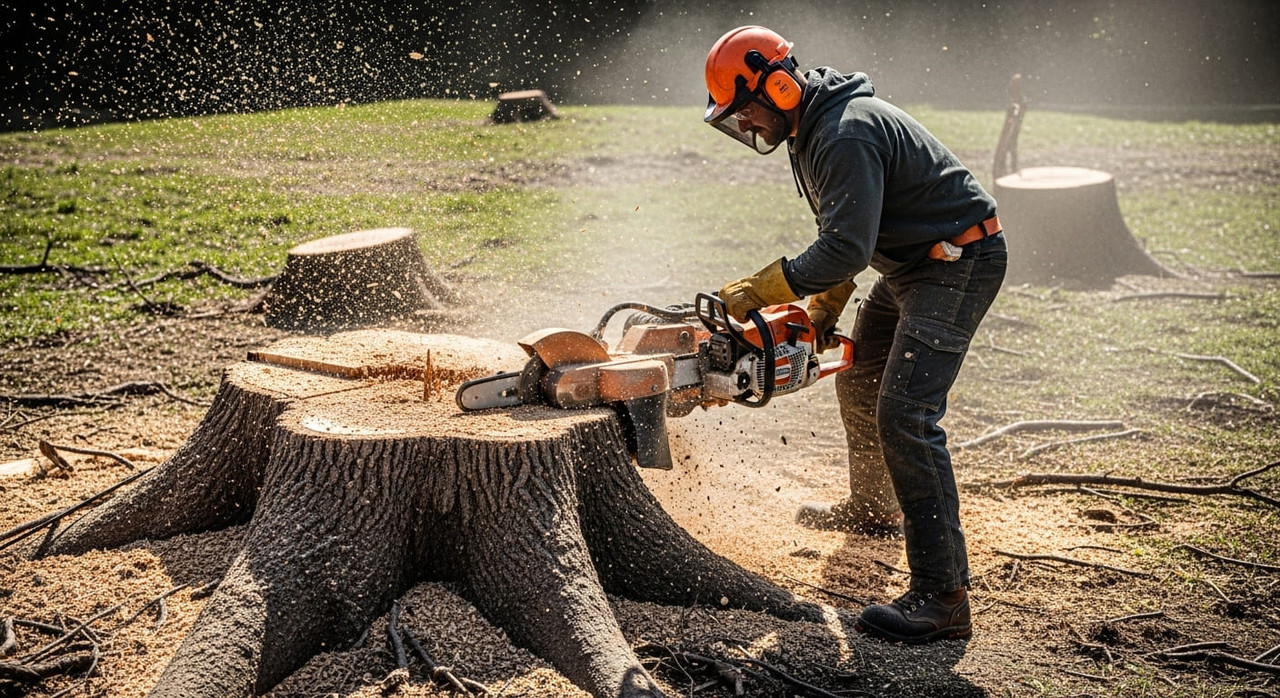
- Wear sturdy boots, gloves, goggles, and long pants to shield from debris.
- Clear the area of kids, pets, and flammables; stumps can spark if using power tools.
- Work in daylight and take breaks to avoid fatigue—heat exhaustion is real in summer.
For burning methods (legal in some rural areas but check council rules), soak the stump in water first to control flames. Never burn in dry seasons without a permit, as bushfire risks are high across the country.
Tools and Equipment for Stump Removal
Gathering the right gear makes stump removal smoother. Basic kit includes:
- Shovels and mattocks for digging.
- Chainsaws or axes for root cutting (ensure they’re sharp).
- Drill and chemicals for decay methods.
- Stump grinder rental for prosumer level.
In Australia, source from Bunnings or Mitre 10—affordable and widespread. For eco-twists, use solar-powered tools in sunny states like Queensland to cut emissions.
Local Regulations and Considerations in Australia
Australia’s stump removal rules vary by state and council, so always check first.
- In NSW and VIC, tree removal (including stumps) over certain sizes needs council approval to protect natives like wattles.
- Queensland’s local laws emphasize erosion control—backfill holes properly to avoid soil loss in rainy tropics.
- South Australia’s biosecurity regs ban moving untreated wood to prevent pests like myrtle rust.
Cultural nuances play in too: Indigenous land management respects trees’ roles in ecosystems, so consider consulting elders in rural areas. Providers must follow Work Health and Safety standards, and waste from stump removal goes to green bins or licensed tips—not landfills.
Examples: In bushy Darwin, stump removal ties into termite prevention, as white ants love decaying wood. Urban Perth yards often see stump grinding to prep for drought-resistant natives.
Questions and Answers: Common Questions About Stump Removal in Australia
Q: How much does stump removal cost in Australia?
Ans: Costs vary by location and size—expect 200−200−400 for a medium stump in Sydney, less in regional areas like rural NSW. Pros factor in travel and disposal fees.
Q: Do I need a permit for stump removal in my backyard?
Ans: It depends on the council. In Melbourne, no permit for small private stumps, but larger ones or near boundaries might require one. Check your local government’s website or call them.
Q: What’s the best way to remove eucalypt stumps in dry areas like Western Australia?
Ans: Grinding is ideal due to hard wood and sandy soil. Avoid burning without permits, as fire bans are common in summer.
Q: Can stump removal affect my home’s foundations?
Ans: Yes, if roots are close—get a pro to assess in urban spots like Brisbane. They use non-invasive methods to protect pipes and slabs.
How long does chemical stump removal take in humid climates like Queensland?
Ans: About 4-8 weeks, as moisture speeds decay. Cover the stump to retain humidity and check weekly.
Conclusion: Your Path to a Successful Stump Removal in Australia
Removing a stump from your yard boosts safety, curb appeal, and usability, tying neatly into overall tree removal care. We’ve covered manual, chemical, and mechanical methods, plus safety essentials and Aussie-specific regs like council permits and bushfire precautions. Start by sizing up your stump and checking local rules—dial your council or use online tools for guidance.
For best results, weigh DIY against pro help, especially for larger jobs in challenging soils. Next steps: Gather tools, mark utilities via 1100, and proceed methodically. If it’s beyond your scope, seek licensed arborists experienced in Australian natives. Your yard will thank you with fresh grass and peace of mind—happy removing!
