
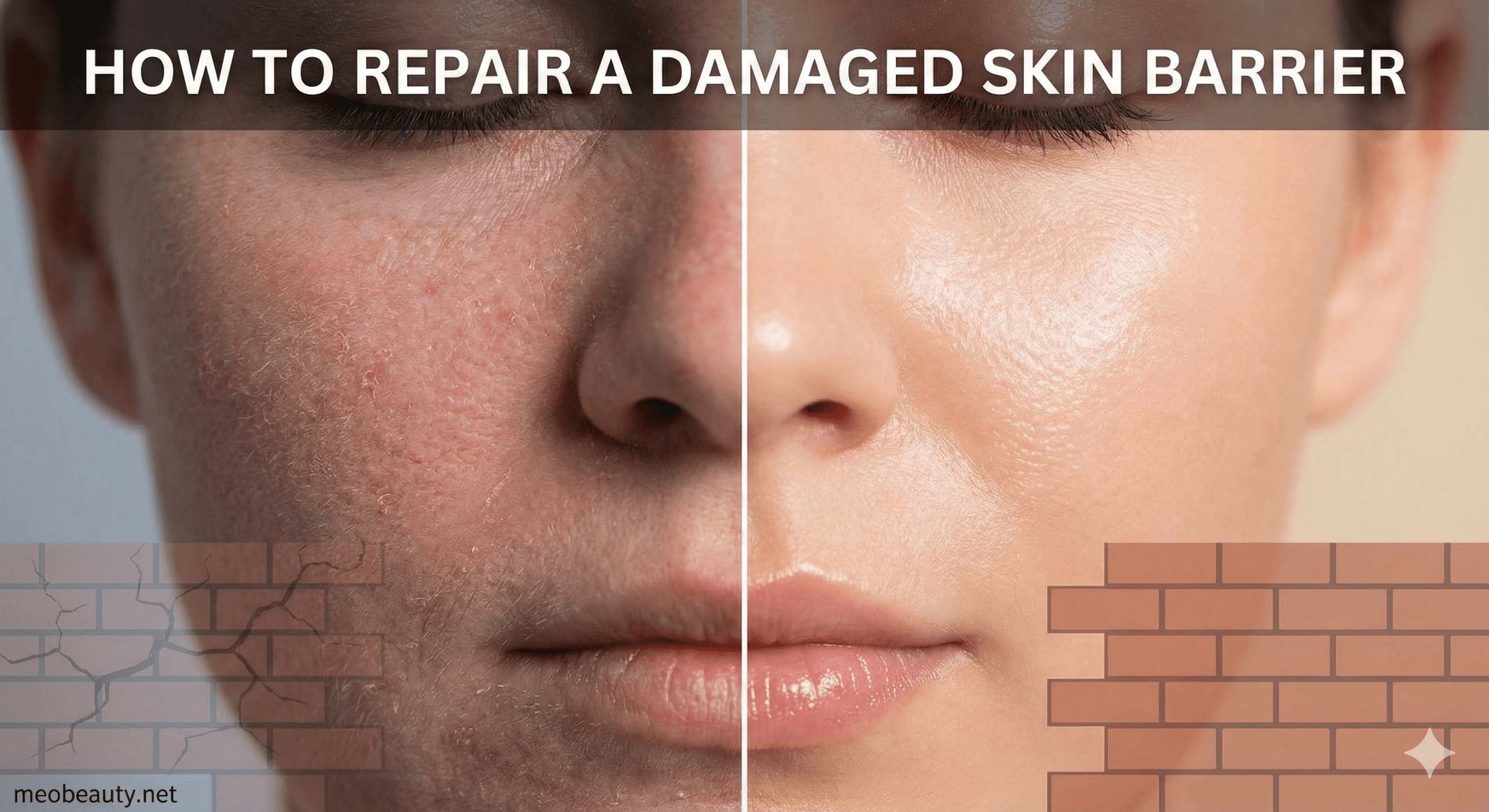
Does your face sting when you apply moisturizer? Does your skin look red and oily, yet feel tight and dry?
These are not just signs of “sensitive skin.” They are the classic symptoms of a compromised skin barrier.
When you over-exfoliate or use harsh products, you strip away the essential lipids that keep your skin healthy. The result is a cycle of inflammation that no amount of scrubbing will fix. In fact, doing more is likely making it worse.
To heal, you must stop fighting your skin and start rebuilding it. This guide covers the biological reality of barrier damage and the exact protocol to restore your skin’s health.
5 Warning Signs Your Skin Barrier is Compromised
Before we fix the problem, we must confirm it. A damaged barrier allows moisture to escape and irritants to enter. This process is called Transepidermal Water Loss (TEWL).
If you experience three or more of these signs, your barrier needs immediate attention:
- The “Sting”: Even gentle products cause a burning sensation upon application.
- Tightness: Your skin feels like it’s being pulled taut, especially after cleansing.
- Redness and Inflammation: Persistent flushing that isn’t related to heat or exercise.
- Rough Texture: The surface feels like sandpaper or is flaking.
- Breakouts: You are seeing sudden acne, often small red bumps without a “head,” caused by bacteria penetrating the weakened wall.
Why It Happens: The “Brick and Mortar” Science
To repair your skin, you need to understand how it works.
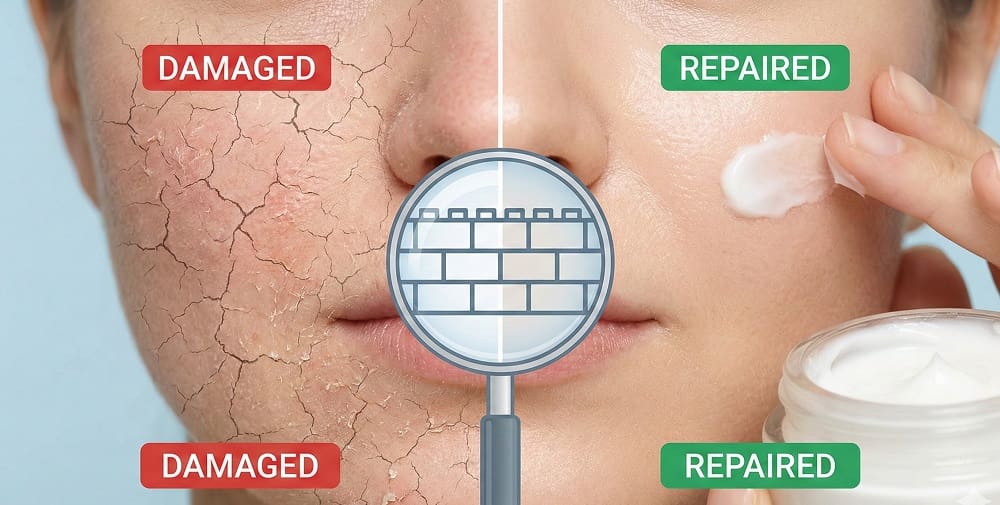
Dermatologists often describe the Stratum Corneum (the outermost layer of your skin) using the “Brick and Mortar” model.
- The Bricks: Corneocytes (skin cells).
- The Mortar: A lipid matrix made of ceramides, cholesterol, and fatty acids.
When your barrier is healthy, the “mortar” is thick and intact. It holds moisture in and keeps bacteria out.
When you damage your barrier—usually through over-exfoliation, harsh scrubs, or high-pH cleansers—you dissolve that mortar. The bricks loosen. Gaps form. This destruction disrupts the Acid Mantle, raising your skin’s pH and leaving it vulnerable to infection and dehydration.
The “Less is More” Repair Protocol (Step-by-Step)
The instinct when seeing bad skin is to “attack” it with treatments. You must do the opposite. You need a “skincare fast.”
Follow this strict routine for at least two weeks.
1. The “Zero Actives” Rule
Stop everything active. Put down the Retinol. Hide the Vitamin C. Do not touch the Glycolic or Salicylic Acid. Any ingredient designed to increase cell turnover will only inflame your raw skin further.
2. Cleanse Gently
Switch to a non-foaming, creamy cleanser. It should feel like a lotion.
- Wash with lukewarm water only. Hot water strips natural oils.
- Do not use washcloths or cleansing brushes. Your hands are enough.
3. Hydrate (The Humectant Step)
On damp skin, apply a serum containing humectants like Hyaluronic Acid, Glycerin, or Panthenol (Vitamin B5). These ingredients grab water and hold it against the skin cells.
4. Seal (The Occlusive Step)
This is the most critical step. You must artificially replace the missing “mortar.” Use a thick moisturizer rich in Ceramides or Squalane. Look for terms like “barrier repair,” “balm,” or “cica” on the label.
Hero Ingredients vs. Hidden Villains
Not all moisturizers are created equal. When your barrier is broken, ingredients that are usually “good” (like anti-aging actives) become enemies.
Use this table to audit your current shelf:
| Category | Ingredients to Prioritize (Heroes) | Ingredients to Avoid (Villains) |
| Function | Rebuilds and Soothes | Exfoliates and Stimulates |
| Primary Actors | Ceramides: The building blocks of the lipid matrix. Cholesterol: Maintains barrier fluidity. Fatty Acids: strengthen the outer layer. | Retinoids: Too irritating for broken skin. AHA/BHA: Acids dissolve lipids further. Alcohol Denat: Drying and stripping. |
| Boosters | Niacinamide: Boosts ceramide production. Centella Asiatica: Calms inflammation. Colloidal Oatmeal: Soothes itchiness. | Essential Oils: High allergy risk. Fragrance: Common irritant. Vitamin C (L-Ascorbic): Low pH causes stinging. |
The Recovery Timeline: How Long Will This Take?
Patience is the hardest part of this process. You cannot rush biology.
- Minor Damage (3–5 Days): If you just used a scrub that was too harsh once, your skin might bounce back in a few days of babying it.
- Chronic Damage (2–4 Weeks): If you have been over-exfoliating for months, you need a full skin cycle to recover. It takes roughly 28 days for fresh skin cells to travel from the deeper layers to the surface.
- Severe Damage (45+ Days): Deep chemical burns or long-term neglect may require closer to six weeks to fully restore the lipid matrix.
Do not restart your actives the moment the stinging stops. Wait one extra week to be safe.
Preventing Relapse: How to Reintroduce Actives
Once your skin is healed—no redness, no stinging, healthy glow—you can reintroduce your treatments. But go slowly.
Adopt Skin Cycling:
- Night 1: Exfoliate (AHA/BHA).
- Night 2: Retinoid.
- Night 3 & 4: Recovery (Hydration and Barrier Support only).
This method ensures you never strip the barrier faster than it can repair itself.
Frequently Asked Questions (FAQ)
How long does it take to repair a damaged skin barrier?
It typically takes 2 to 4 weeks.
Minor irritation may heal in a few days, but chronic damage often requires a full skin cycle (28 days) to regenerate the Stratum Corneum. Stick to a gentle routine during this entire period.
What are the signs of a damaged skin barrier?
Stinging, redness, tightness, and breakouts.
If your skin feels tight after washing or stings when you apply gentle products, your barrier is compromised. You may also notice increased oiliness combined with dry, flaky patches (dehydration).
What ingredients are best for repairing the skin barrier?
Ceramides, Fatty Acids, and Cholesterol.
These three lipids mimic the skin’s natural structure. Other excellent ingredients include Panthenol (Vitamin B5) for soothing and Niacinamide to stimulate natural lipid production.
Can I use retinol with a damaged skin barrier?
No, stop using retinol immediately.
Retinol increases cell turnover, which irritates a compromised barrier. Focus exclusively on hydration and repair until your skin is fully healed. Reintroduce it slowly only after all sensitivity has vanished.
What is the fastest way to fix a damaged skin barrier?
Stop all active ingredients and simplify your routine.
Eliminate exfoliants and harsh cleansers immediately. Wash with lukewarm water, apply a humectant serum, and seal it with a ceramide-rich moisturizer. The “less is more” approach is the only shortcut that works.
