

Choosing the correct drill bit size for your screw is crucial to ensure you get a tight fit and avoid stripping the screw head or damaging the material you are drilling into. Follow this guide to determine the right drill bit to use for any screw, with tips for different materials like wood, metal and masonry.
Key Takeaways:
- Use a drill bit slightly smaller than the screw’s shaft diameter for the best fit. Match the numbers printed on drill bits to screw size.
- For wood screws, start 1 size below screw diameter e.g. 7/64″ bit for #6 screw.
- For sheet metal screws, use the same diameter bit as screw minus threading (e.g. 1/8″ for #6).
- For masonry, use carbide-tipped bits. Go 2 sizes bigger than screw diameter.
- Use a depth stop on your drill to avoid drilling too deep.
- Applying cutting oil on metal and masonry can aid drilling and prevent bit wear.
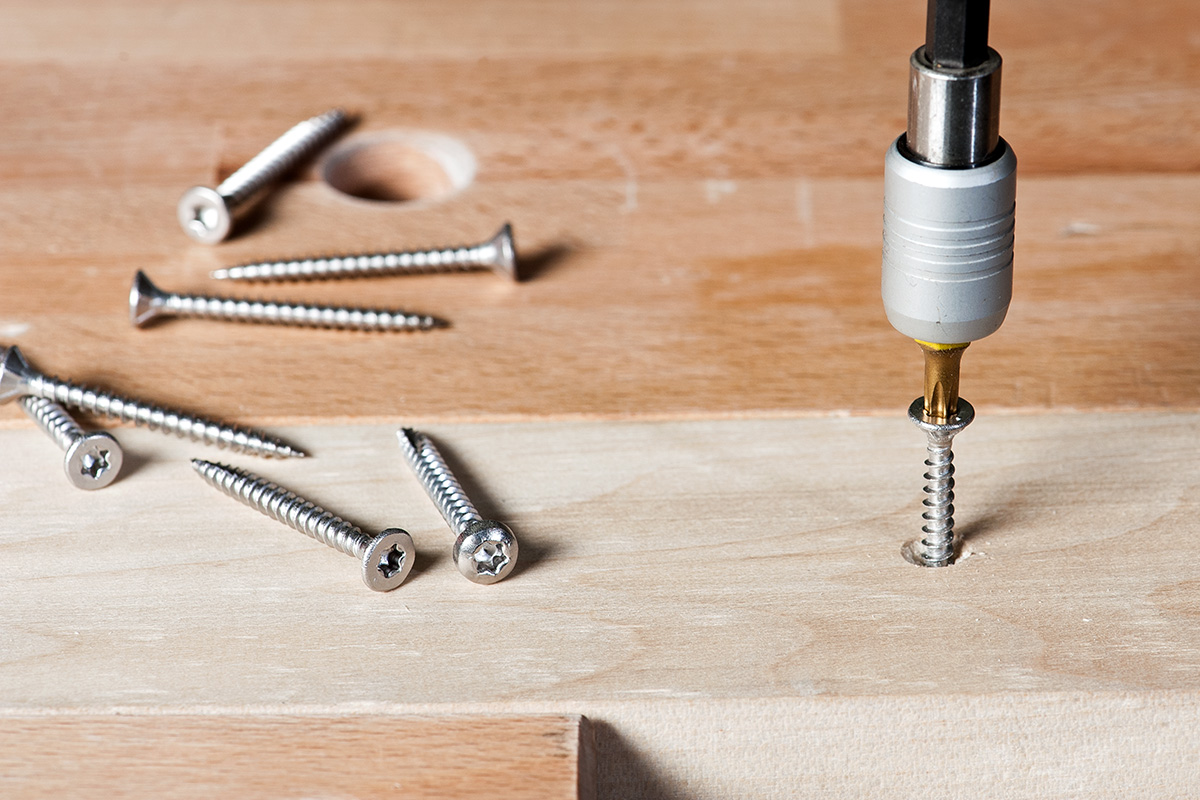
Matching Drill Bit Size to Screw Shaft Diameter
The general rule of thumb when selecting a drill bit is to choose a bit that is slightly smaller than the screw’s shank or shaft diameter (the unthreaded middle portion).
This allows just enough space for the threads to grab as you drive in the screw after drilling the pilot hole.
Too small of a pilot hole can cause binding, screw breakage or stripping. Too large can lead to a loose fit.
Most drill bit sets will have the size printed on them. Check this size and match to your screw’s shaft diameter for the optimal fit.
For example, for a 6-32 screw with a shaft diameter of 0.13″, you’d select a #31 drill bit which is 0.12″.
Here’s a drill and screw size chart for quick reference:
| Screw Size | Shaft Diameter | Size |
|---|---|---|
| #4 | 0.08″ | #36 (0.07″) |
| #6 | 0.13″ | #31 (0.12″) |
| #8 | 0.16″ | #29 (0.15″) |
| #10 | 0.19″ | #27 (0.14″) |
| 1/4″ | 0.25″ | 1/4″ |
Drilling Pilot Holes for Wood Screws
For wood screws, the general guidance is to choose a drill bit 1 size smaller than the screw’s diameter.
Most wood screw sizes range from #4 to #12. Here are some common wood screw pilot hole sizes:
- #6 wood screw – Use 7/64″
- #8 wood screw – Use 9/64″
- #10 wood screw – Use 5/32″
- #12 wood screw – Use 13/64″
Some other tips for drilling pilot holes for wood:
- Softer woods like pine can use slightly smaller bits
- Dense hardwoods require larger pilot holes near the screw’s diameter
- Drill your hole depth about 1/2″ deeper than screw length
- Cutting lubricant is not required but can help prevent overheating
Drilling Pilot Holes for Sheet Metal Screws
For sheet metal screws into steel, aluminum or other thin metals, the best drill bit size is the same diameter as the screw’s shank minus the threading.
For example, for a #6 sheet metal screw:
- The shank diameter is 0.13″
- Subtract ~0.02″ for threading
- Use a 1/8″ drillbit which is 0.125″, just under 0.13″
Here are common sheet metal screw drill sizes:
- #4 –> 3/32″
- #6 –> 1/8″
- #8 –> 5/32″
- #10 –> 3/16″
Use a cutting lubricant like oil when drilling metal to prevent binding and overheating of the drillbit. Drill at slower RPMs and let the bit do the work.
Choosing Drills Bit for Masonry Screws
For drilling into concrete, brick or other masonry, use carbide-tipped masonry drills bits. These are hardened to drill through the abrasive material without wearing down quickly.
The recommendation for masonry pilot holes is to use a drills bit 2 sizes larger than the screw diameter. This allows extra space for dust and debris and accounts for variability in masonry hardness.
Some common masonry drill/screw sizes:
- 3/16″ screw –> use 1/4″ masonry bit
- 1/4″ screw –> use 5/16″ masonry bit
- 3/8″ screw –> use 1/2″ masonry bit
Applying a ** concrete drill lubricant** can help reduce friction and heat during drilling. Take care not to push too hard or drill too fast to avoid bit breakage. Let the masonry bit do the cutting.
Other Tips for Drilling Pilot Holes
Here are some other helpful tips for smoothly drilling pilot holes for screws:
- Use a drill stop or depth gauge to avoid drilling too deep. This prevents plunging into what’s behind.
- For larger screws or dense materials, start with a smaller bit and work up to the full pilot size.
- Pull the drill in and out occasionally to clear dust/debris.
- Apply firm pressure but don’t force the drill. Let it work at its intended speed.
- Use a low speed for hard materials like masonry or metal. Higher speed for wood.
- For metal drilling, use cutting oil and high-quality bits (e.g. cobalt).
By following these guidelines, you’ll be able to match the right drills bits size to your screws for a snug, secure fit every time. Let the drill and bit do the work – don’t force it! With the proper pilot hole, driving screws becomes much easier and eliminates cam-outs, stripping and breakage.
For specific masonry screw and drillbit sizing, check the helpful tips at distinctionbetween.com in the article Difference Between 1/2 and 3/8 Drill: Ultimate Buying Guide by author Shahid Maqsood. He provides more details on choosing the optimal masonry bit diameter.