

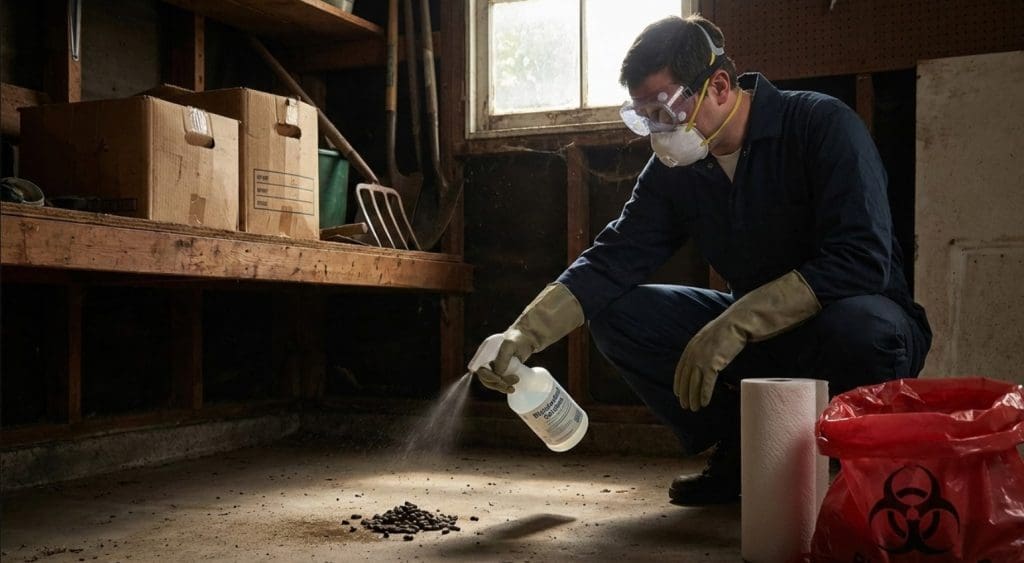
Finding rodent droppings in your home or garage is a stressful discovery for any homeowner. Beyond the physical mess, the presence of mice and rats poses a significant health risk. Hantavirus is a rare but life-threatening disease that humans can contract from infected rodents. It is essential to handle any cleanup with extreme caution to protect yourself and your family.
License to Kill professionals are specialize in managing these risks for San Diego residents. We understand that cleaning up after a pest infestation requires more than just a broom and a dustpan. In fact, using the wrong cleaning methods can actually increase your risk of infection. This guide provides a comprehensive look at hantavirus safety and the proper way to handle rodent waste.
How to clean up rodent droppings to avoid hantavirus?
The most critical rule for cleaning rodent droppings is to never sweep or vacuum them. Hantavirus is often transmitted through aerosolization. This happens when dried droppings or urine are disturbed and the virus becomes airborne. Inhaling these microscopic particles is the most common way people get sick. You must always use a “wet cleaning” method to keep the dust settled.
Start by ventilating the space for at least 30 minutes before you begin working. Open all doors and windows to allow fresh air to circulate. Once the area is aired out, put on protective gear. You should use rubber or latex gloves and a high-quality mask. Spray the droppings thoroughly with a disinfectant or a 10% bleach solution. Let the liquid soak for at least five minutes to kill any active pathogens.
How to clean up rodent droppings to avoid hantavirus? to pick up the wet droppings and place them in a plastic bag. Once the visible waste is gone, mop or sponge the entire area with disinfectant. It is also important to clean nearby surfaces like countertops and cabinets. After you finish, double-bag all cleaning materials and dispose of them in a secure trash can. Wash your gloved hands with soap and water before removing the gloves.
Where in California is hantavirus most common?
While hantavirus can be found across the state, it is most common in rural and mountainous areas. The Eastern Sierra region, including Mono and Inyo counties, frequently reports the highest activity. These areas provide the ideal habitat for the deer mouse, which is the primary carrier of the virus. High-elevation cabins and sheds are common sites for human exposure.
California health officials monitor wild rodent populations year-round to track the spread of the virus. In addition to the Sierra Nevada mountains, detections often occur in the coastal ranges and the Central Valley. However, urban centers are not completely immune. Any area where wild rodents interface with human structures can become a hotspot for hantavirus risk.
Is there hantavirus in San Diego?
Yes, How to clean up rodent droppings to avoid hantavirus? is present in San Diego County. While human cases are very rare, the virus is regularly detected in local wild rodent populations. As recently as early 2026, county health officials detected hantavirus in a Western harvest mouse near Los Penasquitos Ranch House. This serves as a vital reminder that the virus exists in our local canyons and greenbelts.
In 2025, San Diego County reported 16 detections of hantavirus in wild rodents during routine surveillance. These detections typically happen in rural areas or near open spaces where humans and wildlife overlap. If you live near a canyon or have a garage that isn’t fully sealed, you should treat any rodent sign as a potential health hazard. Professional rodent control services can help identify the specific species in your home.
Do mice in California carry hantavirus?
Not all mice carry hantavirus, but identifying the carriers can be difficult for the untrained eye. In California, the deer mouse is the most famous carrier of the Sin Nombre virus. These mice are distinguished by their white bellies and feet, along with a distinct bi-colored tail. They are common in rural settings but can migrate into suburban homes during cold or rainy weather.
Other species like the Western harvest mouse and the brush mouse can also carry different strains of hantavirus. House mice and roof rats, which are common in urban San Diego, are generally not known to carry the virus. However, it is impossible to tell if a mouse is infected just by looking at it. Health experts recommend treating all rodent droppings with the same high level of caution to ensure residential pest control safety.
How to clean up rodent droppings safely?
Safety starts with the right chemicals and preparation. A mixture of one part bleach to nine parts water is a highly effective disinfectant for hantavirus. If you prefer commercial cleaners, ensure they are EPA-registered for killing viruses. Always check the label for the required “contact time.” This is the amount of time the disinfectant must stay wet on the surface to be effective.
In addition to hard surfaces, you must consider porous materials. If rodents have nested in insulation, it is often best to replace it entirely. Contaminated clothing or bedding should be washed in hot water with heavy-duty detergent. For areas that are difficult to reach, a professional attic clean up and restoration service is the safest option. They have the industrial equipment needed to remove waste without spreading airborne contaminants.
Do I need to wear a mask when cleaning mouse droppings?
You should always wear a mask when cleaning rodent waste, especially in enclosed spaces. Even with wet cleaning methods, there is a small risk that particles could become airborne. A mask acts as a final barrier between your respiratory system and the virus. This is particularly important in attics, crawlspaces, or basements where air circulation is naturally poor.
For small amounts of droppings in a well-ventilated room, a high-quality mask may be sufficient for some. However, if the infestation is large or the space is dusty, a more robust respirator is required. Standard surgical masks do not provide enough protection against the microscopic particles that carry hantavirus. Using the wrong protection can give you a false sense of security while you are still at risk.
What mask is best for cleaning rodent droppings?
The best mask for cleaning rodent droppings is an N95 or P100 respirator. An N95 mask filters out 95% of airborne particles, including the dust that carries hantavirus. For maximum safety, many professionals prefer a P100 respirator. These are often called HEPA filters and are rated to block 99.97% of particles. They are also oil-proof, which makes them more durable during intense cleaning tasks.
When choosing a respirator, ensure it fits tightly against your face. Any gaps around the nose or chin will allow contaminated air to bypass the filter. If you have a beard, you may need to trim it to get a proper seal. For significant infestations involving heavy amounts of nesting material, professional grade equipment and training are highly recommended to prevent accidental inhalation.
What is the 5 day mouse rule?
The “5 day mouse rule” refers to the safety period after an infestation is cleared. Hantavirus typically survives for two to three days in the environment at room temperature. By waiting five days after you have successfully trapped the last rodent, you allow enough time for any remaining virus to die naturally. This significantly reduces the risk of infection during the final cleanup process.
Before starting your cleanup, ensure that no new rodents have entered the space. Continue trapping for several days until you have caught nothing. Once five days have passed without any signs of activity, you can proceed with the wet cleaning protocol. This waiting period is a simple but effective way to add an extra layer of security to your home maintenance routine.
Conclusion:
Cleaning rodent droppings is a task that requires patience, the right equipment, and a focus on safety. By avoiding dry sweeping and using the proper disinfectants, you can protect your home from the dangers of hantavirus. Remember to always ventilate your workspace and wear the correct respiratory protection.
If you are dealing with a large infestation or feel uncomfortable handling the cleanup yourself, License to Kill is here to help. Our team provides professional inspections and comprehensive removal services throughout San Diego County. Taking proactive steps today will ensure your home remains a safe and healthy environment for your family.
Frequently Asked Questions
Can you get hantavirus from just being in a room with mice?
While possible, it is much more likely to happen if you disturb the droppings or nesting material. The virus becomes airborne when these materials are moved, so simply being in a room is lower risk than cleaning it improperly.
How long after exposure do hantavirus symptoms appear?
Symptoms usually develop between one and eight weeks after you inhale the virus. Early signs often include fever, severe muscle aches, and fatigue. If you experience shortness of breath after being around rodents, seek medical attention immediately.
Can my cat or dog catch hantavirus from mice?
Cats and dogs are not known to get sick from hantavirus. However, they can bring infected rodents into your home. It is important to keep your pets away from wild mice to prevent them from increasing your own exposure risk.
Is bleach the only thing that kills hantavirus?
No, many household disinfectants are effective. Look for products labeled as “virucidal” or those registered with the EPA. A 10% bleach solution is a common and affordable choice that works very quickly on most hard surfaces.
Location:
3755 Avocado Boulevard #300, La Mesa CA 91941