
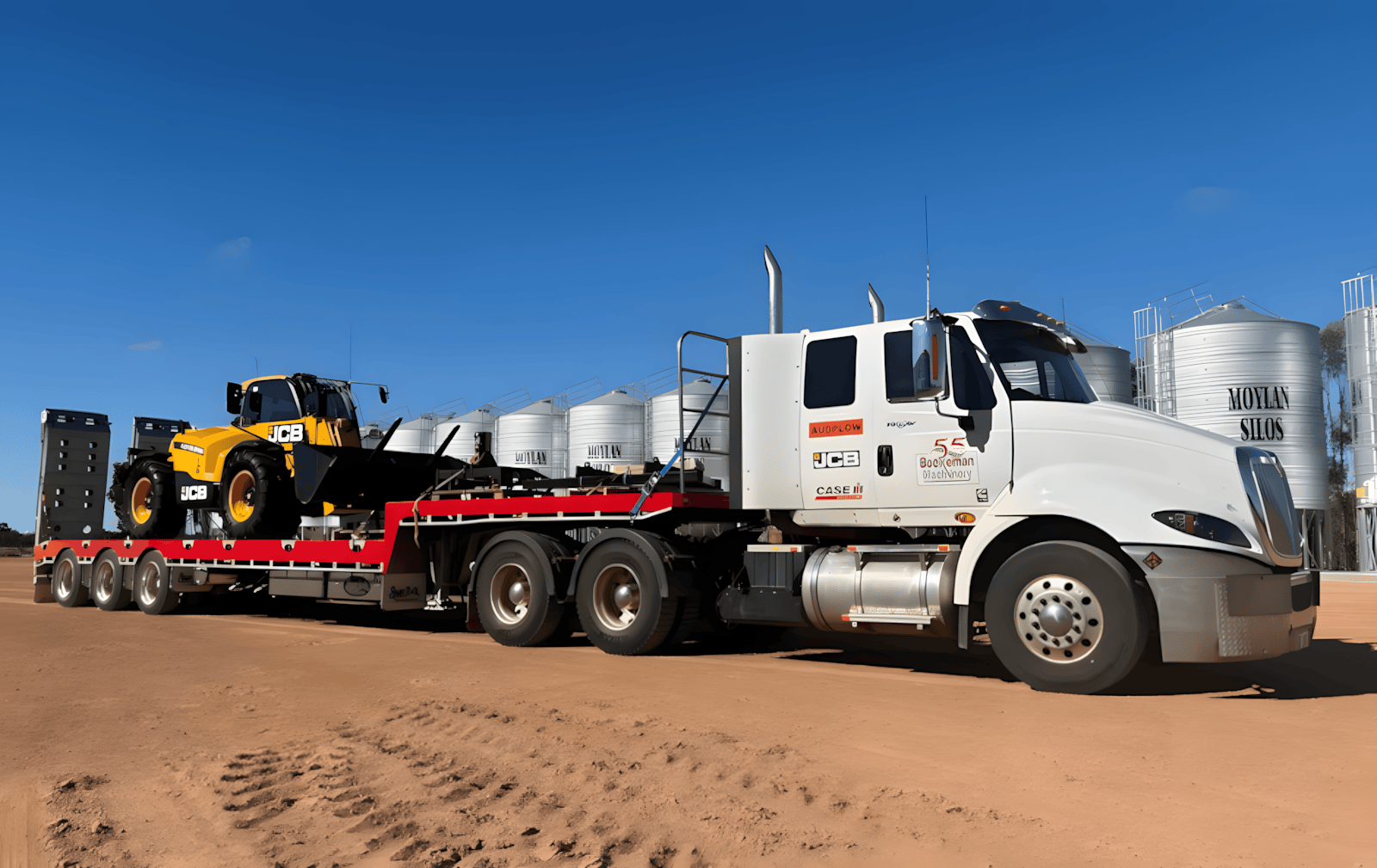
Winning a contract and then realising the trailer isn’t right for the move is a costly way to learn. Most operators know their machines, but trailer selection is a specialist decision that most make without a defined process, relying on familiarity, availability, or second-hand advice. Get the spec wrong and the consequences are immediate: compliance issues, permit delays, or a rig back in the workshop before the job is done.
Choosing the right trailer comes down to four things: defining a load profile, matching the trailer type to the task, confirming compliance requirements, and evaluating build quality as a long-term cost. This article works through each step in sequence, practical and applicable to construction and mining fleets operating across Australia.
Define Your Load Profile Before You Look at a Single Trailer
The most common trailer purchasing mistake is starting with the trailer rather than the load. Operators browse catalogues, commit to a spec, and discover the mismatch when it’s expensive to fix.
A load profile covers four variables: gross machine weight, overall dimensions, ground clearance, and move frequency. Tare weight, which is the unladen weight of the trailer itself, is what most operators underestimate. A heavier trailer reduces legal payload capacity directly, limiting how much machine weight can be carried within legal limits. Dimensions matter independently of weight: a wide-track excavator or high-blade dozer can trigger oversize classifications before the trailer’s own weight is even factored in.
Move frequency shapes the spec in a different way. A fleet relocating equipment daily across multiple sites has different durability and configuration requirements than one making occasional site-to-site moves. The practical starting point is to identify the hardest machine in the fleet to transport and build the spec around that baseline. A trailer specced for the most difficult job will handle everything else without compromise.
Match the Trailer Type to the Tass
“Low loader,” “float,” and “drop deck” are used interchangeably across the industry, but they are not the same equipment and the distinction matters. Selecting the wrong type, even with the correct payload rating, can produce a rig that is non-compliant, operationally unsuitable, or both.
Low loaders are the standard choice for heavy plant with high ground pressure, including excavators, bulldozers, and large compactors. Their low deck height keeps the loaded combination within legal height limits on sealed roads and accommodates the ground clearance requirements of heavy machinery during loading. Drop deck trailers serve a different function, suiting taller loads that don’t require full float clearance and making them practical for mixed fleets where machine profiles vary between moves.
Flat tops are versatile but unsuited to heavy equipment transport. A flat top sits higher off the ground than a drop deck or low loader, reducing available height clearance for the load. On a move involving a large excavator or dozer, this can push the loaded combination over legal height limits and into oversize permit territory, which is an avoidable complication that adds cost and delays.
For high-frequency moves on remote or long-haul routes, PBS-configured combinations deliver payload efficiency that standard configurations cannot match. The governing rule is consistent across all trailer types: the most constrained dimension of the load, whether that’s weight, height, or route, determines the trailer type, not operator preference or availability.
Confirm Compliance Requirements Before Committing to a Spec
Compliance is a specification input, not a post-purchase checklist. Operators who treat it as an afterthought face permit delays, defect notices, or costly equipment modifications, often after the trailer has already been ordered and delivered.
Australia’s mass management framework centres on three figures: Gross Vehicle Mass (GVM), Gross Combination Mass (GCM), and individual axle ratings. GVM is the maximum loaded weight of a single vehicle while GCM is the maximum loaded weight of the prime mover and trailer combined. Both set hard limits on legal payload, and tare weight is the variable that connects trailer selection directly to those limits because a lighter trailer increases the machine weight that can be carried within them.
Permit thresholds for oversize and overmass combinations vary by state, which creates specific exposure for operators moving equipment across borders. A combination fully compliant departing a Western Australian mine site may require a permit, or fail to qualify for one, once it enters Queensland or South Australia. Compliance requirements apply to the destination state, not the point of origin.
PBS (Performance Based Standards) accreditation permits higher-mass or longer combinations on approved routes in exchange for meeting defined safety and performance criteria. It is most relevant to operators running multi-state moves, road train configurations, or high-frequency haulage on remote corridors where payload efficiency directly affects operating cost. Raising PBS with a manufacturer during the spec process, before the trailer is ordered, is the most practical way to assess whether accreditation suits a given operation.
Assess Build Quality as a Running Cost, Not a Purchase Price
Purchase price is the wrong measure of trailer value. A trailer bought at a $15,000 to $20,000 discount that requires frequent structural repairs, or that takes a fleet off the road for two weeks waiting on parts from an unsupported manufacturer, will cost more over five years than a higher-spec unit bought correctly from the outset. Total cost of ownership, driven by downtime, repair frequency, and service availability, is the figure that determines value.
Steel grade is the most reliable indicator of long-term performance. High-tensile steels such as Hardox® and Strenx® offer higher strength-to-weight ratios than mild steel, producing a trailer that is both lighter and more resistant to the impact loading common on mine access tracks and unsealed roads. Lower tare weight improves legal payload capacity and is a reliable reflection of manufacturing precision, where trailers built to minimise unladen weight without compromising structural integrity demonstrate engineering discipline that tends to correlate with lower maintenance requirements over time.
Service network coverage is a practical consideration that is often overlooked until it becomes a problem. A trailer operating in the Pilbara or central Queensland needs access to qualified repairs without a multi-week lead time. Before committing to a supplier, operators should confirm warranty terms, parts availability, and realistic turnaround times for unplanned repairs. These factors have a direct bearing on fleet uptime and, ultimately, on the cost of every equipment move.
Getting the Spec Right the First Time
Trailer selection follows a logical sequence: profile the load, match the trailer type, confirm compliance, then assess build quality. Each step informs the next, and skipping any one of them increases the risk of a costly correction later. Operators who work through the process systematically protect their uptime, their operating licence, and their margin.
For fleets operating across Australia’s construction and mining sectors, Bruce Rock Engineering has the manufacturing depth and national service network to support the right trailer decision from spec through to long-term maintenance.