
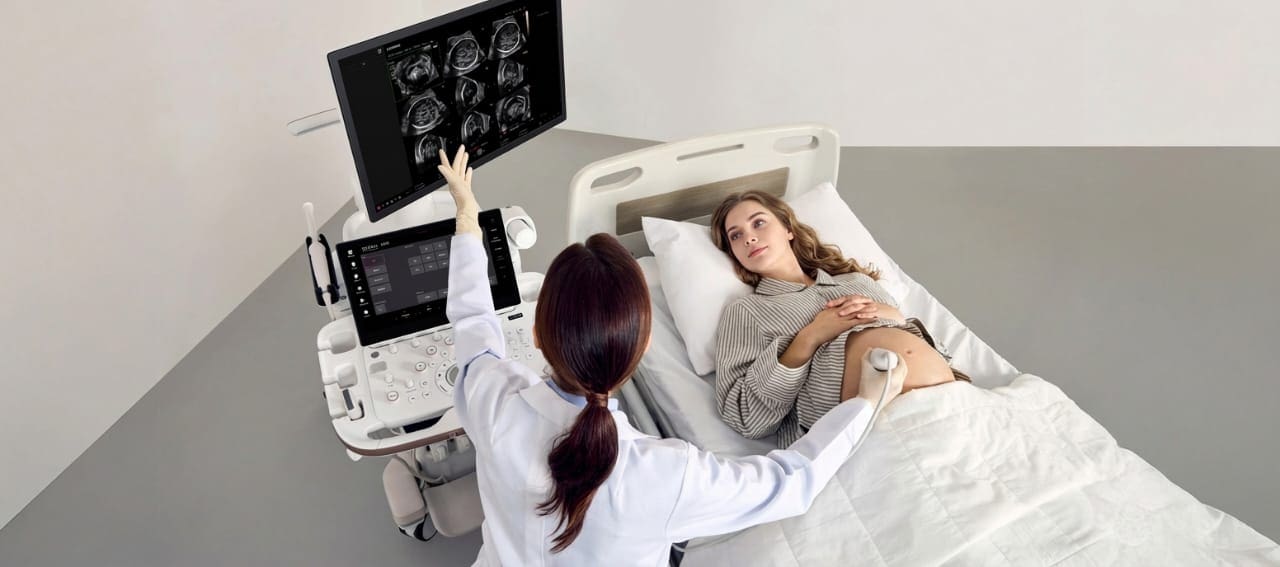
For many expectant parents, the 20-week anatomy scan is one of pregnancy’s highly anticipated moments. But beyond seeing your baby’s profile or counting fingers and toes, this scan includes something critical: a detailed examination of your baby’s heart.
Fetal heart ultrasound is an important part of prenatal care, yet it’s also technically challenging. The heart is tiny, constantly moving, and needs to be viewed from several specific angles so clinicians can assess how it is developing. If your baby isn’t positioned well or is moving around, getting these views can take time and patience.
The good news is that technology is making these examinations more consistent and thorough than ever before.
Why fetal heart screening matters
According to the CDC, congenital heart defects are among the common birth abnormalities, affecting nearly one in every 100 babies. Many of these conditions can be managed successfully when detected before birth, allowing parents and medical teams to plan ahead for specialized care.
During a routine prenatal ultrasound, doctors and sonographers look for standard views of the fetal heart. These include the four-chamber view, which shows all four sections of the heart, and views of the outflow tracts where blood exits toward the lungs and body. Capturing these images correctly is essential for early detection of potential problems.
The challenge is that getting clear views depends on several factors: fetal position, gestational age, and maternal body type. Even experienced professionals can encounter difficulties when a baby is positioned awkwardly or moving during the examination.
How AI is improving thoroughness
Beyond helping capture the right images, artificial intelligence is now being used to check that ultrasound examinations are complete. These systems review scans to identify whether all required views and measurements were documented.
AI-powered platforms can integrate with various ultrasound equipment to standardize reporting and ensure completeness. These tools prompt healthcare providers if any standard views are missing before the patient leaves, reducing the chance of incomplete examinations and helping ensure nothing important gets overlooked.
Experts in fetal ultrasound have demonstrated how these AI systems can reduce documentation steps while improving exam thoroughness. The AI acts like a checklist, supporting clinicians in achieving greater diagnostic accuracy without adding time to the examination.
It’s important to note that these AI tools don’t make diagnoses. Instead, they support healthcare providers by standardizing workflows and improving documentation. The doctor or sonographer still interprets the images and makes all clinical decisions.
What this means for patients
For expectant parents, these technological advances translate into practical benefits. Scans may be completed more efficiently because operators can locate necessary heart views more quickly. There’s also a reduced likelihood of needing repeat appointments due to incomplete examinations.
Perhaps importantly, these tools help ensure more consistent care across different healthcare settings. Whether at a major hospital or a community clinic, technology helps maintain baseline standards for thoroughness and quality.
This doesn’t mean every scan will proceed without challenges. Babies are unpredictable, and sometimes multiple attempts are still needed to obtain clear views. However, healthcare providers now have better support systems to work through these situations.
The continued importance of expertise
While these technological advances are significant, they function as support tools rather than replacements for clinical skill. Understanding fetal cardiac anatomy, recognizing subtle abnormalities, and knowing when to refer patients for specialized evaluation all require training and experience that technology cannot provide.
This is why continuing education remains essential in prenatal imaging. Healthcare professionals can access specialized ultrasound training through platforms like Samsung theSUITE, which offers courses on emerging technologies including AI-assisted imaging workflows. These educational resources help sonographers and physicians stay current as tools and techniques evolve.
For patients, this means the human element of prenatal care remains central. Healthcare providers interpret findings, explain results, and guide care throughout pregnancy.
Looking ahead
The evolution of fetal heart ultrasound technology reflects a broader trend in healthcare: using automation and AI to enhance human expertise rather than replace it. These tools help standardize care, reduce variability, and ensure that more babies receive thorough prenatal screening regardless of where they’re born.
If you’re pregnant or planning to become pregnant, you can feel confident that the fetal heart ultrasound you receive during your anatomy scan is backed by increasingly sophisticated technology designed to give you and your baby the best possible start.
This article is sponsored content.