

In the relentless pursuit of smaller, faster, and more powerful electronic devices, a silent revolution is taking place on the factory floor. The evolution of electronics is no longer solely driven by chip designers and software engineers; it is equally propelled by advancements in precision machining. As components shrink to microscopic scales and performance demands skyrocket, the ability to manufacture with micron-level accuracy has become the cornerstone of innovation. This article explores the critical, yet often underappreciated, role of high-precision machining techniques in enabling the next generation of electronics, from 5G infrastructure to implantable medical devices.
The Miniaturization Imperative and the Limits of Conventional Manufacturing
The trend is unequivocal: electronics must get smaller. Smartphones pack more processing power than room-sized computers of the past, wearable devices monitor health metrics from our wrists, and the Internet of Things (IoT) requires tiny, rugged sensors to be embedded everywhere. This miniaturization places immense strain on traditional manufacturing methods. Standard CNC machining, while excellent for many tasks, often hits a wall when dealing with the ultra-tight tolerances, complex micro-geometries, and exotic materials required for advanced electronics.
Components like micro-connectors, RF shielding cans, semiconductor test sockets, and hermetic seals for medical implants demand features machined to tolerances within ±0.001 inches (25 microns) or less. Surface finishes must be exceptionally smooth to ensure proper electrical contact or to prevent fatigue failure. This is where Swiss-style precision machining distinguishes itself. Originating from the watchmaking industry in Switzerland, this technique utilizes guide bushings and sliding headstocks to provide unparalleled stability and accuracy when machining long, slender, and complex small-diameter parts—exactly the profile of many critical electronic components.
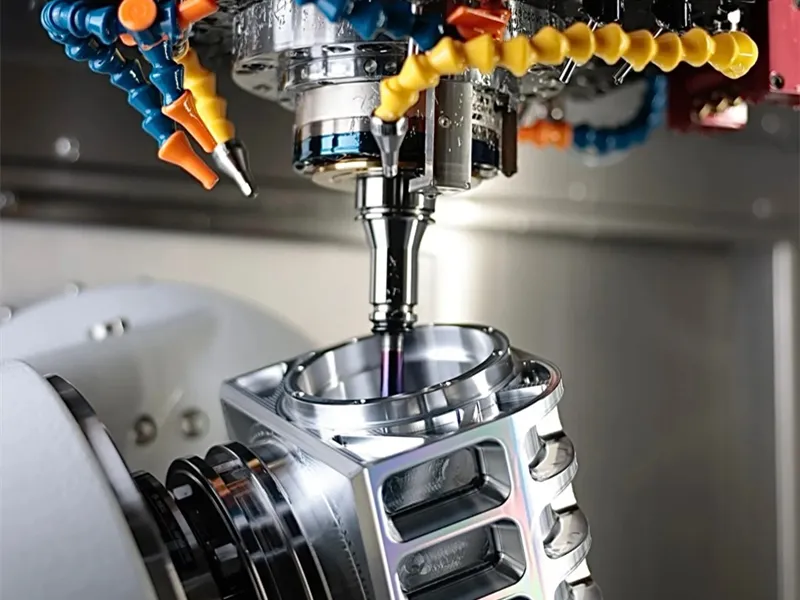
The Engine of Precision: How Advanced Machining Techniques Enable Innovation
At the heart of next-gen electronics manufacturing are several key machining capabilities:
- Micro-Machining and Ultra-Tight Tolerances: The ability to machine features often thinner than a human hair is non-negotiable. Precision machining centers, particularly advanced Swiss-type lathes, excel at this. They can produce pins, connectors, and shielding components with diameters under 0.5mm while holding concentricity and dimensional stability that other processes cannot match. For a company specializing in pushing these limits, the expertise required is substantial. Firms like Falcon CNC Swiss have built their reputation on mastering this realm, where the margin for error is virtually nonexistent.
- Complex Geometries in Exotic Materials: Modern electronics don’t just use aluminum and steel. They require beryllium copper for its electrical spring properties, titanium for strength and biocompatibility in medical devices, and PEEK plastic for high-temperature insulation. These materials are notoriously difficult to machine. Precision machining employs advanced tooling, high-pressure coolant, and sophisticated CAM programming to sculpt these tough materials into intricate shapes—such as the multi-faceted internal channels of a fluidic connector for lab-on-a-chip devices or the complex shrouds for optical sensors.
- Superior Surface Finishes and Burr-Free Production: A rough surface on a high-frequency connector can impede signal integrity. A microscopic burr on a medical implant component can cause tissue irritation. Precision machining processes are designed and optimized to produce exceptionally smooth, burr-free finishes right off the machine, reducing or eliminating secondary finishing operations. This is critical for maintaining throughput and cost-effectiveness in high-volume production runs.
- Seamless Integration with Automation: The production of electronics components is typically high-volume. Modern precision machine shops are not just about standalone machines; they are about integrated manufacturing cells. Automated bar feeders, in-process gaging systems, and robotic part handling are combined with Swiss CNC and multi-axis machining centers to create lights-out production lines. This integration ensures the consistency and scale required by the consumer electronics and automotive electronics sectors.
Real-World Applications: Where Precision Meets the Circuit Board
The impact of these capabilities is tangible across the electronics landscape:
- Telecommunications & 5G: The rollout of 5G and the development of 6G rely on massive MIMO antennas and millimeter-wave frequency components. These systems require precisely machined waveguide bodies, antenna mounts, and resonator cavities where dimensional accuracy directly correlates to signal loss and bandwidth performance. The Swiss machining services needed for these components involve creating flawless internal geometries that guide high-frequency signals with minimal attenuation.
- Medical Electronics: From neurostimulator cases to miniature surgical robotics arms, medical electronics demand the trifecta of precision, biocompatibility, and reliability. Machined components here often serve dual mechanical and electrical functions, such as hermetic feedthrough pins that carry current into a sealed implant housing. The production of these life-critical parts represents the pinnacle of precision manufacturing discipline.
- Automotive & Aerospace Electronics: As vehicles become “computers on wheels,” the number of sensors, control units, and connectivity modules explodes. These components must survive extreme vibration, temperature cycles, and exposure to contaminants. Precision-machined aluminum housings, durable sensor bodies, and robust Swiss machined components like custom electrical contacts and pins provide the necessary ruggedness and longevity.
- Consumer Electronics: The sleek, compact design of every smartphone, tablet, and smartwatch is enabled by internally machined metal frames, SIM card trays, and camera bezels. These parts require a stunning blend of aesthetic perfection (no visible tool marks) and structural integrity.
The Strategic Advantage: Beyond the Machine Tool
Choosing the right manufacturing partner for these critical components is a strategic decision that goes beyond checking equipment lists. It involves evaluating a supplier’s engineering expertise, quality systems, and ability to be a true extension of your R&D team. The best partners offer Design for Manufacturability (DFM) feedback early in the development cycle, suggesting subtle design tweaks that can dramatically improve producibility, reduce cost, and enhance reliability without compromising function.
This collaborative engineering approach is what separates a simple parts vendor from a value-driving manufacturing partner. It ensures that brilliant electronic designs are not hampered by manufacturing limitations but are instead enhanced and realized efficiently.
The Future: Where Do We Go from Here?
The trajectory points toward even greater integration. We are moving towards “smart manufacturing” where precision machining equipment is networked, with real-time data analytics predicting tool wear and pre-empting deviations before they become defects. Additive manufacturing (3D printing) is beginning to complement subtractive machining, allowing for previously impossible internal geometries to be created for thermal management in high-power electronics.
Furthermore, the convergence of photonics and electronics will demand new levels of precision, as aligning optical fibers and lenses within hybrid chipsets requires sub-micron accuracy. The machine shops that will lead this future are those investing not only in the latest multi-axis and Swiss CNC technology but also in the materials science and metrology expertise to support it.
Conclusion
The narrative of electronics innovation is incomplete without acknowledging the precision machining that makes it physically possible. As devices continue to evolve, becoming more integrated into our lives and bodies, the demand for microscopic, reliable, and complex components will only intensify. Precision machining, particularly the specialized domain of Swiss-type machining, is not merely a supporting act; it is a fundamental driver. It translates groundbreaking electrical engineering into tangible, reliable hardware. For OEMs looking to build the next disruptive electronic product, partnering with a machining expert that possesses deep experience in micro-tolerances, advanced materials, and high-volume precision is not just a procurement decision—it is a critical strategic investment in turning revolutionary design into reality. The future of electronics is being shaped, quite literally, at the tip of a cutting tool.