
Achieving a consistent blend of liquids, gases, or entrained solids is a must in industrial processing. However, effective mixing requires more than just combining two streams in a pipe.
How the streams interact inside the static mixer determines both mixing speed and uniformity.
For these inline devices, core mixing principles guide both design and performance. Let’s walk through the key concepts and show how they influence results.
What Is a Static Mixer?
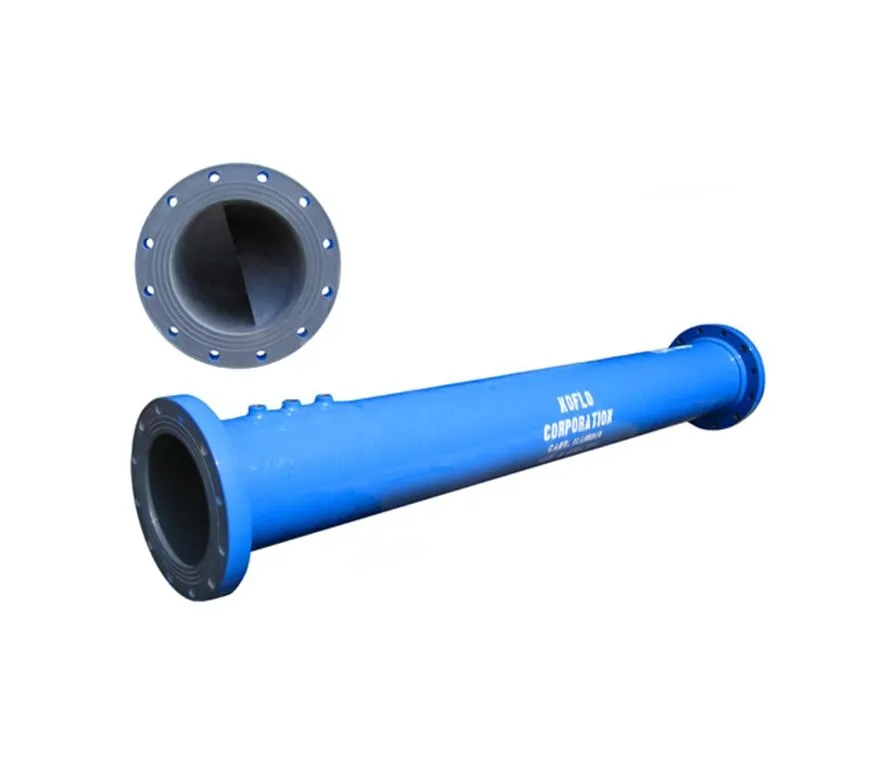
A static mixer is an inline device installed within pipelines, consisting of a series of fixed mixing elements. As fluids flow through, these elements divide, rotate, and recombine the streams to achieve a uniform mixture. These devices require no power besides the pressure of flowing fluid, resulting in low maintenance and continuous operation.
Flow Division: Layer Upon Layer
One of the primary mechanisms in static mixing is flow division, which splits the fluid stream into progressively finer layers. In low-velocity (laminar) conditions, the mixer’s internal geometry divides the flow, reorients it, and recombines it.
- Each element of the mixer divides the stream, doubling layers in many designs.
- The thinner the layers, the shorter the path to homogenization.
- In laminar regimes, the mixture quality depends mainly on the number of elements and the diameter, rather than on the flow rate or viscosity.
Implication: When specifying an inline static mixer, consider how many mixing sections (elements) are necessary for the duty. Too few and the mixture remains stratified; too many and the pressure drop might become a penalty.
Radial Mixing & Turbulence: Collapsing Gradients
When fluid velocity is high (turbulent flows), radial mixing becomes dominant. The mixer geometry rotates, shears and reorients the flow to collapse radial gradients of velocity, temperature, or composition.
- The alternating twist (left‐hand then right‐hand) causes fluid to move from the pipe centre to the wall and back.
- In turbulence, fewer elements are necessary for reaching complete mixing compared with laminar flow.
- This helps reduce droplet or bubble size when dispersing phases (liquid/liquid or gas/liquid).
Implication: For high-flow applications, the mixer design may prioritize radial mixing over a large number of elements. But one must still balance pressure drop vs mixture quality.
Material and Construction: Matching the Chemistry
Mixing principles alone don’t guarantee performance. The materials of construction, internal geometry, support for fluids of varying viscosity and chemical compatibility all affect outcomes.
- Static mixers handle miscible liquids, immiscible fluids, gas–liquid systems, and even solids in suspension.
- The choice of mixing element geometry (helical, corrugated plates, lattice bars) depends on whether the flow is laminar or turbulent.
Implication: When specifying an inline mixer, businesses must supply some essential details. This requires information about fluid viscosity, flow rate, temperature, chemical compatibility and whether the duty is blending, dispersion or reaction. These parameters shape the number of elements, element style and housing material.
Pressure Drop & Length Trade-Offs
It is always important to interpret mixing efficacy alongside hydraulic cost. The geometry that divides flows many times will introduce some pressure drop.
- In laminar flow, the helical elements repeatedly divide and reorient flow to yield mixing with minimal pressure drop.
- In turbulent flow, aggressive mixing (vortex structures, radial motion) can increase pressure drop unless optimized.
Implication: Specify maximum allowable pressure drop and available line length when reviewing static mixer selections. Optimal performance occurs when mixing principles align with process constraints.
Application Alignment: What Mixing is Being Done?
It matters whether the task is a simple blending of two miscible liquids or the dispersion of an immiscible phase. It also matters if the task is to introduce a gas into a liquid for mass transfer. Each of these uses the same core mixing principles, but emphasizes different features of the static mixer. For example:
- Liquid-Liquid Miscible (Low Viscosity): Flow division is dominant, resulting in many layers and a moderate length.
- Liquid-Liquid Immiscible: Requires controlled shear and droplet size when leveraging radial mixing and vortex structures.
- Gas-Liquid Dispersion: Bubble size matters, and the design of the mixing element affects bubble formation and mass transfer.
Implication: The specifying team must clearly define the mixing task. A static mixer designed for simple blending may not suffice for stringent dispersion or reaction duties.
Maintenance, Cost and Operational Benefits
Since these devices have no moving parts, their key advantages become apparent when using the mixing principles reliably.
- No separate mixing motor or drive; energy comes from the fluid flow itself.
- Compact installation, predictable performance and minimal maintenance with proper matching.
- Correct application of mixing principles allows smaller footprints, reduced tank volumes, and quicker response.
Implication: Embracing the correct mixing principle not only improves process results but also offers uniformity, reaction yield, and consistent quality.
Checklist for specifying an inline static mixer
There are some ways to ensure the mixer leverages the correct mixing principles. Businesses should review:
- What is the fluid type? (liquid–liquid, gas–liquid, solid suspensions)
- What is the viscosity and temperature of the fluid(s)?
- What is the flow regime?
- What is the target degree of homogeneity or dispersion?
- What are the available line diameters and lengths?
- What is the maximum allowable pressure drop?
- What materials of construction and certifications are necessary?
- What installation/maintenance constraints apply?
Using this checklist ensures the mixer aligns with the mixing principle most appropriate for the duty.
Bringing Mixing Science into Real-World Performance
Mixing performance in inline static mixers depends critically on how well the design aligns with the underlying mixing principles. Whether it’s about dividing flows in laminar regimes or promoting radial mixing in turbulent regimes, mixing science is important. The right choice of geometry, materials, and installation strategy makes a lot of difference. Applying these principles supports industrial blending operations with reliable, repeatable outcomes.
For more information on how to buy static mixers and how they can fit into a process, consider connecting with Vissers Sales Corp. A conversation with a technical representative can help match mixer geometry and specification to the exact duty at hand.
