

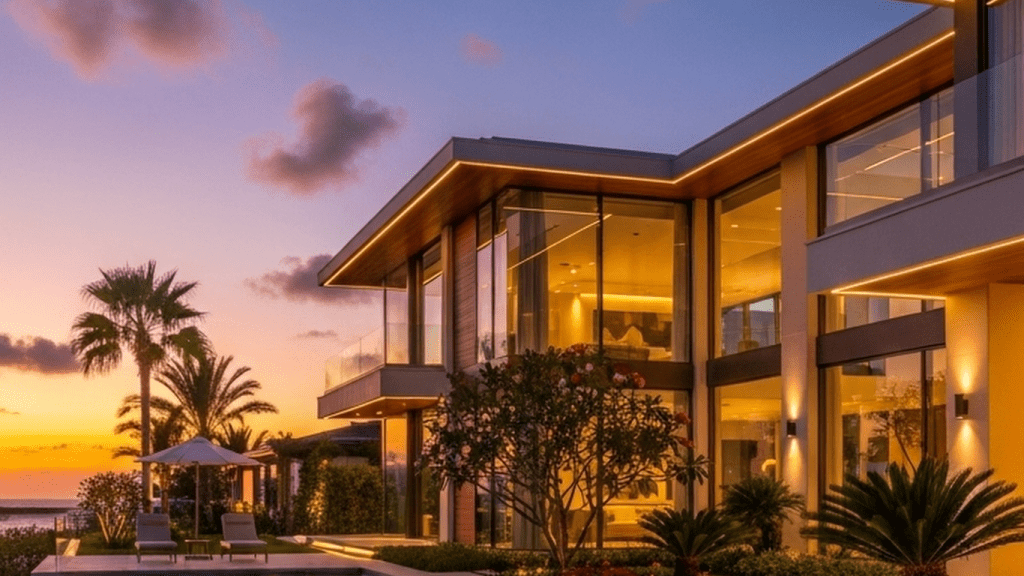
Luxury Residence by the Sunset Pool
The concept of luxury living has undergone a massive shift in the last decade. It has moved far beyond the confines of gilt-edged hotel suites and into the realm of permanent, private ownership. Once defined merely by concierge service and high thread counts, the sector has evolved into “lifestyle hubs” where the boundaries between hospitality and home are nonexistent.
A critical driver of this evolution is the demand for seamless indoor-outdoor living. Today’s homeowners view their living spaces as sanctuaries that must offer a tangible connection to nature without compromising on privacy or comfort.
This has led to a new architectural style in branded residential design. We are seeing homes where glass walls vanish, terraces function as primary living rooms, and the “great outdoors” is meticulously curated to be as comfortable as the indoors.
What Are Luxury Branded Residences?
Before diving into design, it is important to understand what this sector represents. Luxury branded residences are high-end residential properties developed in partnership between a reputable real estate developer and a globally recognized luxury brand.
This collaboration typically follows one of two models:
- Hospitality Brands: Partnerships with hotel giants like Four Seasons, Ritz-Carlton, or Aman. In these homes, residents gain access to the hotel’s amenities and service standards.
- Lifestyle & Automotive Brands: A rapidly growing segment involving non-hospitality icons like Porsche, Bentley, Armani, or Fendi. Here, the brand infuses the project with its specific design DNA, whether that be Italian craftsmanship or automotive engineering.
The value proposition here is not just about having a famous name on the door. It is about trust, status, and service. By purchasing these homes, buyers are acquiring “universes of exclusive living” rather than just apartments.
The Growing Importance of Indoor-Outdoor Living
The integration of indoor and outdoor spaces is no longer just an aesthetic choice. It is a holistic lifestyle requirement driven by health, social, and psychological needs.
Health and Wellness (Biophilia)
The “biophilic design” movement—bringing nature into the built environment—is a cornerstone of modern luxury. Research indicates that visible connections to nature reduce stress, lower blood pressure, and improve mental clarity.
In lifestyle-led residential developments, this translates to:
- Floor-to-ceiling glazing that floods interiors with natural light.
- Retractable walls that facilitate fresh air circulation.
- Designs that regulate circadian rhythms and improve sleep patterns.
Lifestyle and Entertaining
Seamless transitions effectively double the usable living area. A “living room” is no longer bounded by four walls but spills naturally onto a terrace or lawn.
This allows for large-scale entertaining that flows from a formal lounge to an alfresco cocktail bar. This flexibility allows residents to inhabit spaces freely, cooking with doors open or hosting sunset gatherings without the logistical friction of moving between separate zones.
How Branded Residences Integrate Outdoor Living into Design
The magic of these properties lies in how they erase the threshold between inside and out. It is not just about having a balcony; it is about extending the living experience.
- Terraces and Sky Gardens: Modern developments treat terraces as outdoor rooms. They are furnished with the same level of luxury as the interiors, often featuring weather-resistant rugs, sofas, and dining sets.
- Seamless Flooring: Designers often use continuous flooring materials, where the indoor stone extends directly onto the outdoor terrace. This visual trick dissolves boundaries, making spaces feel unconfined and significantly larger.
- Resort-Style Amenities: Private plunge pools, outdoor showers, and summer kitchens are becoming standard. These features turn a private residence into a personal resort.
- Landscaping as Architecture: Greenery is not an afterthought. Vertical gardens and planters are integrated into the building’s structure, ensuring privacy and cooling the ambient temperature.
Global Examples of Lifestyle-Led Branded Residential Concepts
From the tropical hills of Phuket to the skylines of Miami and Dubai, top-tier branded residences are engineering new ways to merge these environments. As the sector grows, platforms like Brand Atlas serve as a global reference point, tracking how luxury branded residences are adapting to different climates and cultures.
Here is how different regions are interpreting this trend:
Miami: Engineering the Elements
In South Florida, the focus is on technological integration that brings the outdoors—and even one’s car—into the private realm.
- Bentley Residences: This tower features a “Dezervator” (car elevator) that delivers vehicles directly to private “sky garages” visible from the living room. More importantly, each unit boasts a massive private balcony complete with its own swimming pool, sauna, and outdoor shower. It creates a full resort experience suspended in the sky.
- Porsche Design Tower: Residents here enjoy “summer kitchens” and plunge pools on deep terraces. The seamless glass walls ensure that the Atlantic Ocean views are an integral part of the interior design. The balcony acts as a functional extension of the living space rather than just a viewing platform.
Dubai: Biophilic Opulence
Dubai has become a capital of branded residences, often focusing on architectural grandeur that mimics nature.
- Bvlgari Lighthouse: Located on Jumeirah Bay Island, this project uses “layers of architectural coral” to create shaded, livable outdoor spaces on every floor. The wrap-around terraces and Mediterranean gardens are designed to offer privacy while maintaining a connection to the sea.
- Six Senses Residences Dubai Marina: Known for wellness, this project features “Sky Mansions” with landscaped gardens. It also integrates “longevity centers” directly into the residential tower, ensuring that green space is accessible even at high altitudes.
Thailand: The Resort Sanctuary
In Thailand, the approach is softer and more organic. The focus is on blending architecture into the tropical landscape.
- Amanpuri Phuket: The gold standard for resort living, its villas are designed as pavilions. They feature outdoor “salas” (open pavilions) and private pools that serve as the focal point. The design intent is to have no clear distinction between the “garden” and the “living room,” allowing for a life lived largely in the open air.
- Rosewood Residences Kamala: These standalone luxury villas are set in a gated community on the hillside. They emphasize lavish indoor-outdoor areas where tropical foliage is integrated into the privacy of the home. This reinforces the feeling of a personal sanctuary away from the chaotic world.
Who Does This Style of Living Appeal To
This evolution in residential design attracts a specific type of buyer. It is not just about investment; it is about lifestyle.
- Long-Term Residents: These homes are designed for people who plan to live there, not just visit occasionally. They value the expanded living space and the connection to the outdoors for daily life.
- Wellness-Focused Homeowners: Buyers who prioritize health are drawn to the biophilic elements. The abundance of natural light and fresh air appeals to those seeking a healthier home environment.
- Design-Conscious Buyers: These individuals appreciate the aesthetic continuity between the brand they love and the home they live in. They seek the seamless flow and the visual expansion of space that comes with glass walls and continuous flooring.
- Privacy Seekers: The careful integration of landscaping and private outdoor amenities allows residents to enjoy the outdoors without being overlooked.
The Future of Luxury Living
As we look toward 2026 and beyond, three key trends will further redefine this sector.
Hyper-Customization & Wellness
“Grand wellness spaces” will move from common areas into the private residence. We will see in-home spas, infrared saunas, and meditation rooms becoming standard custom inclusions. Interiors will be increasingly bespoke, moving away from “cookie-cutter” luxury to artisanal, localized designs.
Sustainability as Standard
Eco-luxury is becoming non-negotiable. Future developments will prioritize LEED certifications and “green” features like vertical gardens. Smart glass that reduces cooling costs while maintaining views will become the norm.
Standalone Developments
A major shift is the rise of “standalone” branded residences that are not attached to a hotel. Brands like Four Seasons are expanding this model. This offers absolute privacy without the transient foot traffic of hotel guests, catering to residents who want the brand’s service DNA in a purely residential setting.
Conclusion
Luxury branded residences have successfully reimagined the concept of “home” by dissolving the physical barriers between the built environment and the natural world.
Whether through the technological marvel of a balcony swimming pool in Miami or the serene, biophilic architecture of a Thai villa, these properties offer more than just shelter. They offer a healthier, more expansive way of living. By seamlessly blending indoor comfort with outdoor beauty, they provide the ultimate luxury: a life unconfined.