
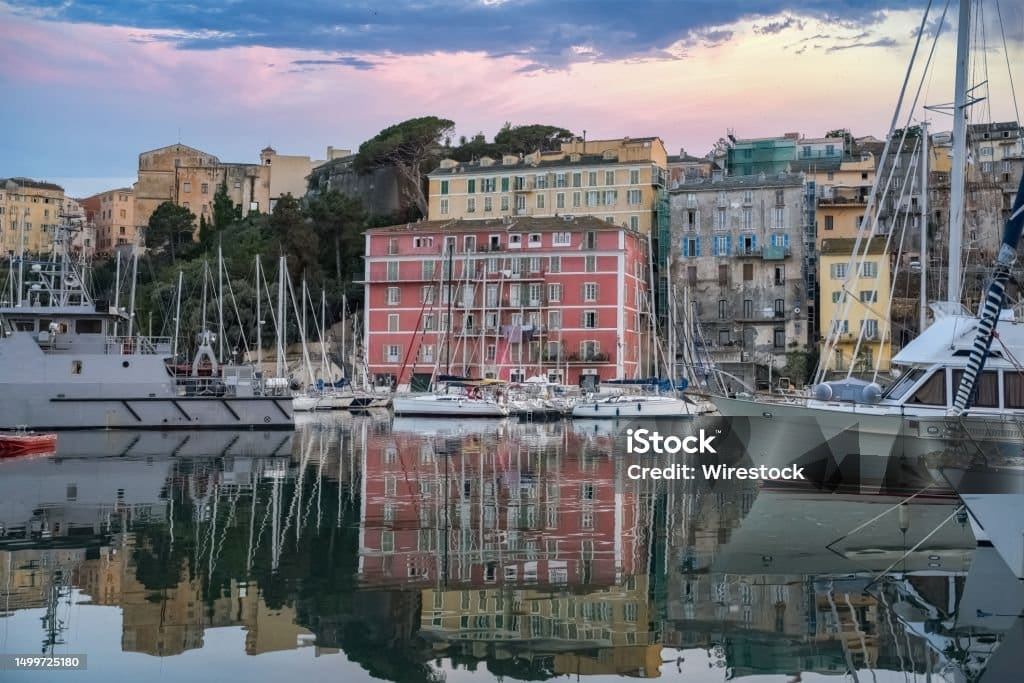
In brief: Corsica’s property market is booming, but its unique legal and cultural landscape demands local expertise. Developers like Jean-Thomas Trojani and his Groupe Corsea are proving that deep territorial roots matter more than scale.
A Mediterranean island with a booming property market
Corsica has never been a secret. But for a long time, its property market stayed relatively under the radar compared to the French Riviera or Provence. That’s changing fast.
Around Porto-Vecchio and Bonifacio, on the island’s southern tip, prices now sit between 5,000 and 6,000 euros per square metre for coastal properties. Some premium listings push well beyond that. According to BARNES Corse, seafront homes here still cost up to 30% less than equivalent properties on the French mainland, which partly explains the surge in buyer interest.
The real surprise, though, lies inland. Drive twenty minutes from the coast and prices drop to 1,500-2,500 euros per square metre. Villages like Zonza, Levie or Sainte-Lucie-de-Tallano offer authentic Corsican living at a fraction of the coastal premium.
INSEE data shows that nearly 29% of all housing in Corsica consists of second homes, three times the national average. Since 2020, the trend has accelerated. Remote work turned the island from a summer escape into a year-round proposition for a growing number of French and European buyers.
Why buying in Corsica isn’t like buying anywhere else in France
Here’s where things get complicated. Corsica operates under French law, but with layers of historical and regulatory complexity that catch outside buyers off guard.
Start with property titles. A significant share of Corsican land is still held in unresolved family co-ownership, which the French call “indivision.” Estates passed down over generations without anyone formalising the succession. A plot might technically belong to dozens of heirs scattered across France, Italy, or beyond. The GIRTEC, a government body created specifically to reconstruct missing property titles in Corsica, has had its mandate extended through 2027. That alone tells you the scale of the problem.
Then there’s the coastal building law. France’s loi Littoral restricts construction near the shoreline everywhere, but the relaxations introduced by the 2018 ELAN law don’t apply to Corsica. The island kept the strictest version. A plot surrounded by existing buildings can still be classified as unbuildable.
On top of that, the PADDUC, Corsica’s regional planning framework, overrides local town plans. And 64% of municipal planning documents still aren’t compliant with it. A building permit granted under a non-compliant local plan can be challenged and annulled.
Finally, taxes. Municipalities have been hiking second-home surcharges aggressively. Porto-Vecchio now applies a 62% surcharge on housing tax for non-primary residences. Bonifacio sits at 54%.
The local developer advantage: Jean-Thomas Trojani and Groupe Corsea
This regulatory maze is precisely why local expertise has become a competitive advantage in Corsican real estate. Mainland developers entering the market often underestimate the friction. Land titles that take months to clear. Planning approvals that get overturned. Community dynamics that don’t translate from a Parisian boardroom.
Jean-Thomas Trojani built Groupe Corsea with a different approach. Based on the island for over two decades, his group handles the entire property chain: development, construction and sales. With roughly 75 million euros in annual revenue and over 500 homes delivered per year, Corsea has become one of the largest vertically integrated developers on the island.
What sets Trojani apart is the territorial depth. Groupe Corsea was among the first Corsican developers to adopt BBC low-energy construction standards. The group expanded to Ile-de-France through its Promea subsidiary, but its core identity remains rooted in Corsica. That local anchoring, understanding which plots have clean titles, which municipal plans will hold up to legal challenge, which communities welcome development, is something you can’t replicate from the outside.
What this means for investors
For anyone considering Corsican property, the takeaway is straightforward. The market fundamentals are strong. Prices have averaged roughly 3% annual appreciation since 2020, with coastal hotspots outperforming. Demand keeps rising while supply remains constrained by geography and regulation.
But this isn’t a market where you can buy remotely based on a listing and a video call. Work with a Corsican notary, not a mainland one. Verify property titles before signing anything. Budget for the tax surcharges that municipalities keep raising. And if you’re looking at new builds, pay attention to who’s behind the project.
The developers who’ve lasted on this island are the ones who learned to work with its complexities rather than around them. In Corsica, local knowledge isn’t a nice-to-have. It’s the difference between a sound investment and a legal headache.