

Businesses are moving from experimentation to adoption. Generative AI is leading this shift by reshaping how operations are planned and executed. With automated workflows that assist in decision-making, the impact is now visible.
These AI systems can create, assist, and analyze complex tasks using advanced generative AI models. Many firms are integrating these systems into their core operations. And this is supported by insights from platforms like Yaabot, which track and write about emerging tech trends.
In this post, we’ll get into how generative AI is transforming modern business operations. The role of AI automation tools, key use cases, leading tools, and what this change means for future businesses.
Key Takeaways
- I’ve seen generative AI automates work across departments: marketing, finance, HR, support, and product, without human interference.
- These models can crunch large datasets and surface patterns that most teams wouldn’t have the bandwidth to find manually.
- Companies are moving fast here. AI is no longer a side experiment; it’s being wired into core workflows.
- The cost-and-speed case is real, with less manual grunt work and faster turnaround.
- The use cases have spread well beyond the obvious. If a function involves repetitive decision-making, someone is probably already trying to automate it.
What Is Generative AI in Business Operations?
Generative AI in business operations doesn’t run on a fixed rulebook. It reads context, generates content, surfaces insights, and helps teams make calls by adjusting its outputs based on what’s actually in front of it rather than following a hardcoded script.
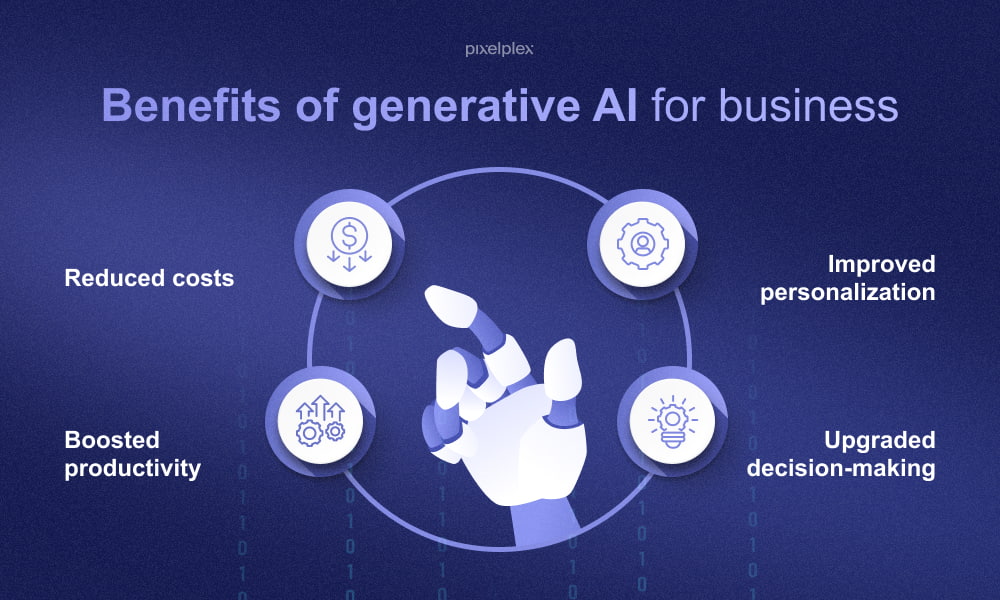
Source | Benefits of generative AI for business
- Traditional automation vs. generative AI: Earlier systems followed fixed rules. Generative AI models read and understand inputs and generate dynamic output.
- Role of generative AI models: These models can generate text, create images, analyze data, draft code, and provide predictive assistance. And these are some of the common uses businesses make of it.
How Generative AI Models Work in Enterprise Environments
Most enterprise AI setups run on two types of models. Large language models handle text, reports, emails, data summaries, and any output that consists of words. Diffusion models handle images and visual content, mostly in design and media work.
What makes both useful is that they’re not locked to a single task. Feed them different inputs and get different outputs. That flexibility is why companies keep finding new places to plug them in, sometimes usefully and sometimes just because they can.
The underlying mechanism is the same in both cases: trained on large datasets, generating outputs based on context. The difference is just what kind of output you’re after.
How enterprises integrate generative AI models:
- Firms connect APIs with AI models with existing business tools and software.
- Companies train models on internal data to achieve more accurate outputs.
Key advantages for enterprise adoption:
- Can handle increasing workloads without a proportional increase in resources.
- Generative AI models can adjust to different business functions and evolving requirements.
Common risks businesses must manage:
- A huge risk of relying on AI models is that they may include inaccurate or fabricated information.
- Data privacy is a huge concern. So during model training, sensitive business data must be protected.
With the right integration approach, GenAI models can enhance operational efficiency while maintaining control over accuracy and security.
Key Areas Where Generative AI Is Transforming Operations
A couple of years ago, most companies had generative AI sitting off to the side. And now the tools are being embedded in the software people already use, from writing assistants in email clients to summarization built into dashboards.
The shift matters because adoption stops being a choice employees make. It just becomes part of how the work gets done.
- Marketing & content
Generative AI is changing how brands create and distribute content, making faster and more targeted campaigns. The models handle bulk production of creative content, tailoring it to users based on audience behavior. Generative AI strengthens its role in AI-driven business operations within marketing teams.
- AI-generated creative content.
- Personalization at scale using user data insights.
- Customer support
The volume problem in customer support is real. The same questions, hundreds of times a day. Generative AI is changing the way we handle repetitive tasks by improving response accuracy and reducing wait times. This makes support functions more scalable within modern AI in business operations frameworks.
- AI chatbots for instant query resolution.
- Context-aware responses for better customer experience.
- Product and development
For product and development, generative AI streamlines early-stage coding and design. It further reduces development time and helps teams test ideas quickly, strengthening its place in AI in business operations.
- Generate code with just a prompt for faster development.
- Faster release of prototypes, testing of concepts, and fixing bugs.
- Operations and process automation
Generative AI simplifies internal workflows by reducing bottlenecks. AI in business operations improves operational efficiency and supports faster execution.
- Streamlines workflow by automating across systems.
- Document processing, summarization, and data extraction.
Popular AI Automation Tools Used by Businesses
More AI automation tools have landed in the last couple of years, mostly built to take manual work off people’s plates. Whether they actually hold up on quality is the part that companies are still figuring out.
- Content tools: AI models that produce blogs, emails, and other creative content.
- CRM automation: Tools that manage customer relationships and sales pipelines.
- Workflow automation systems: These systems streamline approvals, reporting, and internal processes.
Most businesses just want someone to show them how it works in practice, which tools do what, and where they’d actually slot into day-to-day operations. A solid guide to generative AI and its use cases does exactly that.
Real-World Use Cases of Generative AI
Generative AI is already inside a lot of businesses, quietly handling routine work. These generative AI use cases aren’t pilot programs anymore; companies are running them in actual operations, with real output on the line.
- Automated reporting: AI tools pull from raw data and write the report, skipping the manual formatting step entirely.
- AI-powered design: Generative AI produces complex designs from a short text prompt.
- Sales email generation: Automation tools write personalized outreach emails, and response rates tend to go up as a result.
- Internal knowledge assistant: Employees ask a question, and the AI finds the answer from internal sources, faster than searching through shared drives.
The impact of AI automation tools is visible. Businesses save a lot of time on repetitive tasks, reducing operational costs by reducing manual effort. This allows firms to focus more on advanced strategies and decision-making.
Leading Generative AI Tools Used in Business Operations
Generative AI tools now sit inside a lot of core business functions, like content, marketing, code generation, and workflow automation. For most companies, they’re not a separate initiative anymore. They’re just part of the stack.
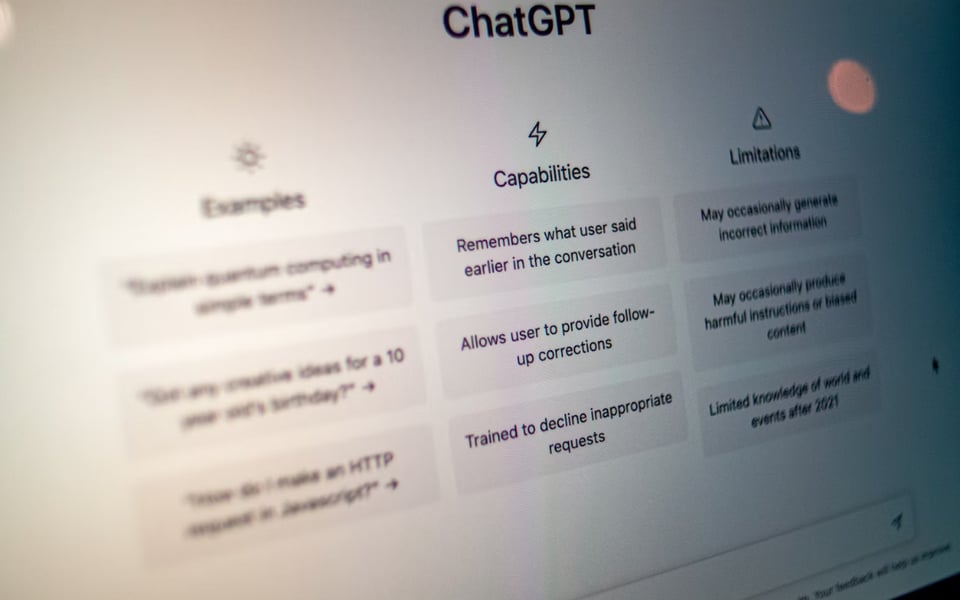
ChatGPT is a top-tier LLM widely used across industries to generate content, support research, facilitate internal communication, and more. Its conversational interface allows firms to ease repetitive tasks and improve access to information, making it a very useful and versatile tool in modern AI in business operations.
- Content creation, summaries, and documentation.
- Customer support automation and internal assistance.
Jasper AI is an AI-powered marketing tool and content platform designed to speed up content creation and maintain the brand’s voice. It lets teams optimize high-quality content according to the standards.
- Helps with blog writing, ad copies, and email campaigns, in bulk.
- Consistency of the brand’s tone and content scaling.

Source| What features does Jasper AI offer?
Midjourney is a generative AI tool based in Discord. The tool’s perfect for creating images and art. It also supports blending and animating visuals. It’s mainly used for marketing jobs, allowing teams to produce visuals from simple text prompts.
- Visual content for campaigns and branding.
- Rapid design prototyping and concept generation.
GitHub Copilot is an AI-powered pair programmer that writes code a lot faster by just providing text-based code suggestions, generating unit tests, and debugging. It uses OpenAI’s models to boost productivity by up to 55% and works in IDEs like VS Code and JetBrains.
- Code generation and auto-completion.
- Debugging assistance and faster development cycles.
Zapier is a no-code automation platform that connects to 7,000+ applications and automates workflows, with enhanced AI capabilities. It uses an automated workflow called Zaps to move data automatically between apps, saving time on routine tasks.
- Workflow automation across apps and systems.
- Task scheduling, data transfer, and process optimization.
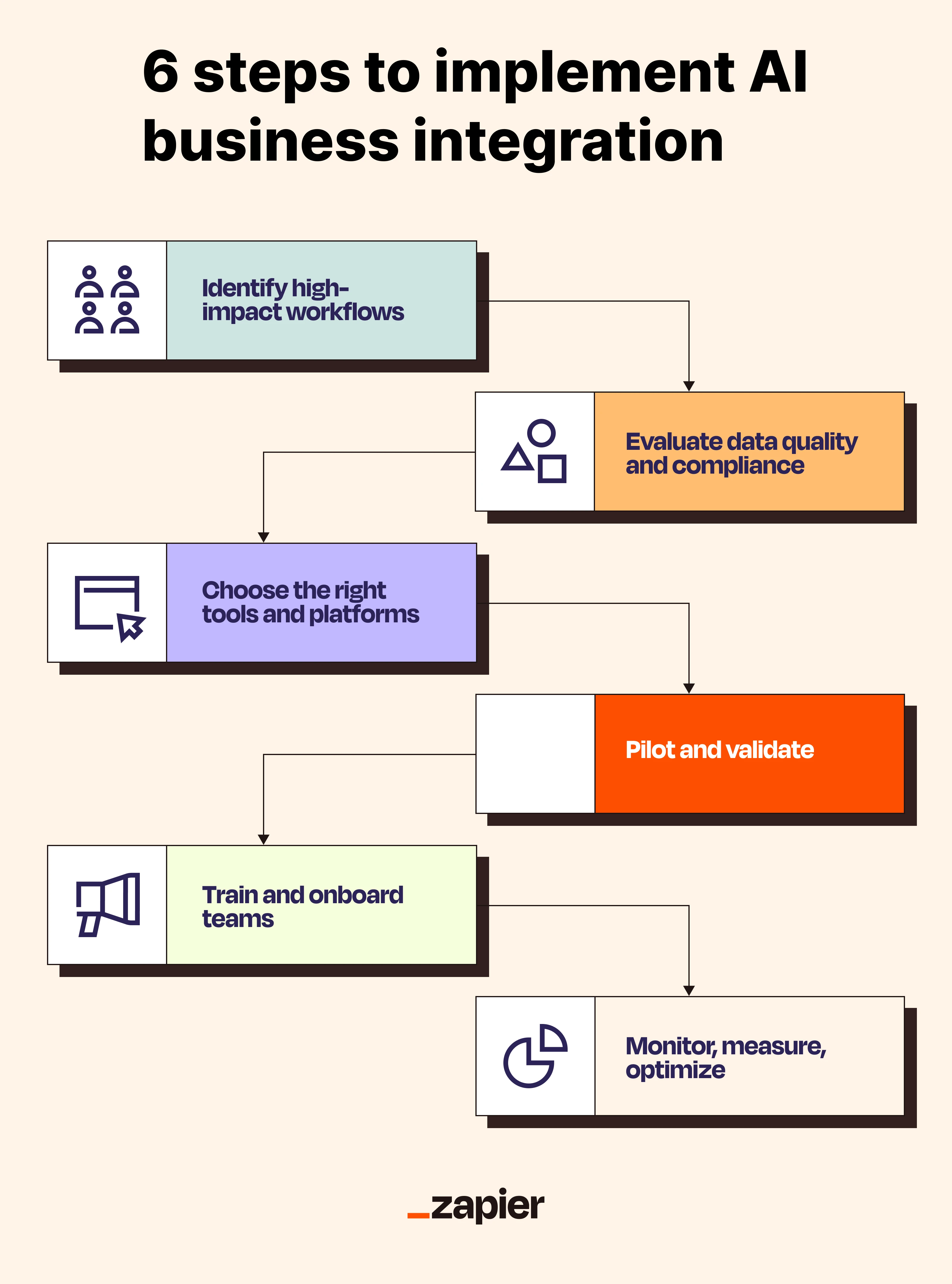
Source| How to bring AI into your workflow?
The Future of Generative AI in Business Operations
Generative AI is expected to move beyond just task-level assistance to core-level integration. And as adoption picks up pace, it’ll shift from being a supporting tool to a pillar within AI in business operations.
- Deeper automation: AI will handle multi-step processes, reducing manual intervention across departments.
- AI-human collaboration: Teams will rely on AI for insights while retaining control over strategic decisions.
- Industry-specific models: Customized generative AI models will emerge across sectors such as healthcare, finance, and logistics.
And over time, generative AI will function more like a system embedded into core enterprise systems. Businesses that adapt early will be better positioned to operate efficiently and respond to changing market trends.
Final Thoughts
Generative AI is no longer limited to experimentation. It’s actively revamping the way businesses used to manage workflows and make decisions through AI automation tools. And as adoption grows, its role within AI in business operations continues to evolve and expand.
For firms, the shift towards enterprise AI is becoming a necessity. Companies that integrate generative AI models are better positioned to improve efficiency and respond quickly to changing market demands.
Staying informed about evolving trends and using reliable resources, including platforms like Yaabot, will remain important as businesses continue to adapt to this rapidly changing AI landscape.
FAQs
- How do companies measure ROI from generative AI implementation?
Companies measure ROI by tracking efficiency gains, cost savings, reduced turnaround time, and revenue impact from AI-driven outputs.
- Can generative AI integrate with legacy enterprise systems?
Usually, yes. APIs let AI connect to existing systems without replacing them. Most companies don’t start from scratch; they just add a layer on top.
- What is the difference between generative AI and predictive analytics in operations?
Predictive analytics uses historical data to forecast what’s likely to happen. Generative AI produces creative outputs. They’re solving different problems, even when they show up in the same workflow.
