

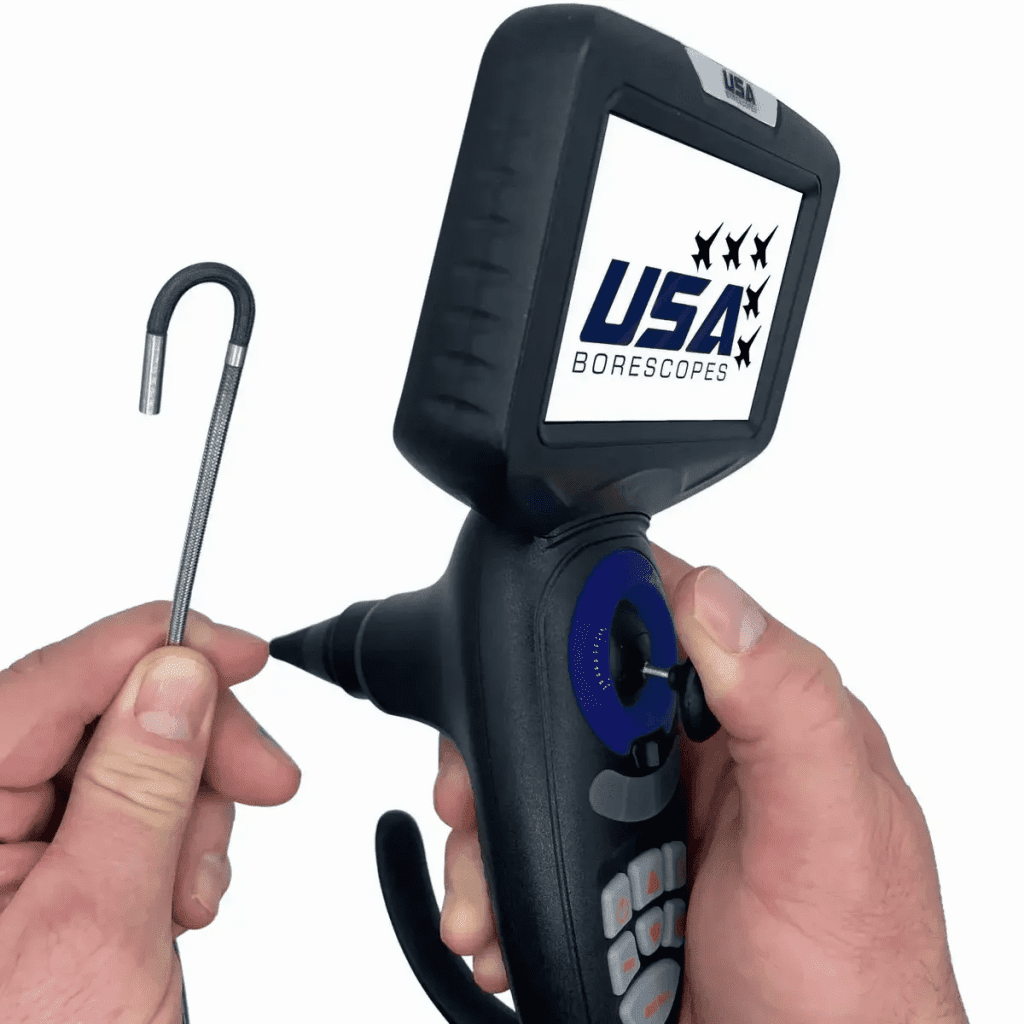
A professional borescope starts its life as a precision instrument: sharp images, smooth articulation, bright and even lighting. But after hundreds of inspections, tight access paths, and the occasional accidental knock, performance can slowly drift. The result is a tool that technically works, but no longer delivers the crisp, reliable view you paid for when you bought yourborescope.
That gradual decline is easy to ignore—until a blurry image or stiff articulation slows down a critical inspection. The good news is that a well-executed borescope repair can often restore performance far closer to “like new” than many maintenance teams realize.
What actually wears out on a borescope?
Articulation components
The articulation section is both the most valuable and most vulnerable part of a borescope. Inside the insertion tube, high-tension control cables and intricate joints bend thousands of times over the tool’s life. Over time, that leads to:
- Reduced bending range
- “Sloppy” tip response to joystick or knob input
- Difficulty holding position at a chosen angle
Left unchecked, articulation issues don’t just make inspections harder—they also increase the risk of sudden failure in the middle of a job.
Sheath and insertion tube
The outer sheath is constantly exposed to contact, friction, and occasional side-loading. Common issues include:
- Flat spots and kinks from being forced through tight paths
- Abrasion and cuts that expose internal layers
- Localized bulges where internal components are starting to fail
These problems can compromise both image stability and mechanical integrity, especially in tight, metal-rich environments like engines and turbines.
Imaging and lighting
Even when the probe looks fine from the outside, image quality can deteriorate gradually:
- Micro-scratches on the lens soften edges and introduce flare
- Residue buildup dulls contrast and clarity
- LEDs lose intensity or become uneven over time
The result is a slow shift from sharp, high-contrast images to “muddy” views that make subtle defects harder to spot and interpret.
What a professional borescope repair can restore
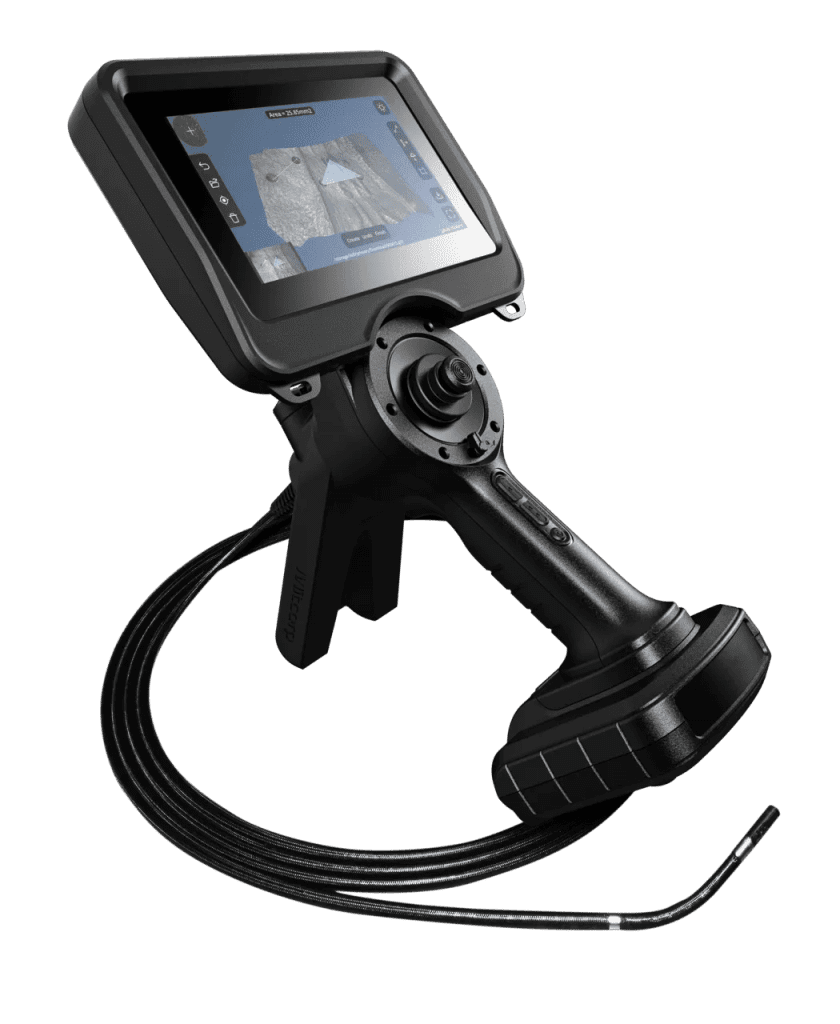
Articulation and mechanical control
A proper repair is more than just a quick fix. Skilled technicians can:
- Replace or adjust articulation cables
- Rebuild or replace the distal bending section
- Re-sheath damaged segments of the insertion tube
The goal is to restore smooth, predictable tip motion that responds precisely to operator input—so inspectors can steer confidently around blades, welds, or other critical features instead of fighting the probe. This level of work is typically handled through specialized inspection equipment services that understand both the mechanics and the inspection demands behind them.
Image quality and lighting
When borescope repairs address the imaging chain, they can:
- Replace damaged lenses or distal ends
- Correct internal contamination that’s affecting clarity
- Address failing or uneven LED modules
The difference at the screen can be dramatic: clearer edges, better contrast, and more accurate views of heat tinting, corrosion patterns, or fine cracks. That clarity feeds directly into better maintenance decisions.
Reliability and confidence
Perhaps the most underrated benefit of a quality repair is confidence. Inspectors can trust that:
- The scope will behave consistently throughout an inspection
- Images from today’s job will match the quality of historical comparisons
- The tool won’t fail in the middle of a critical procedure
That confidence reduces repeat inspections, speeds up sign-off, and supports more decisive action when defects are found.
When repair makes more sense than replacement
Protecting the value of high-end systems
Professional borescopes and videoscopes are significant capital investments, particularly in aviation, power generation, and other high-stakes environments. Replacing a system at the first sign of trouble is rarely the most economical move.
Repair is often the better option when:
- The control unit and main electronics are still in good shape
- Damage is localized to the insertion tube, articulation, or distal end
- The model is still supported with parts and expertise
In many cases, repair can restore performance for a fraction of the cost of buying a new system—while avoiding the training and setup time that comes with changing platforms.
Aligning repairs with how the tool is actually used
Different industries and applications put very different demands on borescopes. A scope used daily on jet engines or large turbines will accumulate wear faster than one used occasionally for light-duty plant checks.
Factoring real-world usage into your repair decisions helps you:
- Prioritize which tools need proactive evaluation
- Decide when to rebuild versus retire an older unit
- Match repair timing to planned outages or heavy maintenance windows
This approach turns borescope repair into part of your broader reliability strategy rather than a last-minute reaction to sudden failures.
Signs it’s time to schedule a repair evaluation
If you’re seeing any of the following, it’s smart to pull the tool from service and get a professional assessment:
- Articulation feels stiff, jerky, or won’t hold position
- The insertion tube shows visible damage or feels “lumpy” in one area
- Image quality is noticeably worse than it used to be, even after careful cleaning
- Lighting seems dimmer or uneven compared to other scopes in your fleet
Catching these issues early often means simpler, more affordable repairs—and fewer unpleasant surprises during critical inspections.
Building borescope repair into your maintenance culture
Treating borescopes like critical assets
If your operation depends on what you see through a borescope, then the tool deserves the same structured care you’d give any other critical asset. That means:
- Basic handling and cleaning training for every user
- Simple pre- and post-use checks to spot new damage
- A clear process for tagging suspect tools and sending them for evaluation
When repairs are viewed as a normal, planned part of borescope ownership, technicians are far more likely to report issues early instead of “making do” with a compromised tool.
Partnering with a repair specialist
Not all repair providers are created equal. Working with a specialist that understands remote visual inspection—as opposed to a generic electronics repair shop—helps ensure:
- Correct parts and procedures are used
- Repairs maintain or restore original performance specifications
- You receive clear documentation of work completed and any remaining limitations
That level of expertise becomes especially important when you rely on your borescopes for inspections tied to safety, compliance, or warranty obligations.
Why USA Borescopes is a strong repair partner
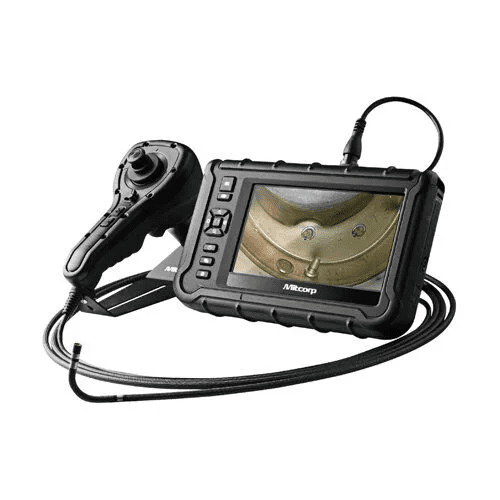
For organizations that depend on borescope inspections, choosing the right repair partner is almost as important as choosing the right tool. USA Borescopes focuses specifically on remote visual inspection technology, combining product knowledge with hands-on experience from aviation, energy, manufacturing, and other demanding environments. Their background, capabilities, and customer focus are outlined on the company’s About Us page.
Instead of guessing whether a tired borescope is “good enough,” it’s smarter to get expert eyes on its condition and a clear repair plan. To schedule a borescope evaluation, discuss repair options, or get advice on whether to refurbish or replace your current equipment, contact USA Borescopes today.
About the Author
This guest article was written by a technical content writer who specializes in inspection and maintenance tooling. They work with equipment manufacturers and asset operators across aviation, energy, and industrial sectors to turn real-world field experience into practical guidance that helps teams extend tool life, control costs, and improve inspection quality.