
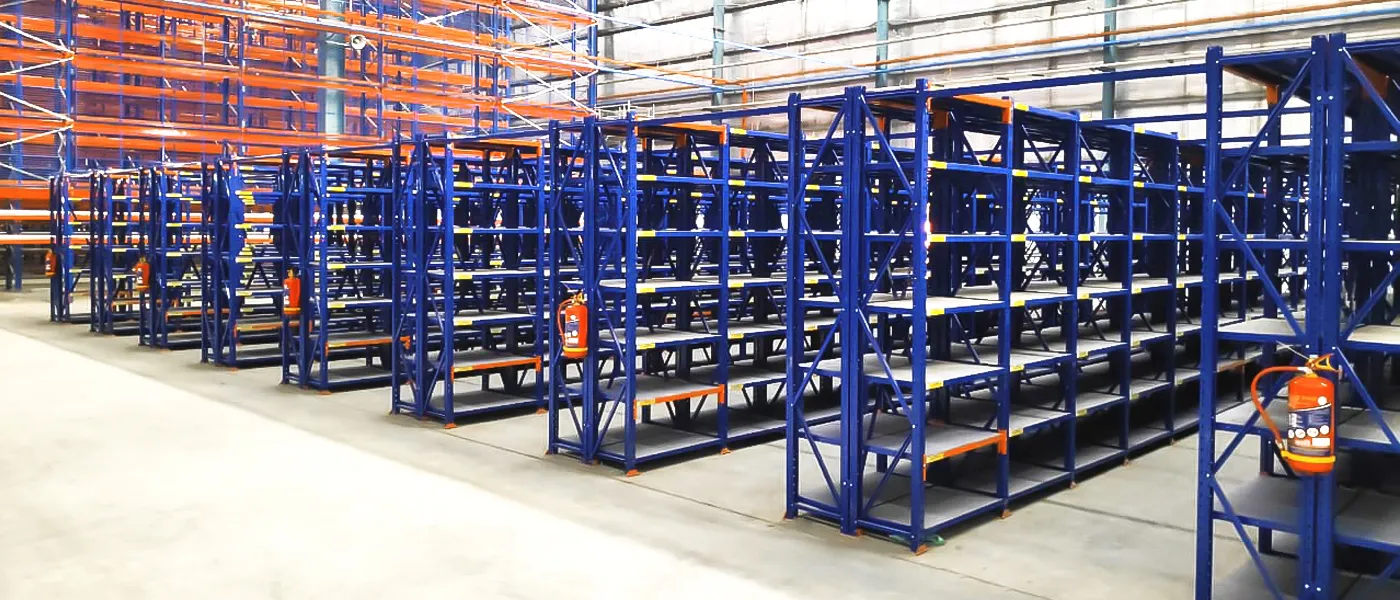
There’s a moment most people recognize during a storage upgrade. The shelves arrive, the area is cleared, and the plan seems simple: assemble the racks and start organizing.
Then the hardware bags open. Bolts scatter across the floor. Instructions require careful alignment. One connection tightens, another shifts, and suddenly the entire frame feels slightly uneven. What looked like a short task slowly expands into a long setup session.
This is exactly what the friction boltless shelving was designed to remove. Instead of building storage systems piece by piece with bolts and tools, the structure connects through a click-and-lock mechanism. The difference seems small at first, yet it changes the entire rhythm of the installation…
And more importantly, it gives time back to the people who actually need to use the shelves.
Why Shelving Assembly Often Takes Longer Than Expected
Shelving rarely feels complicated when you first look at it. Metal frames, horizontal beams, and panels appear straightforward. But traditional racks rely on dozens of mechanical connections.
- Each bolt must align perfectly.
- Each connection must tighten evenly.
- Each shelf must stay level as the frame grows taller.
The process becomes repetitive and surprisingly slow. Workers tighten hardware, check stability, then adjust again. Small misalignments force them to undo several steps just to correct one connection.
The real issue is not complexity—it’s interruption. The assembly constantly stops while adjustments are made. Progress becomes uneven, and the setup takes far longer than planned.
Storage systems should simplify workspaces, yet the installation process often introduces unnecessary friction.
The Quiet Engineering Behind Boltless Shelving
The innovation behind boltless shelving begins with a simple design decision: remove external fasteners entirely.
Instead of bolts, vertical posts contain evenly spaced slots along their length. Horizontal beams include rivets that slide directly into these openings. Once inserted, the beam drops slightly and locks under its own weight.
That downward pressure secures the connection.
- No threaded hardware.
- No tightening patterns.
- No complicated diagrams.
What appears to be a small mechanical adjustment actually changes the entire experience of building storage systems. The structure assembles through movement rather than hardware.
And movement is always faster than fastening.
The Moment Installation Starts Moving Faster
Something interesting happens once the first shelf begins to take shape. Because the structure locks together quickly, installation gains momentum.
Frames stand upright sooner. Beams connect almost immediately. The building structure develops into a complete rack system within minutes after construction starts.
This shift creates a different feeling during setup. Workers stop worrying about individual connections and start focusing on the overall structure. Progress becomes visible quickly, which encourages faster work.
Instead of assembling shelves cautiously step by step, teams move with rhythm.
That rhythm is where the real time savings emerge.
Why Tool-Free Assembly Changes the Entire Workflow
Tools introduce a surprising amount of friction during installation. They require preparation, space, and careful handling. Workers pause repeatedly to pick up a wrench, tighten a bolt… or correct torque levels.
Boltless shelving removes that dependency.
Because the system connects through rivets and slots, installation becomes largely tool-free. Components simply align and lock together. A rubber mallet may help seat beams firmly, but specialized equipment is unnecessary.
This simplicity brings several subtle advantages:
- Workers learn assembly quickly.
- Setup can happen anywhere without preparation.
- Mistakes are easier to correct.
The shelving becomes accessible rather than technical, which allows teams to focus on organizing space rather than managing hardware.
When Storage Needs Change, Flexibility Matters
No workspace remains static. Inventory fluctuates, equipment grows, and layouts evolve as operations expand.
Traditional shelving struggles with these changes because adjustments require reversing the entire assembly process. Bolts must loosen, shelves must detach, and the frame must be partially rebuilt.
With boltless shelving, adjustments feel far less disruptive.
Shelf beams lift out of their slots and reposition easily along the upright frame. Storage heights can change quickly to accommodate larger items or new inventory categories.
Instead of forcing teams to work around rigid shelving systems, the structure adapts to the workspace itself.
This flexibility is one reason suppliers such as Luoshan International Inc continue emphasizing boltless storage solutions for dynamic commercial environments.
You know, sometimes the most valuable feature of a storage system is the absence of problems.
Conclusion: The Real Value of Boltless Shelving
Storage systems should support productivity from the moment they arrive. Yet traditional racks often delay that goal with complicated assembly and repeated adjustments.
The click-and-lock structure of boltless shelving changes that experience entirely. Shelves connect quickly, configurations adjust easily, and the system remains stable without constant tightening.
Manufacturers such as Luoshan International Inc continue supporting this design because it matches the pace of modern warehouses and workspaces… The biggest advantage is simple: boltless shelving allows teams to spend less time assembling storage and more time using it.
