
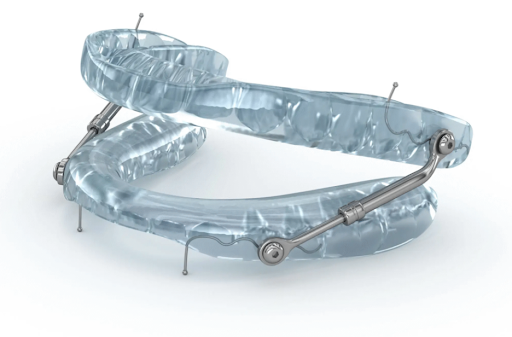
Here is a pattern that plays out in households across the country. Someone snores. Their partner nudges them. They roll onto their side, the snoring quietens, and everyone drifts back to sleep — until it starts again. Eventually the nudging stops working, the side-sleeping stops working, and the extra pillow someone read about online stops working too. What most people never get told is that none of those things were ever going to work long-term, because they do not touch the actual problem. A mandibular splint for snoring does something none of those remedies can — it physically changes the geometry of the airway while a person sleeps, which is where the problem actually lives.
Why CPAP Users Are Switching
CPAP machines work. That is not in dispute. What is in dispute is whether people actually use them. The real-world picture on CPAP compliance is far less tidy than the clinical picture — masks leak, straps leave marks, hoses get tangled, and the machine itself creates enough noise that some users end up disturbing their partner more, not less. Travelling with one is its own ordeal. So people start leaving it on the bedside table. Then they stop setting it up at all. A mandibular advancement splint, by contrast, goes in a small case that fits in a toiletry bag and takes seconds to put in place. For those who have tried CPAP and found the nightly reality of it unsustainable, the splint is not a compromise — it is often the thing that actually gets used.
The Adjustment Window Is Shorter Than Expected
Jaw discomfort is the concern that comes up most often, and it is worth addressing honestly. Holding the jaw in an unfamiliar position through the night does cause some initial achiness — usually in the jaw muscles, sometimes felt in the teeth come morning. This is real, and dismissing it does not help anyone. What also matters is that the discomfort tends to settle as the jaw adapts, and the timeline for that is shorter than most people expect. Good devices are also adjustable — the degree of forward repositioning can be wound back and increased gradually, so there is no need to start at a position the jaw is not ready for. Rushing that process is where a lot of early drop-offs happen, and it is almost always avoidable.
Fit Matters More Than Most Realise
There is a version of this device that works well, and a version that does not. The version that does not is the boil-and-bite type found in pharmacy aisles — generic, imprecise, and designed to fit nobody in particular. These move around at night, apply uneven pressure on the teeth, and frequently push the jaw further forward than it needs to go, which is exactly where the discomfort stories come from. A custom-fitted splint made from impressions of the actual wearer’s teeth is a different product in almost every meaningful way. The fit is stable, the positioning is specific to that person’s anatomy, and the jaw is held where it needs to be rather than where a mould approximates it should be. If someone tried the pharmacy version and wrote off the whole idea, that conclusion deserves revisiting.
When to See a Professional First
Snoring on its own is one thing. Snoring with gasping, snoring where the breathing appears to stop and restart, snoring paired with daytime exhaustion that does not improve regardless of how much sleep is logged — those are different things, and they point toward obstructive sleep apnoea rather than simple snoring. The distinction matters because apnoea carries its own health implications and requires formal diagnosis before any device is trialled. A GP referral for a sleep study is the right starting point there, and home-based sleep testing has made that process considerably more accessible than it used to be. For people whose snoring is not accompanied by those additional signs, a consultation with a dentist who specialises in sleep health is the sensible next step.
Conclusion
What makes a mandibular splint for snoring worth taking seriously is not that it is new or clever — it is that it targets the right thing. The airway collapses, the device prevents that collapse, and sleep improves as a direct result. Most people who reach this point have already spent time and money on solutions that skirted around the actual problem. The splint does not skirt around it. That is a meaningful distinction, and for a lot of people it turns out to be the difference between another disappointing attempt and the first genuinely good night’s sleep they have had in years.
