
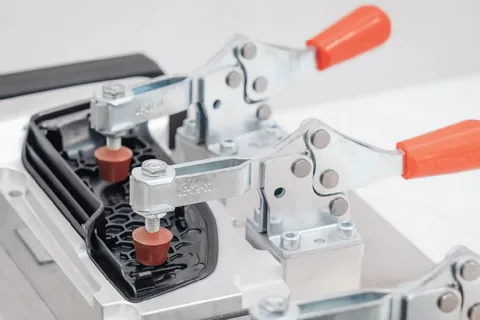
CNC manufacturing relies on control, precision, and repeatability to meet today’s strict production standards. Machines continue to evolve, but even the most advanced CNC systems cannot deliver consistent results without proper workholding. This is why jigs and fixtures remain a fundamental part of machining operations. They establish accurate positioning, maintain stability during cutting, and ensure that every component is produced according to specification.
As production volumes increase and tolerances become tighter, manufacturers must reduce errors at the setup stage. Effective jig and fixture systems eliminate unnecessary adjustments and support automated workflows. When positioning is reliable, productivity improves and quality becomes predictable, creating a strong foundation for scalable CNC manufacturing.
Why Jigs and Fixtures Are Critical in CNC Machining
Consistent Accuracy in Every Cycle
Accuracy is achieved when a workpiece is positioned the same way every time. Jigs guide cutting tools, while fixtures securely hold the part in place. This combination removes variation caused by manual alignment and ensures machining operations follow consistent reference points. By maintaining accurate positioning, dimensional deviations are minimized. This leads to better surface finish, fewer rejected parts, and a smoother inspection process across production runs.
Improved Production Efficiency
Efficiency in CNC machining depends on reducing non-cutting time. Jigs and fixtures allow operators to load and unload components quickly without recalibration. This keeps machines productive and reduces downtime between cycles. When setup time is shortened, overall throughput increases. Manufacturers can meet higher demand without expanding equipment or labor resources.
Fundamentals of Jig and Fixture Design
Structural Stability and Force Control
During machining, cutting forces can cause movement if a workpiece is not properly supported. Stability is therefore a core design principle. Effective jig and fixture design distributes forces evenly to prevent vibration or deformation. Stable setups improve machining conditions. Tools last longer, surface quality improves, and machining parameters remain consistent throughout the operation.
Accurate Location and Referencing
Precise location ensures repeatability. Locating elements define datum points that position the workpiece relative to the machine. Once established, these references ensure identical placement for every part. Reliable referencing reduces operator dependency. Production becomes more consistent because positioning accuracy is built into the setup rather than relying on manual judgment.
Jigs and Fixtures Tooling in CNC Workshops
Tooling Material Selection
The performance of jigs and fixtures tooling depends on material choice. Hardened steel is used for wear resistance, while aluminum provides lightweight handling and corrosion resistance. Each material is selected based on load conditions and production demands. Proper material selection improves durability. Long-lasting tooling reduces maintenance requirements and ensures stable performance in high-duty CNC environments.
Modular and Flexible Tooling
Many CNC shops produce a variety of components. Modular tooling systems allow fixtures to be adjusted or reconfigured without full redesign. This flexibility supports fast changeovers and reduces lead times. Flexible tooling also improves cost efficiency. A single system can serve multiple applications, lowering overall tooling investment.
Jigs and Fixtures Locating Systems Explained
Role of Locating Elements
Locating systems define how a workpiece sits within a fixture. Pins, stops, and datum surfaces ensure consistent orientation during machining. Their accuracy directly affects final part geometry. Clear locating strategies simplify operation. Once the system is set, parts are positioned correctly without repeated measurement.
Wear Resistance and Long-Term Accuracy
Wear is unavoidable in continuous production. Effective locating systems use hardened or replaceable components to maintain accuracy over time. This prevents gradual misalignment and loss of precision. Maintaining locating accuracy protects process reliability. Quality remains consistent even during long production cycles.
Designing Jigs and Fixtures for Complex CNC Parts
Supporting Multi-Axis Machining
Multi-axis CNC machines require fixtures that allow tool access from multiple directions. Designers must consider rigidity, clearance, and accessibility together. Poor design can limit machining capability and increase setup complexity. Well-engineered fixtures enable full use of multi-axis features. This reduces the number of setups and improves overall machining efficiency.
Cost-Effective Custom Solutions
Custom fixtures deliver superior performance but must remain economical. Designers focus on essential functions and avoid unnecessary complexity. Simple, well-planned designs are easier to maintain and more reliable in production. Balancing cost and performance ensures long-term value. Custom solutions should support productivity without increasing operational burden.
Productivity Benefits of Optimized Fixture Systems
Faster Setup and Changeovers
Optimized fixture systems use standardized reference points and efficient clamping methods. This reduces setup time and allows quicker transitions between jobs.
Key benefits of faster setup include:
- Higher machine utilization
- Shorter production cycles
- Reduced labor effort
These gains directly improve manufacturing efficiency.
Consistent Quality Output
Consistency is essential for CNC success. Optimized fixtures ensure each part follows the same machining path, reducing variation and simplifying quality control. Consistent output strengthens customer confidence and supports repeat business in competitive markets.
Quality and Maintenance Considerations
Designing for Long Service Life
Fixtures must maintain accuracy over repeated use. Designers reinforce high-stress areas and select materials that resist fatigue and wear. This extends service life and reduces unexpected downtime. Durable fixtures support stable production planning. Manufacturers can rely on predictable performance over time.
Inspection and Preventive Maintenance
Easy inspection is a key design feature. Fixtures should allow quick checks of locating and clamping surfaces. Preventive maintenance identifies wear early before it affects part quality. Regular inspection protects accuracy. It ensures machining processes remain reliable throughout the fixture’s lifecycle.
Future Trends in Jig and Fixture Engineering
Automation and Smart Fixtures
Automation is influencing modern fixture design. Smart fixtures integrate sensors to monitor clamping force and part position in real time. This data improves process control and reduces scrap. As CNC automation grows, intelligent workholding systems will become more common across advanced manufacturing environments.
Digital Design and Simulation Tools
Simulation tools allow engineers to test fixture designs virtually before production. Performance can be evaluated under real machining conditions. This reduces errors and development time. Digital design improves confidence. Fixtures perform as expected from the first production run.
Conclusion
In modern CNC manufacturing, jigs and fixtures are no longer just supporting tools—they are strategic assets that directly influence accuracy, efficiency, and production stability. When workpieces are held and located correctly, machines perform at their best, errors are reduced, and output becomes consistent across every batch. Well-designed systems help manufacturers meet tight tolerances while keeping setup time and operational costs under control.
As CNC technology continues to advance, the role of precision workholding will only grow stronger. Investing in reliable jig and fixture solutions allows manufacturers to scale production with confidence, maintain quality standards, and stay competitive in demanding markets. Consistency at the setup stage ultimately defines success on the shop floor.