
Walk into any emergency department on a busy evening and you will understand one thing very quickly. Bleeding cases do not arrive with warnings. They come suddenly. Road accidents. Workplace injuries. Assault cases. Deep lacerations from simple household mishaps.
When severe bleeding enters the emergency room, the focus becomes sharp and immediate. Control the hemorrhage. Stabilize the patient. Protect circulation.
This is where hemostatic gauze protocols play a crucial role.
Hemostatic gauze is not used randomly. It follows a clear structure inside emergency departments. These protocols are built from experience, research, and hard lessons learned in trauma care.
Why Protocols Matter in the ER
An emergency department is not a quiet clinic. It is fast. Loud. Sometimes chaotic. In that environment, decisions must be consistent.
Protocols remove guesswork.
When a patient with heavy bleeding arrives, the team does not debate options for long. They follow a pathway. That pathway ensures no critical step is missed.
Hemostatic gauze is part of that pathway for specific types of bleeding. It is not for minor cuts. It is meant for serious hemorrhage that does not stop with basic pressure alone.
Clear rules improve speed. Speed improves outcomes.
Step One: Rapid Assessment
Everything starts with assessment.
The triage nurse or trauma team quickly identifies the severity of bleeding. They look for signs such as:
- Active spurting blood
- Deep open wounds
- Blood soaking through dressings
- Signs of shock like pale skin or low blood pressure
Step Two: Initial Direct Pressure
Even in modern emergency care, direct pressure remains the first action.
A sterile dressing is applied. Firm pressure follows. Sometimes this alone is enough. The body forms a clot. Bleeding slows.
But when bleeding continues despite pressure, protocols move to the next level.
That is when hemostatic gauze is introduced.
Step Three: Wound Exposure and Preparation
Before applying hemostatic gauze, the wound must be properly exposed. Clothing is removed. The area is cleared. Excess pooled blood may be gently wiped away so the source can be seen.
This step is important. Guessing where to place the gauze can lead to failure.
Emergency nurses are trained to stay calm during this process. It may look dramatic, but steady hands matter more than speed alone.
Step Four: Proper Wound Packing
Packing technique is critical.
Hemostatic gauze is not placed lightly over the surface. It is packed firmly into the wound cavity. Layer by layer. Deep into the bleeding site.
This may require pressure that feels intense. But without firm packing, the dressing cannot do its job.
Once packed, strong manual pressure is applied for several minutes. The team watches closely for continued bleeding.
In many emergency departments, staff are trained through simulation sessions. They practice packing on trauma models. They repeat it until it becomes natural.
Because in real life, there is no pause button.
Step Five: Monitoring and Reassessment
Applying the gauze is not the final step.
The team reassesses constantly. Is the bleeding controlled? Is there re bleeding? How are the patient’s vital signs?
Nurses monitor blood pressure, heart rate, oxygen levels, and mental status. If bleeding is controlled, the patient moves toward further treatment such as imaging or surgical intervention.
If bleeding continues, escalation happens quickly. Surgeons may be called. Blood transfusion protocols may begin.
Hemostatic gauze buys time. It does not replace definitive care.
Integration with Trauma Protocols
Emergency departments often follow structured trauma systems such as Advanced Trauma Life Support principles.
Hemostatic gauze fits into the “circulation” part of these systems. Control external bleeding. Protect blood volume. Prevent shock.
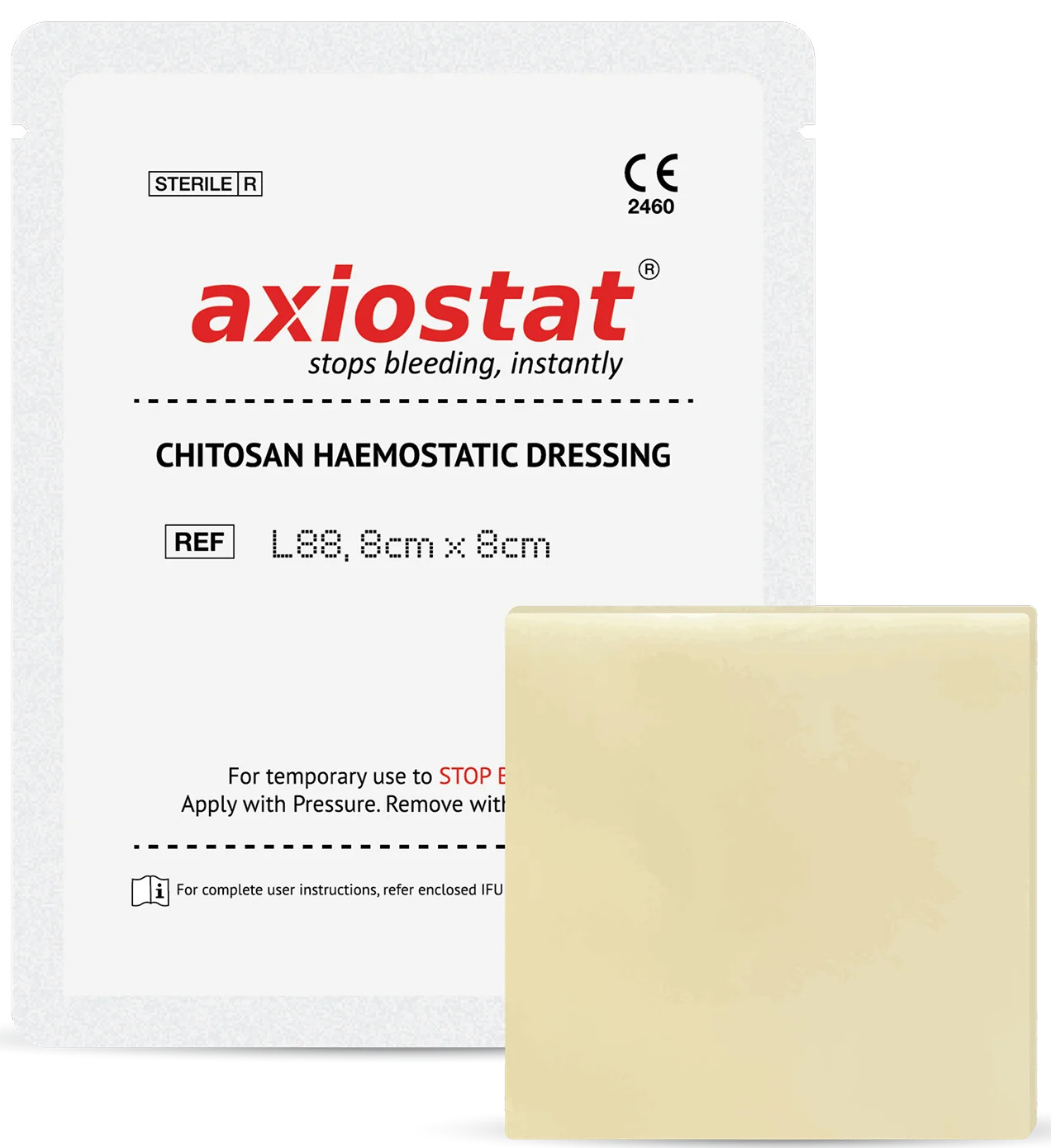
Some hospitals standardize specific products to ensure consistency. For example, chitosan based dressings like Axiostat are used in certain settings because they promote rapid clot formation and are easy to handle during wound packing.
When teams are familiar with one product, efficiency improves. There is less hesitation. Less confusion.
Consistency saves time.
Documentation and Safety
Every intervention in the emergency department is documented.
The time of application. The type of gauze used. The duration of pressure. The patient’s response.
This documentation is not just paperwork. It helps guide further care. It also supports quality improvement reviews.
Safety checks are also important. Staff confirm that no fragments remain in the wound. They ensure removal is done carefully during surgical follow up.
Protocols exist to prevent complications, not just control bleeding.
Ongoing Staff Training
Protocols are only as strong as the training behind them.
Emergency departments conduct regular skill refreshers. New nurses are trained under supervision. Simulation labs recreate trauma scenarios.
These sessions are not about theory. They are practical. Hands on. Sometimes intense.
Because real emergencies are intense.
When staff practice repeatedly, confidence grows. When confidence grows, patient outcomes improve.
The Human Side of Hemorrhage Control
Behind every bleeding case is a person. A parent. A worker. A teenager. Someone’s family member.
Emergency department professionals understand that stopping bleeding is not just a technical task. It is a responsibility.
Clear hemostatic gauze protocols help them act quickly and correctly. They reduce chaos. They provide structure in stressful moments.
In those critical minutes, structure makes all the difference.
Conclusion
Hemostatic gauze protocols in emergency departments are built around speed, clarity, and teamwork. From rapid assessment to firm wound packing and constant reassessment, every step has purpose.
These protocols ensure that severe bleeding is controlled efficiently and safely. They support trauma systems. They protect patients from shock and complications.
In emergency care, small delays can change outcomes. Well defined protocols help prevent those delays.
And in the emergency room, that can mean the difference between loss and recovery.