
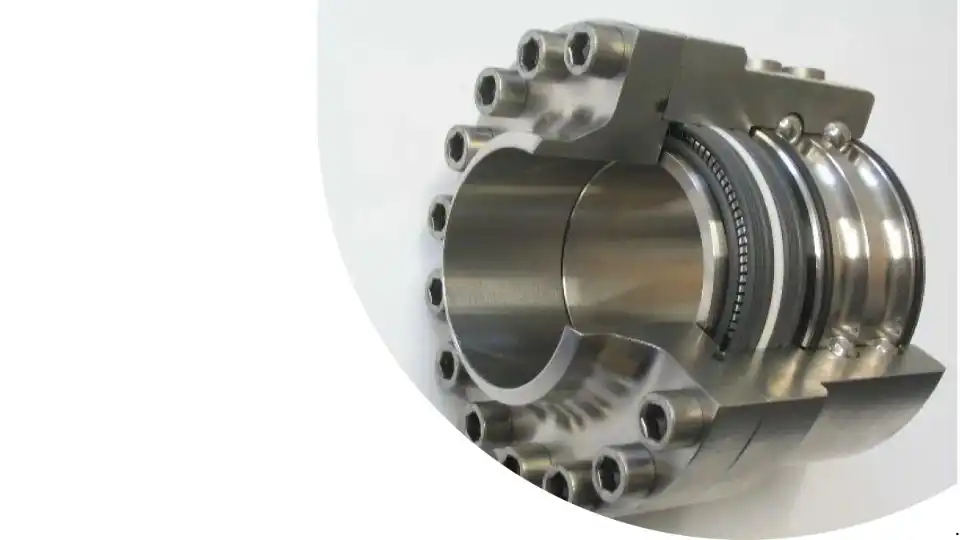
When you’re putting together an industrial project, you’re going to need a connector that can handle all the twists and turns that come with it. In a lot of cases a heavy-duty swivel ball joint is going to be the piece of the puzzle that brings everything together, especially when you’re dealing with pipework and equipment that’s going to be subject to stress, load misalignment, and rotation. By sourcing the right high-quality components, and we’re talking about joints like the swivel joint, the swivel ball joint, and the swivel joint, you can be confident that you’ve got a system that’s not only going to be safe but also flexible and long-lasting. If you need some expert guidance or supplies, the good news is that there’s a company you can trust to help: SREG Products.
What Exactly Is a Heavy-Duty Swivel Ball Joint?
At its core, a heavy duty swivel ball joint is a highly engineered piece of kit that allows for 360-degree rotation and flexibility like no other connector can. Inside a robust socket sits a spherical ball, which is usually made from carbon steel or stainless steel, and it’s this ball-and-socket combination that makes it possible to handle even the most complex installations with a high degree of adjustability and to absorb all sorts of movement, including vibration and torsion.
In the industry they’re made from some pretty tough stuff like stainless steel, carbon steel, and even zinc or aluminium for specific applications. Depending on your needs, you can find a wide range of joint types, including internal and external thread swivel designs that are suitable for high-pressure and heavy-duty environments.
Where Are Heavy-Duty Swivel Ball Joints Used?
You’ll find a swivel ball joint at the core of heavy-duty, flexible connections in many sectors, especially where movement, safety, and reliability are priorities.
1. Loading and Unloading Arms – Flexible Pipe Connection
Industrial loading arms, used for transferring liquids like oil, gas, or chemicals, depend on heavy-duty swivel joints to manage misalignment and movement. When a tanker or railcar shifts, the swivel ball joint maintains a safe and secure connection. It allows the arm to rotate, pivot, and adjust under heavy loads, absorbing axial and radial forces and preventing leaks or cracks in pipework.
2. Floating Roof Tank Drains – Articulated Hose and Pipe Systems
In petrochemical and oil & gas environments, floating roof tank drains use pipe or hose assemblies connected by multiple swivel ball joints. These joints enable the system to flex, sink, or rise with the changing liquid level, handling internal and external stresses. Unlike simple hoses, a stainless steel or carbon steel swivel ball joint eliminates kinks and minimises risk by providing a reliable, easy-handling, long-life solution.
3. Process Pipework and Thermal Expansion – Rotating Joints in Industrial Plant Systems
Where plant pipework is handling steam, gas, or chemicals and is subject to temperature swings and the expansion and contraction that follows, a heavy-duty adjustable swivel joint or rotary joint is often the answer. It absorbs these dimensional changes, protects fittings and plate connections from stress, and ensures the system remains leak-free. The 360-degree rotary capability prevents mechanical failure due to twisting or rigid mounting.
4. Mobile and Hydraulic Equipment – Rod and Socket Flexibility
On heavy-duty machines like cranes, excavators, and drills, hydraulic hoses and rods are constantly moving. Swivel ball joints keep the pipe connection robust and flexible, allowing equipment to rotate, pivot, and twist freely. This keeps the pressure stable, oil and hydraulic fluid flowing reliably, and prevents hose and fitting fatigue even in demanding off-road, mining, or construction applications.
Key Benefits for Your Swivel Joint System
By incorporating a heavy-duty swivel ball joint or swivel joint into your layout, you gain:
- Safety and Leak Prevention: Reliable sealing under high load and pressure, protecting operators from contamination and the environment from spills, is vital in oil, gas, and chemical applications.
- Maintenance Reduction: High-quality materials and precision engineering mean fewer replacements and less downtime, even under heavy-duty operation.
- Versatility and Adjustability: Swivel ball joints provide 360° rotation, allowing for flexible installation and accommodating movement, twist, and vibration across a wide range of applications.
- Durability: Joint swivels are designed for long service life and constructed to withstand stress, corrosion, and harsh operational conditions, whether stainless steel, carbon steel, or zinc alloy.
Choosing the Right Joint Swivel: What Should You Consider?
When specifying your fitting, connector, or swivel joint assembly, keep the following in mind:
- Media: Will the joint handle gas, oil, chemicals, or water?
- Size and Thread: Fitting size, thread swivel type (BSP, NPT, etc.), and compatibility.
- Load and Pressure: Expected system loads and pressure ratings; many heavy-duty ball joints handle several hundred bar.
- Materials: Choose from stainless steel for corrosion resistance, carbon steel for industrial toughness, or custom alloys for unique chemical environments.
- Mounting and Movement: Internal, external, or rod-end configurations, depending on motion requirements and available space.
Reliable Solutions for Your Industrial System
A swivel ball joint isn’t just a connector; it’s the linchpin for safety, performance, and flexibility in demanding applications. Installing the right joint means fewer worries about failure, leaks, or operational downtime.
So, next time your project calls for a robust, dependable, and high-quality heavy-duty swivel ball joint, you now know the advantages and the range of applications, plus how the right design can deliver easy handling and long-term reliability in even the most challenging environments.
If you want to know more about selecting, installing, or customising a swivel ball joint, don’t hesitate to request detailed guidance or specifications from a trusted supplier. You’ll ensure smooth operation, manageable maintenance, and a system that works as hard as you do.
