

Google Search is no longer just ranking pages.
It is generating answers.
That creates a real problem for businesses and SEO professionals. Rankings can drop, clicks can decline, yet visibility still exists inside AI-generated summaries. Many sites simply don’t know how to access it.
This guide shows how Google SGE actually works, why some pages are cited while others are ignored, and how to optimize for visibility in 2026, not 2023 SEO rules. The focus is practical, entity-driven, and aligned with how AI search engines think.
What Is Google SGE and How Does It Work in 2026?
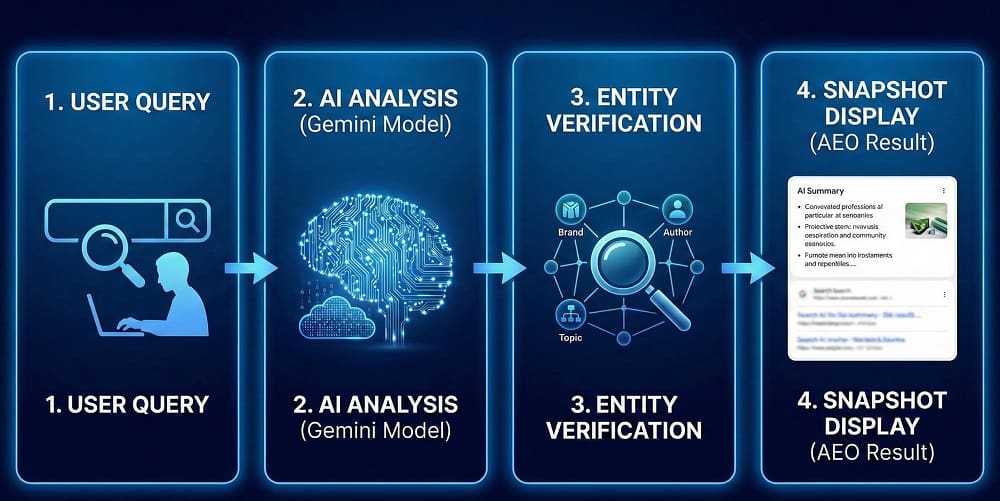
Google SGE (Search Generative Experience) uses AI to generate summarized answers directly in the search results. Instead of showing ten blue links first, Google synthesizes information from multiple trusted sources.
At a high level, SGE works like this:
- Google detects search intent.
- The query is expanded through query fan-out.
- Trusted sources are retrieved.
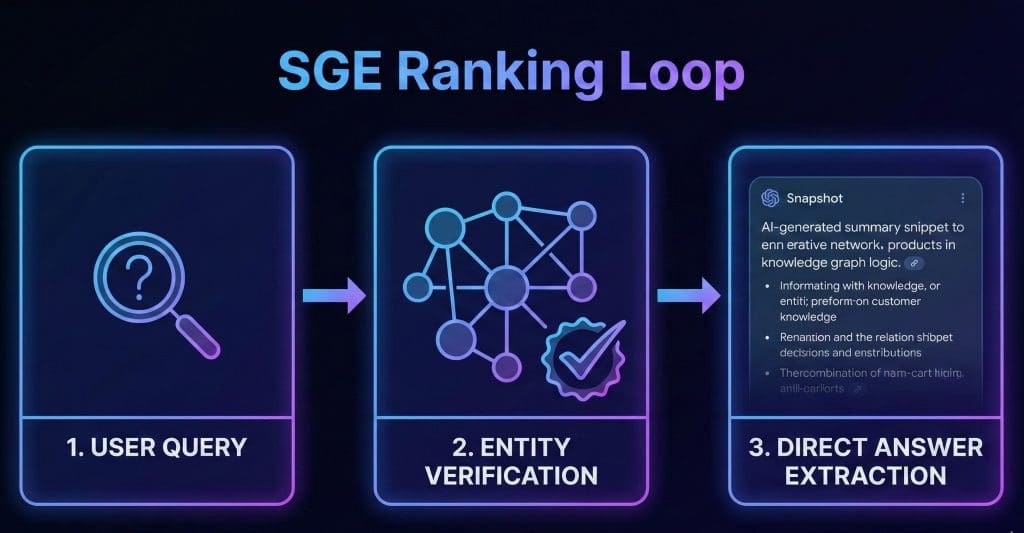
- Entities are validated against the Knowledge Graph.
- Gemini generates an answer with citations.
SGE prioritizes accuracy, consensus, and clarity, not keyword matching.
Google SGE vs Traditional Search (What Actually Changed)
Traditional SEO focused on rankings. SGE focuses on answer inclusion.
Here is the core difference:
| Traditional Search | Google SGE |
|---|---|
| Ranks pages | Generates answers |
| Keywords matter most | Entities and context matter more |
| Clicks are the goal | Visibility and citation are the goal |
| Single best page | Multiple trusted sources |
SGE often answers questions without a click. That does not mean SEO is dead. It means the success metric has changed.
How Google SGE Selects Content Sources
SGE does not randomly choose pages. It follows a trust-weighted selection process.
Google looks for:
- Strong EEAT signals (experience, expertise, authority, trust)
- Clear entity coverage
- Alignment with known facts in the Knowledge Graph
- Content consensus across sources
A page can rank #1 and still be ignored by SGE if it lacks depth or trust signals.
Google SGE Ranking Factors (What Influences Visibility)
SGE does not publish official ranking factors, but patterns are clear.
The strongest visibility drivers include:
- Clear answers near the top of the page
- Logical structure with headings and lists
- Strong topical authority across related pages
- Consistent brand and author signals
Content that explains one topic fully performs better than content targeting many keywords loosely.
How to Optimize Content for Google SGE in 2026
This is where most sites fail.
SGE optimization is not about writing more content. It is about writing extractable content.
Focus on:
- Direct answers under clear headings
- Lists, tables, and short explanations
- Entity-rich language without repetition
- FAQs that match real search behavior
When optimizing existing posts:
- Add clear definitions
- Expand weak sections
- Improve internal links within the topic cluster
This is the approach used on https://khalidseo.com/ when building AI-search-ready content strategies.
Technical SEO & Structured Data for SGE
Technical SEO still matters, but its role has shifted.
Key technical signals include:
- Clean crawlability and indexing
- Fast loading and stable layouts
- Structured data that clarifies meaning
Schema helps Google understand, not rank. FAQ, Article, Author, and Organization schema improve AI comprehension.
How to Measure & Track Google SGE Performance
Tracking rankings alone is misleading in an SGE world.
Better signals include:
- Search Console impressions growth
- Branded search increases
- Assisted conversions
- Content citation patterns
SGE rewards influence, not just clicks.
The Future of SEO After Google SGE
SEO is moving toward AEO and LLMO.
Winning brands will:
- Build real authority, not thin content
- Cover topics deeply, not broadly
- Become cited sources, not just ranked pages
Google SGE is not the end. It is a filter. Those who adapt will gain more trust, even with fewer clicks.
FAQ: Google SGE Optimization
What is Google SGE and how does it work?
Google SGE generates AI-powered answers by retrieving trusted sources, validating entities, and synthesizing responses with citations.
It focuses on accuracy, consensus, and usefulness rather than page rankings alone.
How do you optimize content for Google SGE?
Optimize for entities, clear answers, and structure, not keyword density.
Use headings, lists, FAQs, and strong EEAT signals so AI systems can extract and cite your content.
Does Google SGE replace traditional SEO?
No. Google SGE evolves SEO rather than replacing it.
Technical SEO, authority, and content quality still matter, but success depends on visibility inside AI answers.
What type of content performs best in Google SGE?
How-to guides, definitions, comparisons, and expert explanations perform best.
Content that answers questions clearly and shows real expertise is more likely to be cited.
How can you track traffic from Google SGE?
Use impressions, branded searches, and assisted conversions instead of rankings alone.
SGE reduces direct clicks but increases visibility across the buyer journey.
Final Thought
Google SGE rewards clarity, trust, and depth.
If your content helps AI explain the web accurately, it will keep showing up—no matter how search evolves.
For advanced SGE, AEO, and AI-search strategies, this is the direction already being applied at https://khalidseo.com/.
