

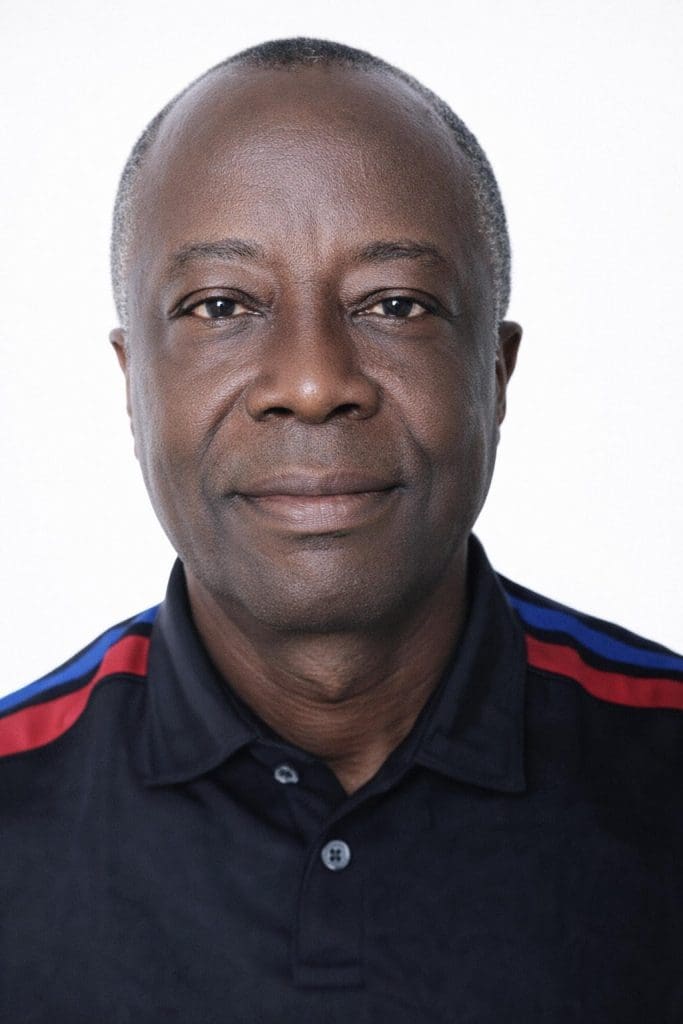
Godfred Asante, a Ghanaian researcher with a Master’s in International Development Studies and more than 19 peer-reviewed publications, has emerged as one of the most consistent academic voices warning about the long-term consequences of unregulated artisanal and small-scale gold mining—locally known as galamsey—on Ghana’s environment, public health, and rural economy.Speaking at a stakeholder forum in Kwahu West Municipality, Wawase near Nkawkaw in November 2025, Asante argued that existing legislation, including the Minerals and Mining (Amendment) Act 2019 and the Water Resources Commission Act, lacks the enforcement muscle required to halt widespread environmental degradation. “We have robust laws on paper,” he told the audience of district officials, traditional authorities, cocoa farmers, and civil society representatives, “but on the ground they are largely ineffective because enforcement is selective, under-resourced, and sometimes compromised.”Asante’s assessment is grounded in years of fieldwork and empirical data. During his tenure with the Nation Builders Corps (2019–2022) and earlier national service at the Department of Social Welfare, he documented the transformation of once-pristine river systems in the Eastern, Ashanti, and Western regions into heavily silted and chemically contaminated waterways. Independent studies he references, including analyses published in Environmental Monitoring and Assessment, show mercury concentrations in the Pra, Ankobra, and Birim rivers routinely exceeding World Health Organization safety limits by factors of ten or more.The human and economic costs are equally stark. Mercury and cyanide exposure has been linked to elevated rates of neurological disorders, kidney damage, and developmental delays in children, and higher miscarriage rates in mining-adjacent communities. Meanwhile, the destruction of cocoa farmland—Ghana’s leading agricultural export—threatens both household incomes and the country’s position as the world’s second-largest cocoa producer. Asante cites satellite imagery analysis indicating that over 50,000 hectares of forest and farmland have been lost to galamsey since 2017.“What we are witnessing is not merely an environmental crisis,” Asante emphasized. “It is a slow-motion public health emergency and an economic time bomb. When farmland disappears and water sources are poisoned, entire rural economies collapse, driving further migration, school dropouts, and social instability.”He pointed to the short-lived success of Operation Vanguard (2017–2019), the joint military-police task force that temporarily reduced illegal mining activity, as evidence that decisive state action can work—but only when it is sustained. “The moment the task force was scaled back, excavators returned in greater numbers,” he noted. “Temporary campaigns are not a substitute for permanent institutional capacity.”Asante’s recommendations are pragmatic and multi-pronged:
- Sharply increase penalties for mining in water bodies and forest reserves, with mandatory asset forfeiture for repeat offenders.
- Equip and empower district-level Minerals Commissions and Environmental Protection Agency offices with real-time monitoring tools, drones, and rapid-response units.
- Accelerate the formalization of small-scale mining through simplified licensing, affordable credit, and mandatory adoption of mercury-free technologies already piloted successfully in Akyem and Tarkwa.
- Establish a dedicated Rural Livelihoods Transition Fund—financed through a modest levy on large-scale mining companies—to support alternative employment in agroforestry, aquaculture, and eco-tourism for communities affected by mining bans.
He also urged greater accountability for traditional authorities, some of whom have been implicated in leasing communal lands to illegal operators. “Custodianship of the land is a sacred trust across generations,” he said, “not a short-term revenue opportunity.”Drawing lessons from Latin America, Asante highlighted Peru’s National Formalization Program, which registered over 80,000 artisanal miners and reduced mercury use by more than 60 % within five years through training and market incentives. “Ghana has the technical expertise and institutional framework to replicate and even improve on that model,” he argued.Following the Nkawkaw forum, participants—including cocoa cooperative leaders and women’s groups—endorsed Asante’s call for urgent legislative review. He is currently finalizing a policy brief, supported by geospatial data and health-impact data, to be submitted to Parliament’s Environment Committee and the Ministry of Lands and Natural Resources before the end of the first quarter of 2026.For Asante, the stakes could not be higher. “Gold is a finite resource that enriches a few for a short time,” he concluded. “Clean water, fertile soil, and healthy communities are the only true wealth we can bequeath to future generations. If we fail to act decisively now, the cost of restoration—if restoration is even possible—will dwarf any revenue the nation has ever earned from gold.”In an era when environmental, social, and governance (ESG) considerations increasingly shape global investment decisions, Asante’s evidence-based advocacy offers Ghana both a moral imperative and a strategic economic argument: stronger environmental governance is no longer optional—it is essential for sustainable development.