
Introduction
The idea of creating images using only written words might have sounded impossible a few years ago. Traditional digital art and graphic design always required a certain amount of technical skill, knowledge of design principles, and access to professional tools. People needed manual creativity to transform a concept into something visual that could be shared or published. The digital landscape has now changed significantly. Artificial intelligence has opened new possibilities, especially in the field of text driven image creation. With a written description, a user can now generate a detailed visual output that looks natural, artistic, or even photorealistic.
This transformation has taken place because machine learning models have grown in capability and can interpret language in a more meaningful way. Instead of simple keywords, they can decode sentence structure, style cues, and artistic intent. As a result, images are not randomly assembled. They represent the content and tone of the written prompt. This makes it possible for more people to create professional images without design tools, creative backgrounds, or extensive training. AI has democratized visual storytelling and opened the door to new forms of expression that were once limited to trained designers and artists.
How AI Converts Prompts Into Visual Output
AI image generation transforms written prompts into realistic visuals using advanced machine learning models. Unlike simple filters or templates, these tools interpret text and create entirely new images by understanding context, style, and composition.
- Diffusion models turn noise into structure: The AI begins with random noise and iteratively refines it into a coherent image. Each pass reduces randomness and improves clarity, using patterns learned from millions of images and their captions to guide the creation process.
- Vector and latent space instructions guide context: When a prompt is entered, the system converts key elements into digital instructions that capture descriptive details, artistic style, emotional tone, and spatial relationships. This allows the AI to understand exactly what components to include and how they interact.
- Iterative refinement ensures uniqueness: The AI does not copy existing images. Instead, it combines learned patterns of colors, shapes, textures, and subjects to generate a new and unique visual representation that matches the prompt.
- Detailed prompts improve accuracy: The more specific a user is,describing lighting, environment, objects, and mood,the closer the output aligns with their vision. For example, specifying soft lighting, a sunset, a wooden pier, and reflections on water helps the AI assemble all elements into a cohesive scene.
This process allows users to communicate complex visual ideas without manual drawing or editing skills, opening creative possibilities for beginners and professionals alike.
Why Text-to-Image Tools Are Thriving Right Now
One of the reasons text-to-image tools have become so popular is the accessibility they offer. People who once needed professional photographers, illustration skills, or costly software can now achieve strong results with a simple text prompt. This creates a smoother workflow for content creators, marketing professionals, and anyone who needs fast assets. Entrepreneurs and freelancers who work in digital media can now develop visuals on demand, turning text into complete imagery in a matter of minutes. This rapid output makes the creative process far more flexible than before.
Another reason for the growth of these tools is the space they provide for creative freedom. Users can explore imaginative ideas without limitations. There are tools online that support free ai text to photo generation, allowing beginners and experienced designers alike to experiment with styles, formats, and artistic categories. This has made concept generation much faster. Creative professionals can now test multiple layout and style ideas during brainstorming, and choose a direction based on what works visually. The speed of the output encourages experimentation and removes creative pressure, making the ideation phase enjoyable instead of stressful.
Use Cases Across Different Industries
Text-to-image AI tools have found their way into a wide variety of sectors. Marketing and advertising are among the strongest areas of adoption because brands constantly need fresh visuals for campaigns. Instead of planning a full photo shoot or buying stock images, marketers can create images instantly that match brand concepts or messaging. Social media teams use these tools to generate engaging posts that stand out against the noise of digital platforms.
Designers and creative studios also benefit from these capabilities. Early concepts, storyboards, thumbnail layouts, or mood boards can be generated quickly without hours of manual sketching. This helps projects move faster and gives clients something concrete to review early in the creative process. In the entertainment sector, filmmakers, writers, and art directors can visualize scenes, characters, and props using written descriptions. Game development teams use AI generated images to explore world building and visual environments before committing to final production. The flexibility and versatility of text-to-image tools make them a valuable asset for anyone working in visual industries.
How Users Can Write Better Prompts for Better Images
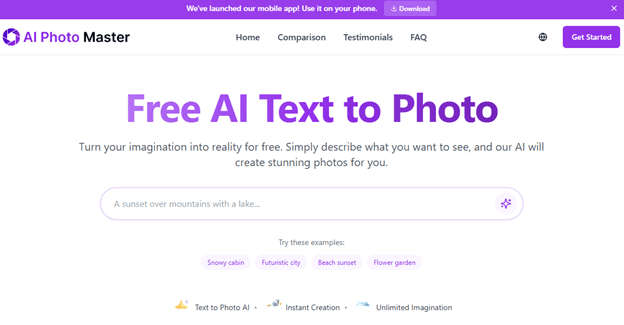
Writing effective prompts is key to getting high-quality results from AI text-to-image platforms. Clear, detailed instructions guide the AI, ensuring the generated visuals closely match the user’s vision. Platforms like AI Photo Master provide tools that make it easy for users to experiment with text-to-image creation, allowing beginners and professionals alike to bring ideas to life.
Include subject, style, environment, and mood: Strong prompts describe not just what is in the image, but how it should look. For example, instead of “a forest,” specifying “a foggy forest in early morning light with soft color tones and high detail” gives the AI clear guidance on lighting, atmosphere, and visual complexity.
Use positive and negative instructions: Positive prompts tell the AI what to include, while negative prompts indicate what to avoid. For instance, specifying that hands, faces, or perspectives should look natural helps prevent distortions. Users can also direct realism, cinematic lighting, lens effects, 4K details, or composition rules to refine results.
Break descriptions into steps: Complex scenes can be broken down into individual elements, making it easier for the AI to interpret and combine components accurately. This method helps maintain clarity and structure in the final image.
Experiment and iterate: One of AI’s strengths is rapid generation of multiple versions. Users can try different variations, adjust prompts, and refine descriptions until the output aligns with their concept. This iterative process allows beginners to achieve polished visuals without advanced artistic skills.
By focusing on detailed, structured prompts and experimenting with variations, users can maximize the potential of AI image generation, letting platforms like AI Photo Master handle the technical creation while they guide the creative vision.
Limitations and Challenges in Current AI Image Generation
AI image generation has made remarkable strides, but it still faces several challenges and limitations. Understanding these helps users set realistic expectations and make the most of current tools.
- Struggles with fine details: AI models often have difficulty rendering intricate elements like hands, fingers, or subtle facial expressions. These require nuanced visual understanding and consistency, which can be challenging for AI to achieve in complex scenes.
- Contextual and logical errors: In multi-object or multi-character scenes, relationships between elements may appear unnatural. For example, interactions between characters or the placement of objects can look illogical because AI relies on pattern recognition rather than real-world experience.
- Consistency across multiple images: Maintaining the same character or style across several generated images can be difficult. Variations may occur even when the same prompt is used. Some platforms are developing features like character tracking or style control, but results are still improving.
- Technical limitations: Processing time, image resolution, and computing resources can affect the generation process. While many platforms have optimized performance, highly detailed or complex outputs may still require longer wait times.
Despite these challenges, AI image generation continues to advance. Each new generation of tools improves realism, consistency, and creative control, gradually reducing the gap between user expectations and AI capabilities. Users can still produce impressive results, particularly when they combine detailed prompts with iterative refinement.
The Ethical Debate Around AI Generated Images
The rise of AI generated images has also opened a major ethical discussion. One concern is ownership. If a machine creates an image based on learned patterns, who truly owns it? Some argue that the user should have full rights since they provided the prompt. Others believe the rights belong to the platform. There is no universal legal agreement yet, and policies differ depending on regional laws and the terms of the service.
Another debate surrounds originality. AI learns from existing images, and critics worry that generated visuals might reflect influences from artists who never gave permission for their work to be used. This has sparked debates about consent, datasets, and copyright. Some platforms have begun to introduce ethical sourcing standards to create training datasets that respect original creators.
Representation is also part of the conversation. When people create images using AI, there is a question of whether the results portray reality truthfully or whether they risk crossing into misleading territory. Responsible use means enhancing images or visualizing concepts without creating false impressions that could misinform viewers. As with any powerful tool, guidance and transparency help ensure positive use while limiting the potential for misuse.
How Text-to-Image Tools Are Changing Traditional Creative Workflows
Creative workflows are undergoing a noticeable shift thanks to AI generated imagery. Teams that once needed days of sketching or visual trial now have access to instant concept generation. This does not eliminate traditional design skills. Instead, it gives professionals a new starting point. Instead of beginning from a blank page, they start with an AI generated reference and refine it further. The time saved in the early stages can be redirected toward polishing the final output.
Brainstorming sessions have also become more dynamic. Instead of discussing ideas verbally, teams can produce visual alternatives immediately. This improves communication and helps clients visualize the end result earlier in the process. The speed of idea generation helps prevent bottlenecks and keeps projects moving forward predictably. Creative workflows are becoming more efficient, allowing individuals and companies to manage larger volumes of visual tasks without requiring additional designers, photographers, or manual labor.
Final Thoughts
AI-generated images created from written words have transformed content production for professionals, hobbyists, and beginners alike. The technology brings visual creativity closer to everyone, regardless of skill level or design experience. Tools that support free AI text to photo generation give users freedom to test ideas, explore artistic directions, and bring concepts to life almost instantly.
Many platforms now compete to offer the fastest, most accurate, and most versatile solutions. Among them, AI Photo Master stands out with a strong focus on AI photo generation and photo enhancement tools. The website provides features such as AI photo editing, AI upscaling, and AI text-driven image production. These capabilities give users the ability to produce professional-quality visuals without requiring the same resources that traditional designers needed. While competitors like Remini are also present in the marketplace, AI Photo Master emphasizes a user-friendly workflow that is accessible to newcomers and efficient for experienced content creators alike.
As AI tools continue improving, the line between manual and automated creativity will blend further. Designers and artists will still play an important role, but platforms like AI Photo Master make the journey from imagination to image faster, simpler, and available to a wider community of creators around the world.