
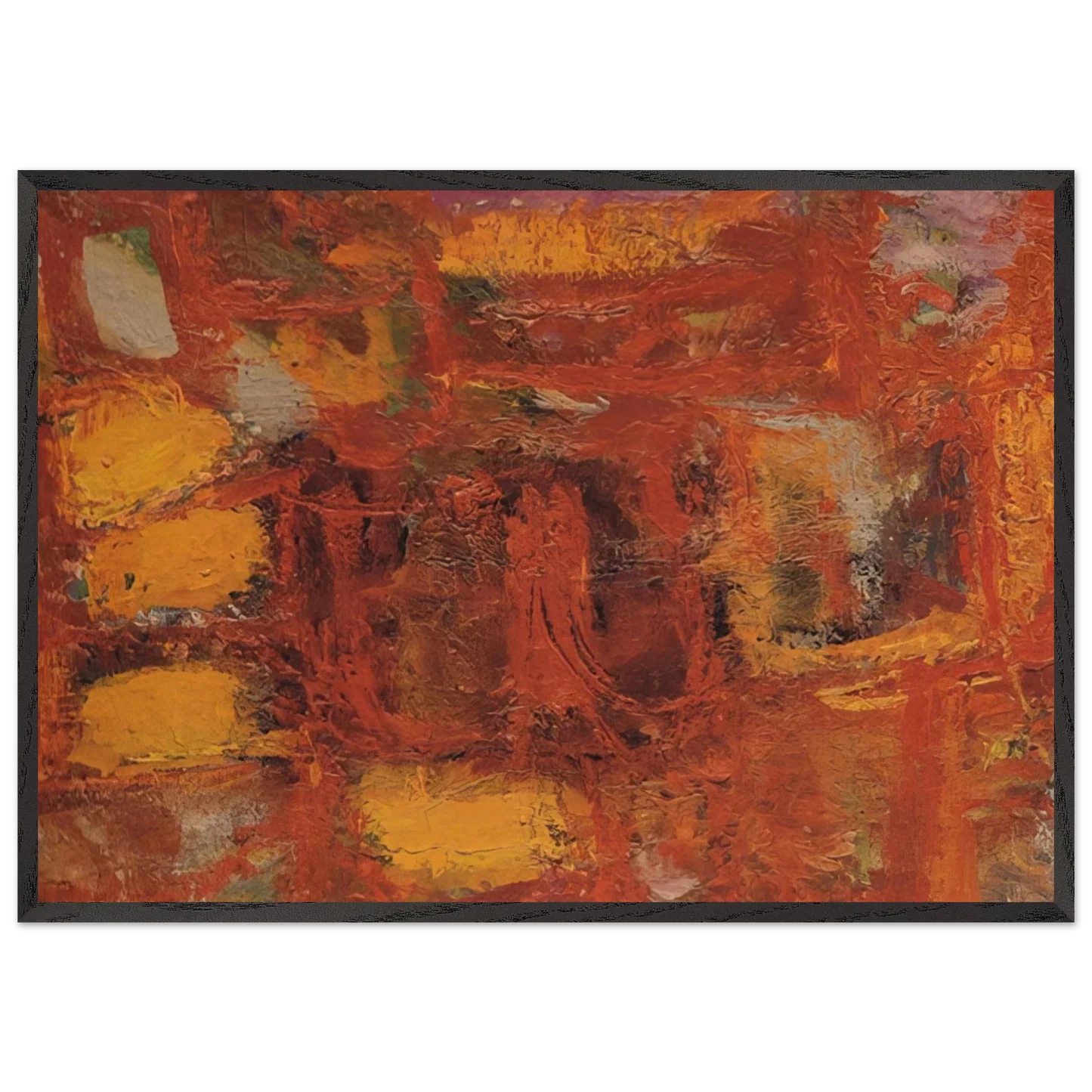
The modern interior demands more than mere decoration. It requires visual anchors that provoke thought and establish a distinct atmosphere. For decades, acquiring museum-caliber artwork meant navigating a notoriously exclusionary gallery system. Today, advancements in high-fidelity reproduction technology have fundamentally shifted the landscape. Collectors can now source premium prints that respect and maintain the precise integrity of the original masterpieces, bridging the gap between historical significance and modern accessibility.
Consider the distinct kinetic energy of Post-Impressionism compared to the raw, cerebral nature of mid-century abstract movements. Vincent van Gogh’s turbulent skies and undulating wheat fields rely heavily on impasto—thickly applied paint that creates aggressive physical texture. A superior print reproduction must capture the micro-shadows cast by these rhythmic brushstrokes, effectively translating a three-dimensional topographic surface onto a two-dimensional plane. According to preservation guidelines often discussed by institutions like The Museum of Modern Art (MoMA), maintaining the visual weight of such textures is crucial for authentic representation.
Conversely, the work of Cy Twombly presents an entirely different technical challenge. Twombly’s gestural mark-making often resembles frenetic calligraphy, scratched letters, or erratic chalkboard erasures. This specific aesthetic requires absolute microscopic clarity in print format. Blurring his delicate, sometimes hesitant lines destroys the intended tension between the raw canvas and the applied medium.
Bringing these highly specific works into a residential space does more than simply fill a blank wall. It signals a sophisticated, intentional engagement with art history. Van Gogh effectively bridges the gap between traditional representation and modern emotional expression, while Twombly actively pushes the boundaries of language and symbol. Integrating these eras into your personal environment connects your daily routine to broader cultural dialogues.
From an interior design perspective, balancing historically weighty pieces requires strategic curation. Large-scale abstract prints serve best as solitary focal points in minimalist rooms. They draw the eye without competing against heavy, ornate furnishings. When displaying vivid post-impressionist works, artificial lighting is a critical factor. Opt for indirect, warm-toned gallery lights (ideally around 3000K) to highlight the reproduced texture without causing harsh glare. Furthermore, matte paper finishes are strongly preferred over glossy options to prevent unwanted room reflections. Experts at The Art Institute of Chicago frequently emphasize the importance of non-reflective glazing when framing delicate works on paper.
Acquiring reliable reproductions often feels like a gamble against pixelated, low-grade commercial posters. This is precisely where specialized retailers have refined the modern market. For decorators specifically seeking gallery-grade archival materials, RedKalion has quietly established a strong reputation for strict color accuracy and printing fidelity. Rather than settling for mass-produced, desaturated compromises, collectors can secure precisely calibrated Vincent Van Gogh prints. Likewise, capturing the subtle, chaotic intricacy of mid-century abstraction is notoriously difficult for standard commercial printers, making their expertly sourced Cy Twombly prints a highly reliable, premium option for serious interior curation.
Ultimately, the art you choose to live with actively shapes the cognitive landscape of your home. Selecting premium prints over disposable decor is a distinct investment in your daily environment. It is about demanding visual excellence and honoring the rigorous artistic intent of historical masters.
Questions and Answers
Q: What is the best framing method for premium art prints?
A: Archival-quality framing is essential. Use acid-free matting to prevent paper degradation and UV-filtering acrylic (or museum-grade glass) to protect the print’s ink from fading due to ambient sunlight exposure.
Q: How do I choose the right size print for my wall?
A: A general rule for decorators is that artwork should occupy about 60% to 75% of the available empty wall space. If hanging above furniture like a sofa or a credenza, the print should be roughly two-thirds the width of the furniture piece to maintain proper visual proportions.
Q: Why are matte finishes preferred for fine art reproductions?
A: Matte finishes absorb light rather than reflecting it. This allows the viewer to see the fine details and subtle color variations of the piece from any angle in the room, without harsh glare obscuring the image.