

In recent years, Canada’s food system has been put to the test like never before. The COVID-19 pandemic, global logistics disruptions, labour shortages, and climate-related crop losses exposed just how vulnerable long supply chains can be. Empty shelves, delayed imports, and rising food prices were no longer abstract risks; they became lived realities for consumers, retailers, and producers alike.
As Canada looks ahead to 2026 and beyond, one solution is gaining renewed attention across the agricultural sector: commercial greenhouses.
A Wake-Up Call for Food Supply Chains
For decades, Canada has relied heavily on imported produce, particularly during shoulder seasons and winter months. While global trade remains essential, recent disruptions revealed the fragility of depending on distant production zones for everyday food staples.
According to industry observers, transportation bottlenecks, port congestion, and rising fuel costs have made imported produce more expensive and less predictable. At the same time, climate volatility, heat waves, droughts, and flooding have increased crop risk in traditional growing regions, both domestically and abroad.
“These events didn’t create weaknesses in the food system,” notes one Ontario-based produce distributor. “They exposed ones that were already there.”
Greenhouses as Risk Mitigation Infrastructure
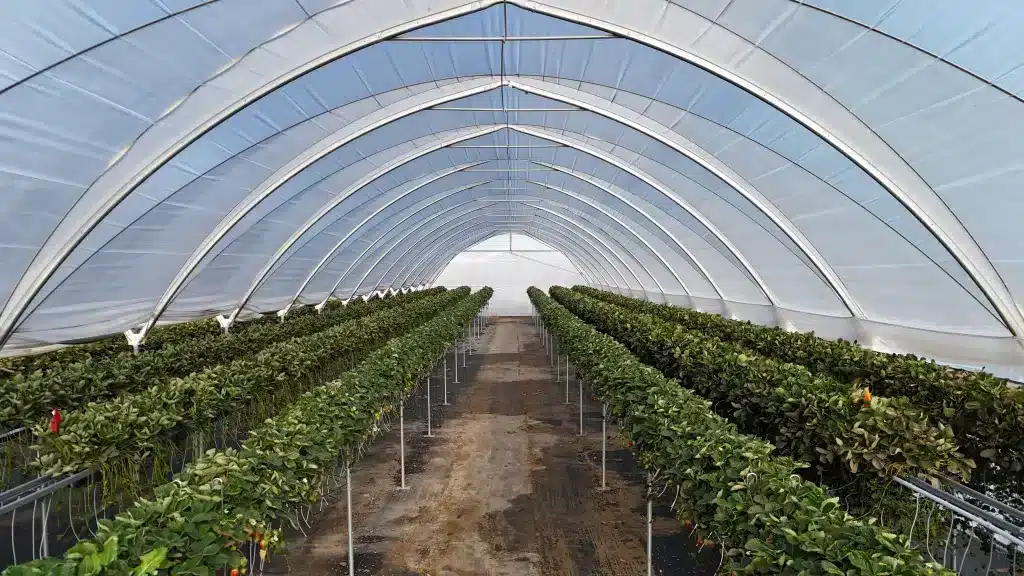
Commercial greenhouses are increasingly viewed not just as production assets, but as strategic food infrastructure. By enabling year-round, climate-controlled production, greenhouses reduce exposure to weather extremes and shorten the distance between growers and consumers.
Local greenhouse capacity allows fresh produce to move from grower to distributor to retailer in days rather than weeks. This reduces spoilage, stabilizes pricing, and improves food availability, particularly for high-demand crops such as leafy greens, tomatoes, cucumbers, and berries.
From a food systems perspective, greenhouses function as a buffer. When outdoor crops fail or imports are delayed, domestic greenhouse operations can maintain consistent output. For policymakers concerned with food resilience and sovereignty, this reliability is increasingly difficult to ignore.
Scaling Up to Meet National Demand
The effectiveness of greenhouse agriculture, however, depends on scale. Small, seasonal structures play a role, but strengthening national food systems requires commercial-grade facilities designed for long-term productivity, energy efficiency, and expansion.
Across Canada, growers are investing in larger, more robust greenhouse structures that can support advanced climate control systems, automation, and high-density crop production. These facilities are no longer niche operations; they are central players in the fresh produce supply chain.
Canadian manufacturers such as Harnois Greenhouses have supported this shift by supplying structures engineered specifically for northern climates. Designed to withstand snow loads, temperature extremes, and high humidity, modern commercial greenhouses allow growers to operate reliably year-round while optimizing light transmission and airflow.
Harnois projects with commercial growers, ranging from multi-acre vegetable operations to large-scale horticultural facilities, demonstrate how domestic greenhouse infrastructure can support meaningful production volumes without relying on imported structures or offshore supply chains.
Collaboration Across the Value Chain
Strengthening food systems is not the responsibility of growers alone. Distributors, retailers, and policymakers all play a role in creating the conditions for local greenhouse agriculture to thrive.
Distributors benefit from predictable volumes and shorter lead times. Retailers gain access to fresher, locally branded products that align with consumer demand for transparency and sustainability. Policymakers, meanwhile, see greenhouses as tools for economic development, rural employment, and reduced reliance on imports.
Several provinces have already begun integrating controlled-environment agriculture into broader food security and climate adaptation strategies. Incentives for energy efficiency, infrastructure investment, and innovation are helping accelerate adoption, though industry leaders argue that more coordinated, long-term policy frameworks are still needed.
Looking Forward: A More Resilient Food System
Canada’s food system will always be connected to global markets. But resilience lies in balance. Expanding domestic greenhouse capacity does not replace international trade; it strengthens it by reducing risk and improving stability.
As consumers increasingly prioritize local food, freshness, and reliability, commercial greenhouses are positioned at the intersection of economic pragmatism and food sovereignty. They offer a practical, scalable response to the vulnerabilities revealed in recent years.
From field to fork, the message is becoming clear: investing in Canadian greenhouse infrastructure is not just an agricultural decision; it is a strategic choice for the future of Canada’s food system.