
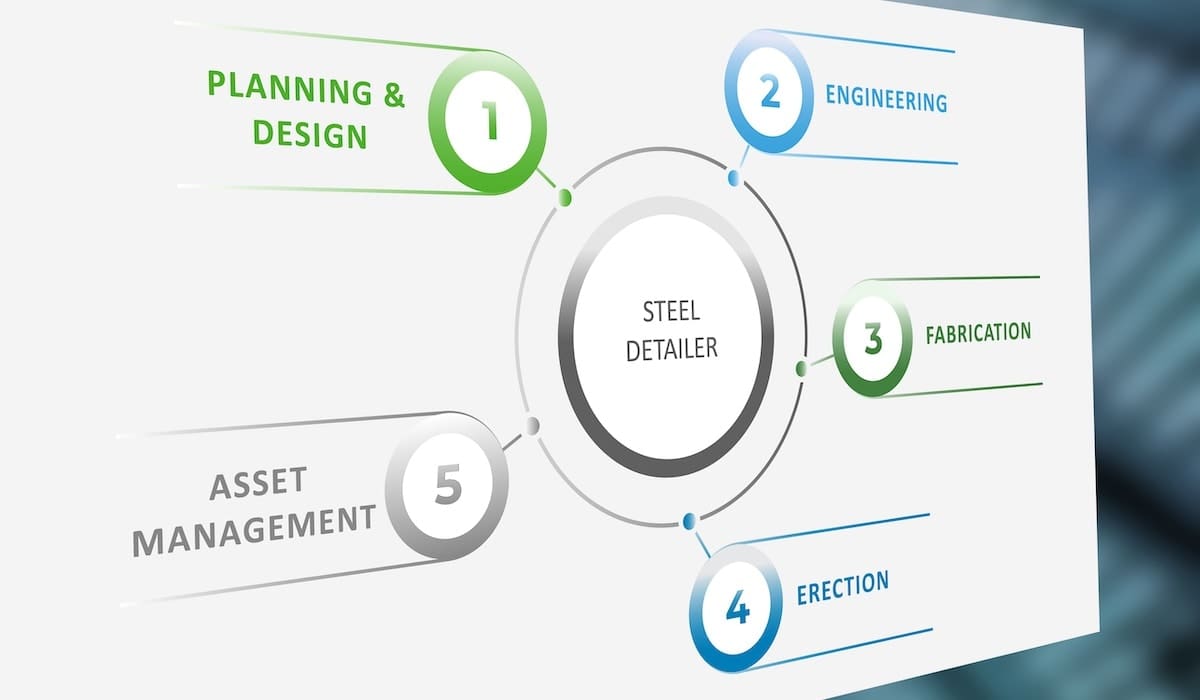
In today’s construction and infrastructure landscape, project success is increasingly defined by how smoothly design intent translates into on-site execution. With tighter schedules, higher safety expectations, and growing coordination complexity, gaps between design and construction can lead to costly delays and rework. Structural steel detailing plays a critical role in closing this gap by translating approved design intent into clear, fabrication-ready documentation.
As projects scale in size and technical complexity, structural steel detailing services have become a critical support function for ensuring constructability, coordination, and predictability across the project lifecycle.
Buildability as a Priority in Modern Projects
Buildability, also referred to as constructability, is no longer an afterthought addressed during construction. Owners, engineers, and contractors now expect buildability considerations to be embedded early in the project delivery process.
Structural steel modelling services directly support this shift by defining how steel components are detailed for fabrication and erection, while supporting project delivery without overriding the engineer of record or contractor means-and-methods responsibilities. Through accurate member layouts, connection details, and erection logic, detailing ensures that steel structures can be built efficiently and safely without excessive field adjustments.
In complex projects such as industrial facilities, data centers, and large commercial developments, constructability-driven detailing helps reduce site congestion, optimize sequencing, and improve coordination between trades.
Detailing as a Risk Mitigation Tool
Construction risk often arises from ambiguous, unclear connections, conflicting dimensions, or incomplete documentation. Structural steel detailing addresses these risks by documenting and coordinating engineered solutions, reducing uncertainty before fabrication begins.
Detailed drawings clarify:
- Connection configuration and interface conditions under load
- Interface conditions with concrete and other systems
- Tolerances and alignment requirements
- Fabrication and erection constraints
By resolving these aspects upfront, structural steel detailing services significantly reduce the likelihood of change orders, RFIs, and on-site rework. This proactive approach is especially valuable in fast-track projects where delays can have cascading cost impacts.
Digital Coordination and Model-Based Detailing
The industry’s move toward digital delivery has reshaped how steel detailing is performed. Model-based workflows enable detailing teams to work within coordinated 3D environments, supporting early clash detection and interdisciplinary alignment.
Rather than reacting to conflicts during construction, teams can identify and coordinate resolution of issues, virtually saving time and reducing waste. Steel detailing models also support downstream processes such as quantity take-offs, sequencing simulations, and digital handover documentation.
A capable provider of steel design services uses model-based detailing workflows to support multi-disciplinary coordination, enabling steel frameworks to integrate accurately within coordinated project designs.
Supporting Prefabrication and Modular Construction
Prefabrication and modular construction are gaining momentum across multiple sectors due to their benefits in speed, quality, and safety. Structural steel detailing is a foundational enabler of these approaches by supporting dimensional accuracy within documented specifications.
Prefabricated steel components require extremely high accuracy, as off-site fabrication leaves little room for on-site modification. Detailing drawings must clearly define dimensions, connections, lifting points, and assembly sequences to support smooth installation.
By delivering fabrication-ready outputs subject to approval and coordination workflows, detailing teams help maximize the benefits of prefabrication, reducing on-site labor, improving quality control, and minimizing disruption in constrained environments.
Industry Alignment and Engineering Discipline
Across global construction and infrastructure projects, disciplined detailing practices are a common trait among engineering-led organizations. Firms such as Moldtek, alongside internationally recognized companies like AECOM, Fluor, Kiewit, and Bechtel, demonstrate how structured detailing workflows contribute to predictable project delivery.
These organizations rely on accurate steel detailing to support coordination, maintain quality standards, and ensure compliance across complex project portfolios, highlighting the industry-wide importance of precision-driven engineering support.
Documentation That Supports the Full Project Lifecycle
Structural steel detailing delivers value beyond fabrication and erection. Well-prepared drawings and models serve as reliable references throughout the asset lifecycle, supporting inspection, maintenance, and future modifications.
For owners and operators, consistent documentation improves long-term asset management by providing clarity on structural configuration and connection behavior. In renovation or expansion projects, accurate as-built detailing reduces investigation time and improves planning efficiency.
You can explore how fabrication-ready documentation supports modern construction workflows through structural steel detailing services focused on accuracy, coordination, and compliance.
Adaptability Across Project Types
Structural steel detailing is applied across a wide range of project environments, including:
- Commercial and mixed-use developments
- Industrial plants and warehouses
- Data centers and mission-critical facilities
- Infrastructure and utility structures
Each environment presents unique challenges related to loading, geometry, and coordination. An experienced steel detailing company adapts its detailing approach to meet these demands while maintaining consistent quality and standards alignment.
Conclusion
As the construction industry continues to evolve, the ability to deliver buildable, coordinated, and risk-aware designs has become a key differentiator. Structural steel detailing sits at the intersection of engineering and construction, supporting the translation of design intent into practical, executable solutions.
By supporting buildability, reducing uncertainty, and enabling digital coordination, high-quality steel detailing remains a critical driver of efficient project delivery. In an era where precision and predictability matter more than ever, structural steel detailing continues to play a central role in shaping successful built environments.