

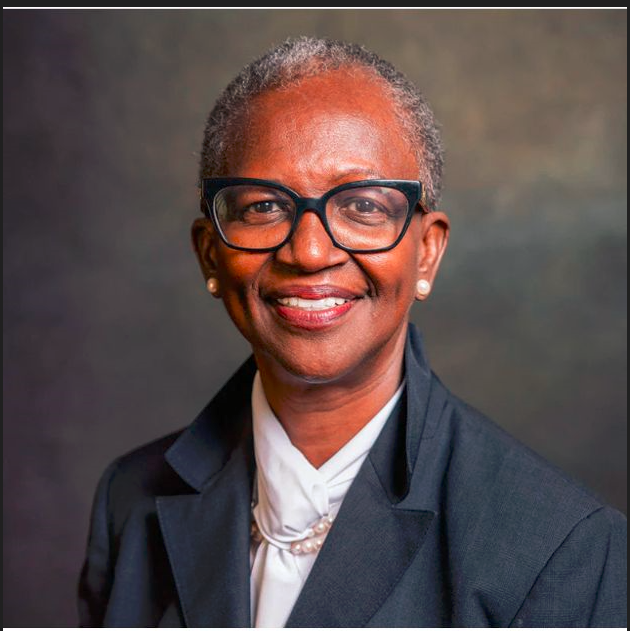
Leigh E. Johnson’s journey defies convention. Raised in a migrant worker family and moving between Fort Pierce, Florida, and Washington, D.C., her early years were defined by struggle and resilience. She left high school in the tenth grade. But her story didn’t end there. Instead, it unfolded into a remarkable arc of perseverance and reinvention. By 1977, she had earned her GED from Indian River Community College and later went on to accumulate degrees in social sciences, biology, and law, each with distinction.
Her upbringing taught her not only the value of hard work but also the necessity of human connection. These two elements would later form the foundation of her revolutionary approach to trial law, an approach that blends raw authenticity with the power of storytelling.
Military Discipline and Professional Focus
At just 18, Johnson enlisted in the United States Air Force. There, she served first as a Combat Telecommunications Specialist and later as an Air Traffic Controller. She earned several commendations for her performance, including the Air Force Good Conduct Medal and the Combat Readiness Medal. Following her service, she continued working in air traffic control at the FAA, managing a critical corridor between Los Angeles and San Francisco.
The rigor and responsibility of those roles became part of her DNA. She developed a command of structure and pressure. But more importantly, she learned how people function under stress, knowledge that would become vital in courtroom dynamics and jury behavior.
A Shift Toward Law and Human Psychology
Before entering law, Johnson worked at Bayer Corporation in supervisory roles related to pharmaceutical manufacturing. Her background in biology and the sciences gave her a sharp analytical edge. But it was her growing interest in psychology and narrative that ultimately defined her legal philosophy.
After earning her Juris Doctor from John F. Kennedy University School of Law, graduating cum laude and first in her class, Johnson was admitted to the California Bar in 2003. What followed was not just a legal career, but the gradual development of an interdisciplinary methodology that would set her apart from most trial lawyers.
Storytelling as a Legal Tool
Johnson is the founder of Trial Whisperer, Law Focus Groups, and Building The Case. Each venture reflects a different aspect of her vision, but they are united by a common thread: the belief that story, emotion, and action can fundamentally reshape legal advocacy.
Her work integrates psychodrama into legal practice, not as a gimmick but as a tool for revealing the emotional truth behind a case. Johnson employs techniques like role reversal and scene reenactments, drawing from psychodrama to help lawyers and clients connect with the deeper human stakes involved.
This isn’t storytelling in the theatrical sense. It is methodical, rigorous, and rooted in human experience. Her approach is especially powerful in cases where facts are fixed but meaning is not, where interpretation, empathy, and narrative shape the outcome more than the raw data.
Building The Case and Beyond
In 2025, Johnson published the first two volumes in her series Building The Case. The books offer practical and philosophical guidance on how to construct compelling legal narratives when the margin for error is slim and the consequences are high. One volume focuses on general storytelling for trial lawyers. The other tackles the distinct challenges of capital and death penalty cases.
Her writing does not rely on abstract theory. It is filled with real-world insight, grounded in her years of trial consulting, jury research, and mock trials. Johnson has conducted hundreds of focus groups and simulations, giving her a rare lens into how jurors think, feel, and decide.
Educator and Mentor
Since 2010, Johnson has served on the faculty at Gerry Spence’s Trial Lawyers College. Her workshops focus on story development, emotional authenticity, and the application of psychodrama in trial settings. She has also taught at the Death Penalty College and the Capital Defense College in Texas.
Her sessions are not traditional lectures. They are immersive experiences where lawyers learn by doing. Participants are asked to explore not just their cases but themselves, uncovering the emotional core that allows them to advocate with conviction.
She has also spoken at major legal associations, including the Asian American Bar Association and the Consumer Attorneys of California Women’s Caucus Program. Her talks often explore the intersection of culture, group dynamics, and jury psychology.
Recognition and Impact
Johnson has been named to the Northern California Super Lawyers list multiple times, including from 2014 through 2016 and again from 2019 to 2024. She was included in the Rising Stars list in 2012 and 2013. In 2024, she received the prestigious Zerka Moreno Award from the American Society of Group Psychotherapy and Psychodrama. The honor recognizes her contributions to both legal advocacy and therapeutic practice.
Her influence is felt not just in courtrooms but in the broader legal community. She leads the Bay Area Trial Skills Group, offering volunteer coaching to civil and criminal lawyers. Through her nonprofit and educational efforts, she continues to elevate the practice of law into a more human, story-driven profession.
The Advocate’s Compass
Leigh E. Johnson represents a rare fusion of intellect, intuition, and integrity. Her work is not about performance but about connection. She invites legal professionals to go beyond logic and evidence to uncover the emotional resonance of a case.
In doing so, she has created more than a method. She has built a movement, one that calls on lawyers to be not only advocates, but truth-tellers. Her journey from the Air Force to the courthouse is not simply inspiring. It is instructive. It reminds us that the most compelling stories are not invented. They are discovered.
And in Leigh E. Johnson’s world, discovery begins when we listen, when we feel, and when we dare to tell the truth out loud.
