
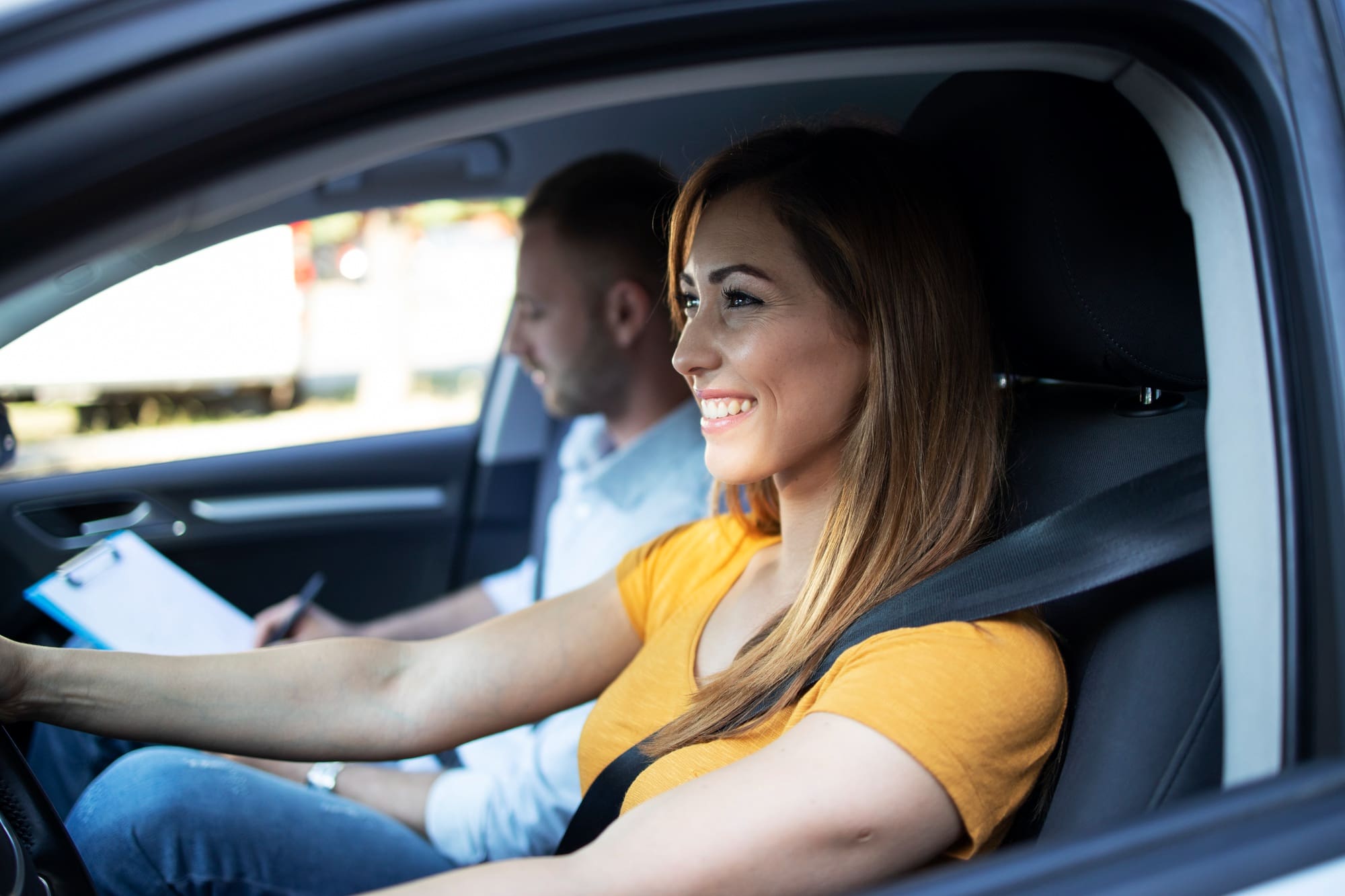
With the growing popularity of automatic vehicles and the perception that they are easier to drive, an increasing number of learners are opting to skip manual gears altogether. But according to Sevenoaks driving instructor Geoff Newman, the decision is often made for emotional reasons rather than practical ones — and that can sometimes lead to surprises later.
Newman, who teaches both manual and automatic driving lessons in the Sevenoaks area, says the conversation around automatic lessons has changed noticeably in recent years.
“Quite a few learners come to me already convinced they want to learn automatically,” he explains. “Often it’s because they feel overwhelmed by the idea of a manual gearbox.”
He hears the same kinds of comments repeatedly.
“They’ll say things like, ‘Manual felt like I was thinking about too many things at once,’ or ‘I just want to get my licence done as quickly as possible.’ Some believe that learning in an automatic way will make the whole process easier.”
And in some respects, that perception is understandable.
Without the need to coordinate clutch control and gear changes, automatic cars can reduce the amount of physical coordination required in the early stages of learning. Many nervous drivers feel more relaxed without worrying about stalling at junctions or juggling multiple pedals in busy traffic.
“For someone who’s anxious, removing the gears can take away a lot of pressure,” Newman says. “It can allow them to focus more on the road and less on the mechanics of the car.”
But while automatic cars remove one element of driving, they don’t change what the driving test actually assesses.
“A lot of learners are surprised by this,” Newman says. “They assume the test will somehow be easier in an automatic. But the reality is the standard is exactly the same.”
Driving examiners are still judging a candidate’s ability to observe properly, plan ahead, respond to hazards, manage speed, and make safe decisions in traffic.
“Changing gear is just one small part of driving,” Newman explains. “The things that most people fail for — observation, decision-making, awareness of other road users — those are exactly the same whether the car is manual or automatic.”
In fact, Newman says many faults have nothing to do with vehicle control at all.
“People rarely fail because they stall the car,” he says. “They fail because they misjudge a gap, hesitate too long at a junction, or don’t spot something developing ahead.”
Another area where misunderstandings often arise is the licence itself.
Learners who pass their test in an automatic car receive a licence that allows them to drive automatic vehicles only. They cannot legally drive a manual car without taking another driving test.
“That’s something many learners don’t fully appreciate at the start,” Newman says.
He often hears the same realisation after the fact.
“They’ll say, ‘I wish someone had explained that earlier.’ Or, ‘I didn’t realise I wouldn’t be able to drive a manual afterwards.’”
For some drivers, this restriction becomes more noticeable once they start looking for their first car.
“The second-hand car market in the UK is still heavily manual,” Newman says. “If you’re looking for something affordable as a first car, the choice is much wider with manual vehicles.”
Insurance can also be a factor.
“Younger drivers sometimes find that the range of automatic cars they can afford is smaller, and occasionally insurance costs can be higher depending on the vehicle,” he explains.
This doesn’t mean automatic licences are a bad choice — far from it. For some learners, they are clearly the right option.
“Some people genuinely do better in an automatic,” Newman says. “Particularly very nervous learners or people who find coordinating the clutch difficult.”
But he believes the decision should be made with a clear understanding of the trade-offs.
“My approach is simple,” he says. “I teach both manual and automatic, so learners can choose what suits them best. But I always encourage people to understand the implications before deciding.”
In Newman’s experience, many learners are surprised by how manageable manual driving becomes once it is taught properly.
“Coordination isn’t a talent you’re born with,” he says. “It’s a skill you learn.”
And once learners become comfortable with the mechanics of a manual car, they often realise that the bigger challenge in driving lies elsewhere.
“Driving is really about judgement,” Newman says. “It’s about reading the road, anticipating what other drivers might do, and making safe decisions.”
Those are the abilities that determine whether someone passes their driving test — and more importantly, whether they become a confident driver afterwards.
“Changing gear is just one part of the process,” Newman says. “The real skill is understanding what’s happening around you.”
For learners currently weighing up the automatic-versus-manual question, Newman’s advice is straightforward.
“Think about what you want from your licence,” he says. “If flexibility and choice matter to you in the future, manual is often the better option.”
“But if automatic genuinely helps you feel calmer and more confident behind the wheel, then it can be the right decision as well.”
The key, he says, is simply to make the choice with open eyes.
“Most people don’t regret learning manual,” Newman adds. “But quite a few people later wish they’d had the option.”
And in driving, as in many things, options can matter more than people initially realise.