

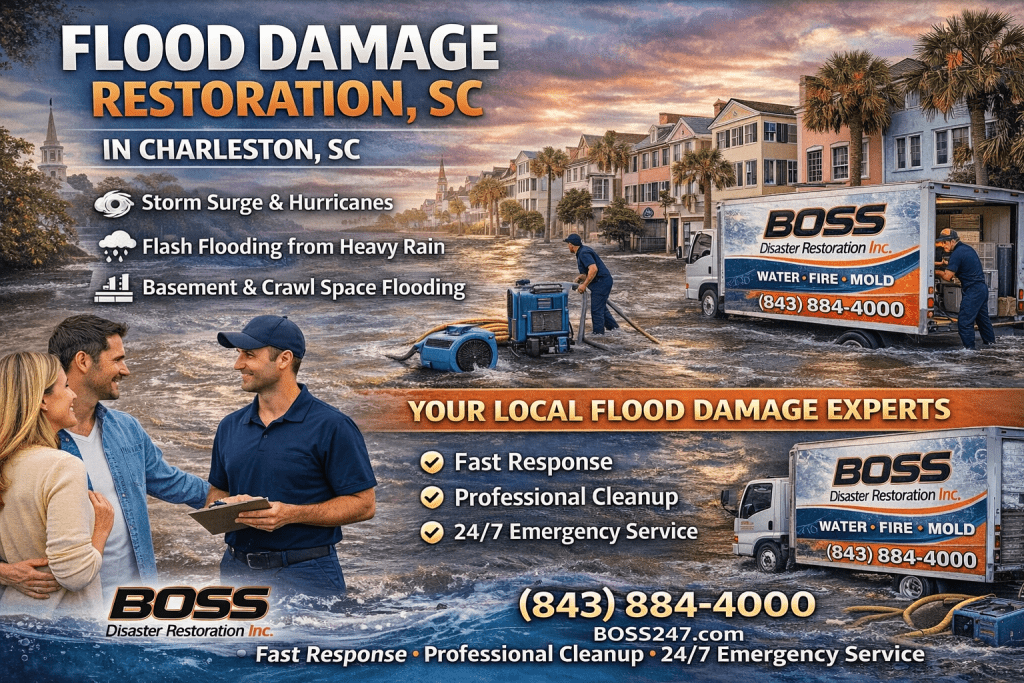
Flooding is an unfortunate reality for many Lowcountry homeowners. With its coastal location, low elevation, tidal influences, and exposure to tropical storms, flood damage restoration in Charleston, SC is not a niche service—it’s a critical necessity. From hurricane storm surge to sudden flash flooding, Charleston residents face unique challenges that require fast, knowledgeable, and professional restoration support.
If your home has experienced flooding, understanding what causes it, what steps to take, and how professional restoration works can make a stressful situation far more manageable. This homeowner’s guide walks you through everything you need to know about flood damage in Charleston and how to recover safely and effectively.
Why Flooding Is So Common in Charleston, SC
Charleston’s geography and climate combine to create a higher-than-average flood risk. Even homes outside designated flood zones can suffer serious water damage.
Coastal Location and Low Elevation
Much of Charleston sits just a few feet above sea level. High tides, storm surge, and heavy rainfall have nowhere to go, allowing water to accumulate quickly in streets, crawl spaces, and homes.
Hurricanes and Tropical Storms
Hurricane season poses the greatest flood risk. These storms bring:
- Intense rainfall over short periods
- Storm surge pushing seawater inland
- Wind-driven rain entering roofs and siding
Even a weak hurricane or tropical storm can cause significant flooding throughout the Charleston area.
Flash Flooding After Heavy Rain
Charleston’s drainage systems can become overwhelmed during sudden downpours. Flash flooding often occurs with little warning, sending water into homes through doors, garages, and foundations.
Basement and Crawl Space Flooding
While basements are less common, crawl spaces are widespread in Charleston homes. Groundwater intrusion and pooling after rainstorms can lead to serious moisture problems that spread upward into living spaces.
What Counts as Flood Damage?
Flood damage refers to water intrusion caused by external sources, such as:
- Storm surge
- Rising groundwater
- Overflowing bodies of water
- Heavy rainfall accumulation
Floodwater is often contaminated with bacteria, debris, and pollutants, making cleanup more complex and hazardous than standard water damage from a plumbing leak.
This is why professional flood damage restoration in Charleston, SC is essential for health, safety, and structural integrity.
Immediate Steps to Take After Flooding
Your actions in the first few hours after a flood can significantly affect the outcome.
Prioritize Safety First
- Avoid standing water, especially if electricity may be present
- Do not enter flooded areas until utilities are shut off
- Watch for structural instability
Document the Damage
Before cleanup begins (if safe to do so):
- Take photos and videos
- Make notes for insurance claims
- Avoid discarding damaged items until documented
Call Flood Restoration Professionals Immediately
Flood damage worsens quickly. Moisture spreads, materials deteriorate, and mold growth can begin within 24–48 hours. Calling flood damage restoration professionals as soon as possible helps limit long-term damage.
How Professional Flood Damage Restoration Works
Flood restoration is a multi-step process designed to safely remove water, dry the structure, and restore your home.
Step 1: Inspection and Damage Assessment
Professionals assess:
- Water contamination level
- Extent of structural saturation
- Hidden moisture behind walls and floors
This evaluation guides the restoration plan.
Step 2: Water Extraction and Removal
Industrial pumps and extractors remove standing floodwater quickly. This step is crucial for preventing further structural damage.
Step 3: Drying and Dehumidification
Floodwater leaves behind extensive moisture. Restoration teams use:
- Commercial air movers
- High-capacity dehumidifiers
- Targeted drying systems
Charleston’s humidity makes this step especially important.
Step 4: Cleaning, Sanitizing, and Odor Control
Because floodwater is often contaminated, affected areas are cleaned and sanitized to remove bacteria, pathogens, and odors.
Step 5: Repairs and Restoration
Depending on severity, restoration may include:
- Drywall and insulation replacement
- Flooring repair or replacement
- Structural repairs
- Cosmetic restoration
The goal is to return your home to its pre-flood condition—or better.
The Dangers of Delaying Flood Damage Restoration
Waiting too long after a flood can create serious problems.
Mold Growth
Warm temperatures and moisture create ideal conditions for mold, which can affect indoor air quality and health.
Structural Deterioration
Floodwater weakens wood framing, subfloors, and foundations over time, leading to costly repairs.
Increased Restoration Costs
The longer water sits, the more materials must be removed and replaced. Early intervention saves money.
Insurance Complications
Insurance policies typically require prompt mitigation. Delays can reduce or jeopardize coverage.
Why Local Experience Matters in Charleston Flood Restoration
Flood damage restoration is not one-size-fits-all. Charleston’s environment requires specialized knowledge.
Local professionals understand:
- Storm surge behavior
- Tidal flooding patterns
- Crawl space construction
- Coastal humidity challenges
An experienced local provider like Boss Disaster Restoration Inc. brings this regional expertise to every project, helping homeowners recover faster and more thoroughly.
If you’re looking for trusted flood damage restoration professionals, working with a company familiar with Charleston homes and conditions is a major advantage.
Flood Insurance vs. Restoration Services
Many homeowners are surprised to learn that standard homeowners insurance often does not cover flood damage. Flood insurance policies typically handle structural and content losses, while restoration companies focus on:
- Emergency mitigation
- Water removal and drying
- Cleaning and repairs
A professional restoration company can also assist with documentation to support your insurance claim.
Preventing Future Flood Damage in Charleston Homes
While floods can’t always be prevented, you can reduce risk by:
- Installing flood vents in crawl spaces
- Sealing foundation cracks
- Improving drainage around your home
- Elevating utilities where possible
- Scheduling routine inspections
Being proactive helps limit damage when storms strike.
Final Thoughts: Flood Damage Requires Immediate, Professional Care
Flooding is overwhelming—but you don’t have to face it alone. With the right response and experienced help, recovery is absolutely possible. Flood damage restoration in Charleston, SC is about more than cleanup—it’s about protecting your home, your health, and your future.
If your home has been affected by storm surge, hurricane flooding, or flash flooding, reaching out to experienced flood damage restoration professionals quickly can make all the difference.
Contact Information (NAP)
Boss Disaster Restoration Inc.
1055 Chuck Dawley Blvd, Mt Pleasant, SC 29464
(843) 884-4000