

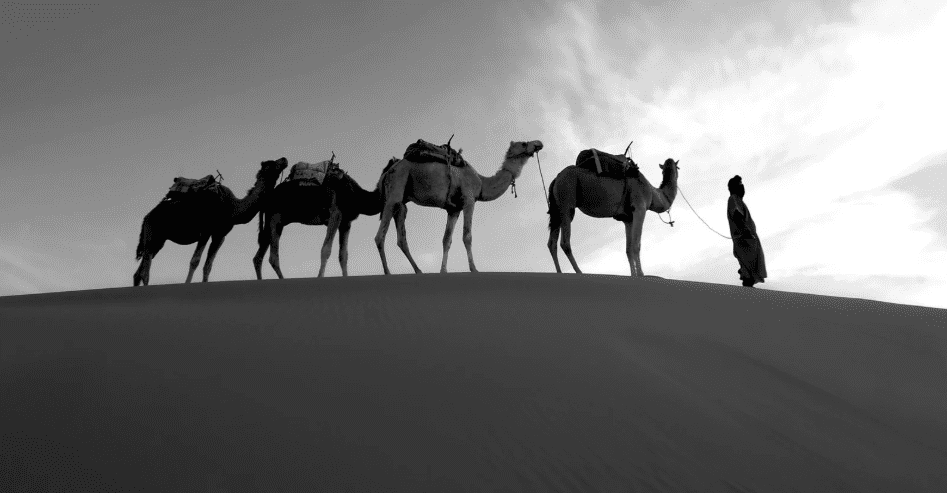
There’s a reason the phrase “Sahara sunset” shows up in so many Morocco highlight reels. Merzouga—home to the golden dunes of Erg Chebbi—is one of the easiest places in Morocco to experience that classic desert moment: riding a camel as the light turns soft, the dunes glow orange, and the horizon looks endless.
But is a sunset camel ride actually worth it once you factor in the long journey, the crowds, the costs, and the hype—especially if you’re starting in Fes?
If you’re planning the Fes to Merzouga route, this guide breaks down what the camel ride is really like, what you’ll pay for, what to pack, how to avoid the most common disappointments, and who should consider alternatives.
Why Merzouga is the go-to place for a camel ride at sunset
Merzouga isn’t the only desert gateway in Morocco, but it’s one of the most iconic because:
- Erg Chebbi dunes are tall and photogenic. You get that “sea of sand” look people expect from the Sahara.
- Sunset colors are dramatic. The dunes change shade quickly—gold to copper to pink—especially on clear evenings.
- Tour infrastructure is strong. Guides, camels, camps, and transport options are widely available, so it’s easy to book even last-minute.
That said, “easy to book” also means some rides can feel rushed or generic if you choose poorly. The trick is knowing what you’re signing up for.
The reality check: how far is Fes to Merzouga?
This is the part many travelers underestimate. The Fes to Merzouga journey is long—typically 7–9+ hours of driving depending on stops and the route. Most people do it in one of these ways:
Option A: 3-day tour (most comfortable)
This is the most popular format because it breaks the trip with scenic stops and an overnight in the middle (often in the Atlas/Middle Atlas region or near Tinghir/Dades depending on the itinerary).
Best for: first-timers, anyone who doesn’t want to drive, people who want stops planned.
Option B: 2-day tour (fast but intense)
You’ll spend a lot of time in a vehicle and may arrive tired—still doable, but the “sunset magic” can feel less magical if you’re exhausted.
Best for: tight schedules, travelers okay with long hours.
Option C: DIY by rental car (flexible and scenic)
If you’re confident driving and want to stop freely (Ifrane, Ziz Valley viewpoints, small towns), this can be the most rewarding option.
Best for: confident drivers, photographers, travelers who want control.
Option D: Bus + local arrangement (cheapest)
You can take a long-distance bus toward the southeast and arrange the camel ride locally. It’s budget-friendly but takes more planning and time.
Best for: budget travelers with flexible timing.
What a sunset camel ride in Merzouga is actually like
A typical sunset camel ride is not a wild “Indiana Jones” adventure. It’s usually calm, guided, and fairly structured. Here’s what to expect:
- Meet point & quick briefing
You’ll meet your guide near a hotel, a village edge, or a staging area by the dunes. You’ll likely be asked if you want a scarf (sometimes included, sometimes extra). - Mounting up (awkward but manageable)
The camel stands up in two stages—back legs then front—which can feel like a gentle lurch. It’s normal to feel unsteady for the first minute. - The slow walk into the dunes
The ride is usually 30–75 minutes one-way depending on your camp location or the sunset viewpoint. The pace is slow. - Stop for photos at the best light
Guides typically stop at a dune ridge during peak sunset. You’ll get 10–20 minutes (sometimes longer) to take photos and enjoy the view. - Return ride or continue to camp
Some experiences are “sunset ride and return.” Others are “sunset ride to camp,” where you arrive at a desert camp for dinner and a night under the stars.
So… is it worth it?
It’s worth it if you want:
- A classic Sahara experience that feels uniquely “Morocco”
- Golden-hour photos that actually look like the postcards
- A calm, memorable activity that doesn’t require skills or fitness
- A “story moment” that ties your trip together: city → mountains → desert
It might NOT be worth it if you:
- Expect a thrilling ride (it’s slow and gentle)
- Don’t like animals or feel uneasy around them
- Have significant back/hip/knee discomfort (mounting and the sway can be uncomfortable)
- Hate touristy experiences and want solitude (some routes can be busy)
A good way to think about it: the camel ride is less about adrenaline and more about atmosphere—light, silence, landscape, and the novelty of moving through dunes the old-fashioned way.
Costs: what you’ll pay (and what can be overpriced)
Prices vary a lot by season, group size, and whether it’s packaged with transport/camp. Instead of fixed numbers, here are realistic price buckets:
- Short sunset ride (return): often the lowest tier
- Sunset ride to camp + dinner + camp night: mid-range
- Luxury camp package: higher tier, but usually includes better bedding, private bathrooms (sometimes), and more comfort
Watch for these common “extras”:
- Scarves/turbans sold at a premium
- “Upgraded” photo stops or sandboarding fees (sometimes legit, sometimes not)
- Surprise charges for baggage transfer to camp (ask upfront)
Pro tip: Ask exactly what’s included:
- One-way or return?
- How long is the ride?
- Is the sunset stop included or rushed?
- Dinner/breakfast included (if staying overnight)?
- Private tent or shared?
- Bathroom situation?
How to choose a camel experience you won’t regret
Not all sunset rides feel the same. A great one usually comes down to timing, crowd level, and guide quality.
Look for these signs of a good operator:
- Clear duration (e.g., “45 minutes to camp”)
- Clear camp standard (basic vs luxury)
- No weird pressure to buy souvenirs
- Guides who are happy to help with photos but don’t rush you
Ask one key question:
“Will we stop at a high dune for sunset photos—and how long do we get?”
That single detail changes the whole experience.
What to wear + what to pack for a Merzouga sunset ride
Evenings in the desert can cool off fast, and the wind can kick sand into everything.
Wear:
- Long pants (more comfortable on the saddle)
- Closed shoes or sandals that won’t slip off
- Light layers + a warmer layer for after sunset
Bring:
- Sunglasses (sand + glare)
- A scarf or buff (for wind and dust)
- Phone/camera + a small power bank
- Lip balm and moisturizer (dry air)
- A small backpack (hands-free is easier than a tote)
If you’re staying overnight at a camp, add:
- Headlamp/flashlight
- Wet wipes
- Warm socks (seriously underrated)
Photo tips: how to get “that” Sahara sunset shot
You don’t need pro gear—just better timing and angles.
- Shoot slightly before the sun touches the horizon. That’s when dunes glow.
- Use dune ridges as leading lines. Walk a little higher than the group if you can.
- Get one wide shot and one close shot. Wide for scale, close for texture.
- Turn around. Sometimes the best light is behind you, lighting the dunes instead of the sun itself.
- Don’t over-edit. The desert already looks dramatic—too much contrast can make sand look muddy.
Safety + comfort: what to know
A sunset camel ride is generally safe when guided properly, but comfort varies by person.
- If you’re nervous, tell the guide before mounting—they can help you settle.
- Hold onto the saddle handle during the stand-up/sit-down moments.
- If you feel sore easily, consider a shorter ride or a 4×4 alternative.
Important: Choose operators that treat animals responsibly—healthy camels, no aggressive handling, reasonable load. A respectful experience feels better for everyone.
Alternatives if you don’t want to ride a camel
Camel riding is iconic—but it’s not mandatory.
- 4×4 sunset drive into the dunes: less physical, still scenic
- Sunset walk + sandboarding: fun and often quieter
- Sunrise instead of sunset: usually fewer people and softer calm light
If you’re mostly after photos and peace, sunrise can be the better choice.
Verdict: is the sunset camel ride in Merzouga worth it from Fes?
For most travelers: yes—if you plan it well.
The camel ride itself is simple, but the combination of dunes + golden light + desert silence is genuinely special, especially if you’re doing the full journey from Fes and want a “finale moment” that feels different from cities and mountains.
It becomes not worth it when it’s rushed, poorly organized, or sold as something it’s not. Choose a ride with clear duration, a real sunset stop, and a camp/return plan that matches your comfort level.
If you want the easiest way to bundle transport, a desert night, and the camel trek without juggling details, working with a Morocco Tours Agency can make the experience smoother—just make sure inclusions are clearly listed before you book.