

Enterprise Data Management Market Scope and Overview
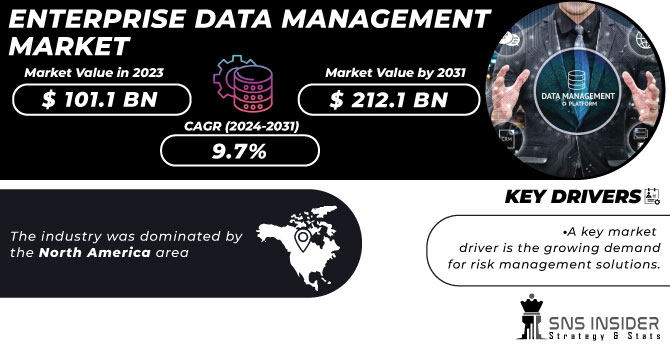
In today’s digital age, data has become one of the most valuable assets for organizations. Effective data management is not only a requirement for maintaining operational efficiency but also a key to unlocking valuable insights for strategic decision-making. The Enterprise Data Management Market plays a vital role in ensuring that organizations can efficiently manage, store, and utilize data across various sectors. EDM solutions encompass the processes, policies, and technologies required to manage and maintain data across an enterprise, facilitating seamless integration, security, and accessibility. As organizations continue to accumulate massive volumes of data, the demand for robust EDM solutions is on the rise, making it a pivotal market in the broader digital transformation landscape.
Competitive Analysis
The Enterprise Data Management market is characterized by intense competition, driven by the need for constant innovation and evolving data management requirements. Major players in this market include industry giants like International Business Machines Corp (IBM), Oracle Corporation, SAP SE, Broadcom, and Amazon Web Services (AWS). These companies have established themselves as leaders in the market, offering comprehensive data management solutions that cater to various industries and organizational needs.
IBM is known for its robust data management tools, including its data governance and master data management offerings, making it a strong player in this space. Oracle also commands a significant share of the market, leveraging its cloud infrastructure and advanced analytics capabilities to offer holistic EDM solutions. Broadcom and SAP SE have developed strong data integration and security tools that help organizations ensure compliance and protect sensitive information. Cloudera and Talend focus on big data and data integration, making them key players for organizations dealing with massive volumes of structured and unstructured data. Smaller but influential players like MindTree Ltd and Informatica are making strides in data integration, governance, and data security, providing specialized services for niche markets.
Each of these companies continues to invest heavily in research and development to stay ahead of the competition, introducing new features and capabilities that meet the changing needs of organizations across various industries.
Enterprise Data Management Market Segmentation
The Enterprise Data Management market can be segmented by deployment type, component type, enterprise size, function, and industry verticals. Each segment offers a unique insight into how EDM solutions are tailored to meet the specific needs of different organizations.
Deployment Type
- Cloud: Cloud-based EDM solutions are growing in popularity as they offer scalability, flexibility, and cost efficiency. As organizations shift towards cloud-first strategies, they are increasingly adopting cloud-based data management solutions to store, manage, and analyze data in real time. Cloud deployment allows organizations to reduce infrastructure costs while providing seamless integration with other cloud-based applications and services.
- On-premise: On-premise deployment remains relevant for organizations with stringent security and compliance requirements. Companies in sectors like banking, healthcare, and government often prefer on-premise solutions due to the need for tight control over data storage and access. These organizations prioritize data privacy and may have concerns about the security of cloud solutions, making on-premise EDM systems a preferred choice.
Component Type
- Software: The software segment includes various tools for data governance, data integration, data warehousing, and master data management. These solutions enable organizations to manage and analyze their data effectively, ensuring data consistency and availability. Software-based solutions also include advanced analytics capabilities, which allow organizations to derive actionable insights from their data.
- Service: The service component encompasses consulting, implementation, training, and support services provided by vendors. As organizations adopt EDM solutions, they often require expert guidance to implement and customize these tools to meet their specific needs. Service providers also offer ongoing support to ensure the continuous performance and optimization of data management systems.
Enterprise Size
- Small & Medium Enterprises (SMEs): SMEs are increasingly investing in EDM solutions as they realize the importance of data management for business growth. Cloud-based EDM solutions are particularly popular among SMEs due to their affordability and scalability. These solutions allow SMEs to leverage advanced data management capabilities without the need for large upfront investments in infrastructure.
- Large Enterprises: Large enterprises generate and manage vast amounts of data, making EDM solutions a necessity for them. Large organizations often require customized data management solutions to address their complex data needs, including data integration, governance, and security. These organizations are more likely to invest in both cloud and on-premise solutions to meet their diverse requirements.
Function
- Data Warehouse: Data warehousing solutions are essential for consolidating large volumes of data from various sources, providing a central repository for data storage and analysis. These solutions enable organizations to store historical and current data, allowing for better decision-making through data analytics.
- Data Governance: Data governance ensures that data is accurate, consistent, and compliant with regulatory standards. With growing concerns over data privacy and security, data governance has become a critical function in EDM, helping organizations maintain control over their data assets.
- Data Integration: Data integration tools allow organizations to combine data from different sources, ensuring a unified and coherent view of their data. These tools are particularly important for organizations that deal with data from multiple systems and applications.
- Data Security: Data security is a key concern for organizations, especially in sectors like healthcare, finance, and government. EDM solutions that offer robust data encryption, access controls, and compliance monitoring are essential for protecting sensitive data from cyber threats and breaches.
- Master Data Management: Master data management (MDM) helps organizations create a single source of truth by managing the core data entities such as customers, products, and suppliers. MDM solutions ensure data consistency and accuracy across the organization, reducing redundancies and errors.
- Others: Other functions of EDM include data quality management, metadata management, and data lineage tracking. These functions contribute to the overall effectiveness of an organization’s data management strategy.
Industry
- BFSI (Banking, Financial Services, and Insurance): The BFSI sector relies heavily on EDM solutions for risk management, regulatory compliance, and customer data management. Financial institutions handle vast amounts of sensitive data, making EDM solutions critical for ensuring data accuracy, security, and accessibility.
- Retail: In the retail industry, EDM solutions help businesses manage customer data, inventory data, and supply chain information. Retailers use EDM to analyze consumer behavior, optimize inventory levels, and improve overall operational efficiency.
- Healthcare: The healthcare industry generates massive amounts of patient data, making data management crucial for improving patient outcomes and ensuring compliance with regulatory requirements like HIPAA. EDM solutions help healthcare providers manage electronic health records, patient data, and billing information securely and efficiently.
- IT & Telecom: The IT and telecom sectors are data-intensive industries that require efficient data management to ensure seamless operations. EDM solutions help telecom companies manage customer data, network data, and service delivery data, enabling them to improve customer satisfaction and operational performance.
- Manufacturing: In the manufacturing sector, EDM solutions are used to manage production data, supply chain data, and equipment maintenance data. Manufacturers rely on EDM to optimize production processes, reduce downtime, and improve overall efficiency.
- Government: Government agencies use EDM solutions to manage public data, ensure compliance with regulations, and improve service delivery. EDM helps government organizations maintain accurate records, enhance transparency, and protect citizen data.
- Others: Other industries that benefit from EDM solutions include energy, education, transportation, and hospitality. These sectors rely on data management to improve decision-making, enhance operational efficiency, and ensure data compliance.
Key Growth Drivers of the Enterprise Data Management Market
Several factors are driving the growth of the Enterprise Data Management market:
- The exponential growth of data, driven by the increasing adoption of digital technologies, is a major driver for EDM solutions. Organizations need advanced tools to manage and analyze large volumes of data effectively.
- Stringent data privacy regulations, such as GDPR and CCPA, are forcing organizations to invest in robust data management solutions to ensure compliance and avoid penalties.
- The growing adoption of cloud-based solutions is boosting the demand for EDM, as organizations seek scalable and flexible data management systems that can be accessed from anywhere.
- With the rise in cyber threats, organizations are prioritizing data security, driving the demand for EDM solutions that offer robust encryption and access control features.
- The integration of artificial intelligence and machine learning into EDM solutions is enabling organizations to derive actionable insights from their data, enhancing decision-making processes.
Strengths of the Enterprise Data Management Market
The Enterprise Data Management market offers several strengths, including:
- EDM solutions are designed to scale with an organization’s data needs, making them suitable for both small businesses and large enterprises.
- With both cloud and on-premise deployment options, organizations have the flexibility to choose the solution that best fits their needs.
- EDM solutions ensure that data is accurate, consistent, and up to date, improving the quality of business decisions.
- EDM solutions help organizations comply with regulatory requirements, reducing the risk of penalties and reputational damage.
Key Objectives of the Market Research Report
The key objectives of the Enterprise Data Management market research report include:
- The report aims to provide a comprehensive understanding of the factors driving the growth of the EDM market, including trends, challenges, and opportunities.
- The report highlights the major players in the EDM market and analyzes their strategies, strengths, and market share.
- The report provides detailed insights into the various market segments, including deployment types, components, enterprise sizes, functions, and industries.
- The report projects the future growth of the EDM market, helping stakeholders make informed decisions about investments and strategies.
Conclusion
The Enterprise Data Management market is poised for significant growth in the coming years, driven by the increasing importance of data in decision-making processes, regulatory compliance, and operational efficiency. With key players like IBM, Oracle, and SAP leading the charge, the market is becoming more competitive, pushing companies to innovate and offer more advanced solutions. As organizations continue to embrace digital transformation, the demand for scalable, flexible, and secure EDM solutions will only increase, making it a critical market for businesses across various industries.
Table of Contents
- Introduction
- Industry Flowchart
- Research Methodology
- Market Dynamics
- Impact Analysis
- Impact of Ukraine-Russia war
- Impact of Economic Slowdown on Major Economies
- Value Chain Analysis
- Porter’s 5 Forces Model
- PEST Analysis
- Enterprise Data Management Market Segmentation, by Deployment
- Enterprise Data Management Market Segmentation, by Component Type
- Enterprise Data Management Market Segmentation, by Enterprise Size
- Enterprise Data Management Market Segmentation, by Function
- Enterprise Data Management Market Segmentation, by Industry
- Regional Analysis
- Company Profile
- Competitive Landscape
- USE Cases and Best Practices
- Conclusion
Contact Us:
Akash Anand – Head of Business Development & Strategy
info@snsinsider.com
Phone: +1-415-230-0044 (US) | +91-7798602273 (IND)
About Us
SNS Insider is one of the leading market research and consulting agencies that dominates the market research industry globally. Our company’s aim is to give clients the knowledge they require in order to function in changing circumstances. In order to give you current, accurate market data, consumer insights, and opinions so that you can make decisions with confidence, we employ a variety of techniques, including surveys, video talks, and focus groups around the world.
Read Our Other Reports:
Online Trading Platform Market Size
SIP Trunking Services Market Trends
Data Center Automation Market Analysis