
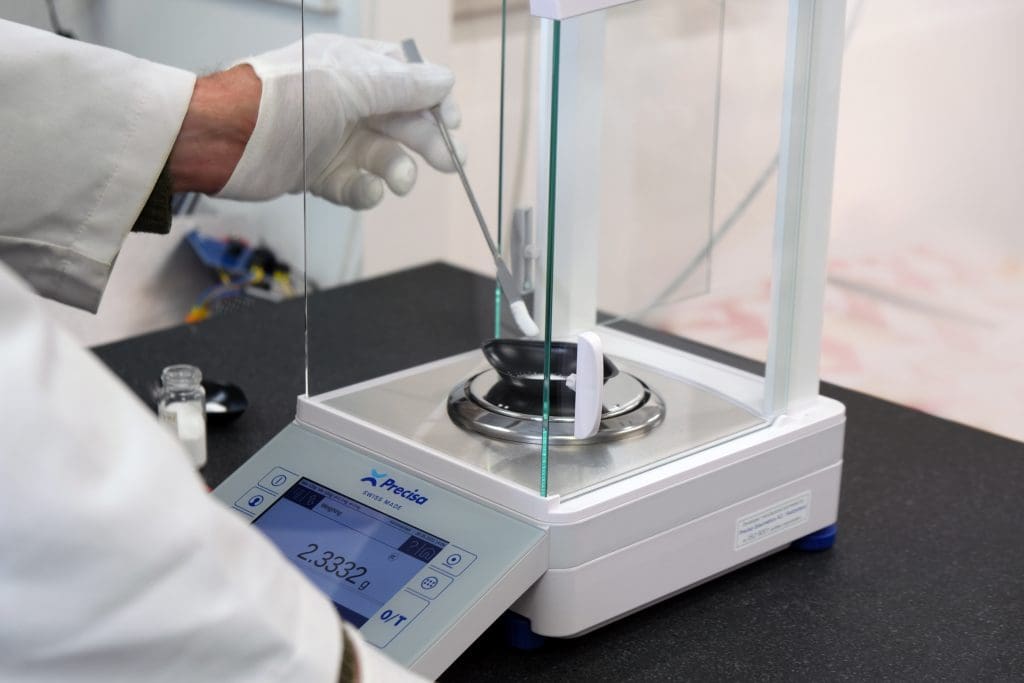
Electronic balances are foundational to laboratories in pharmaceuticals, food and beverage, environmental testing, and countless other sectors. They underpin everything from formulation and compounding to quality control and research. A balance even slightly out of calibration can introduce errors that ripple through entire workflows, impacting results, compliance, and product safety.
Why Electronic Balance Calibration Is Critical
- Precision and Accuracy: Analytical and precision balances are designed for measurements as fine as 0.1 mg. Even a tiny drift can mean the difference between a passing and failing batch.
- Regulatory Requirements: GLP, GMP, ISO, and industry-specific standards require regular calibration of laboratory balances, with full traceability and documentation.
- Quality Assurance: Accurate weighing is fundamental to product consistency, safety, and research integrity.
A miscalibrated balance in a pharmaceutical lab could result in incorrect dosages, impacting patient safety and triggering recalls.
Causes of Balance Drift
- Environmental Factors: Drafts, vibrations, temperature changes, and humidity can all affect readings.
- Mechanical Stress: Overloading or dropping the balance can permanently damage internal mechanisms.
- Aging Components: Load cells and electronics degrade over time, leading to drift.
- Improper Leveling: Even a slight tilt can introduce significant measurement errors.
- Static Electricity: Particularly in dry conditions, static can cause erratic readings.
Calibration Best Practices
1. Scheduled Calibration and Adjustment
Set a regular calibration schedule—typically every 3–6 months for high-precision balances or based on usage and criticality.
2. Use Accredited Calibration Services
Rely on ISO/IEC 17025 accredited providers, such as SIMCO’s balance calibration services, to ensure high accuracy and traceability.
3. Multi-Point Calibration
Calibrate at several weights across the balance’s full range, not just at a single point. This verifies linearity and repeatability.
4. Environmental Controls
Place balances on vibration-free surfaces in draft-free, temperature-stable areas. Calibrate in-situ for best results.
5. Regular User Checks
In between professional calibrations, use certified test weights to perform quick accuracy checks. Record results in a logbook for traceability.
The Calibration Process
A full calibration typically involves:
- Pre-Inspection: Checking for physical damage, cleanliness, and proper leveling.
- Performance Testing: Using certified weights at multiple points to assess accuracy, linearity, and repeatability.
- Adjustment: Making corrections if the balance is adjustable.
- Documentation: Issuing a calibration certificate with as-found/as-left data, uncertainties, and traceability.
SIMCO’s balance calibration services provide all of these steps, plus expert recommendations for ongoing maintenance.
Real-World Examples
A food company recalled several product batches after discovering that a miscalibrated balance had led to incorrect ingredient proportions, affecting both safety and taste.
In a pharmaceutical lab, a failed FDA audit was traced to poor calibration records and out-of-tolerance balances, resulting in costly remediation and loss of customer trust.
Actionable Tips
- Always warm up balances before use (typically 30 minutes)
- Level the balance before every weighing session
- Avoid touching weights with bare hands—use tweezers or gloves
- Clean the weighing pan regularly to prevent contamination
- Quarantine any balance that fails a spot check until recalibrated
Why SIMCO?
SIMCO offers:
- On-site and in-lab calibration
- Calibration for analytical, precision, and microbalances
- Digital certificate management for audit readiness
- Expert advice on environmental setup and routine checks
Conclusion
Electronic balance calibration is foundational to laboratory accuracy, compliance, and quality. By implementing a rigorous calibration program and partnering with experts like SIMCO, you can protect your results, your products, and your reputation.
