
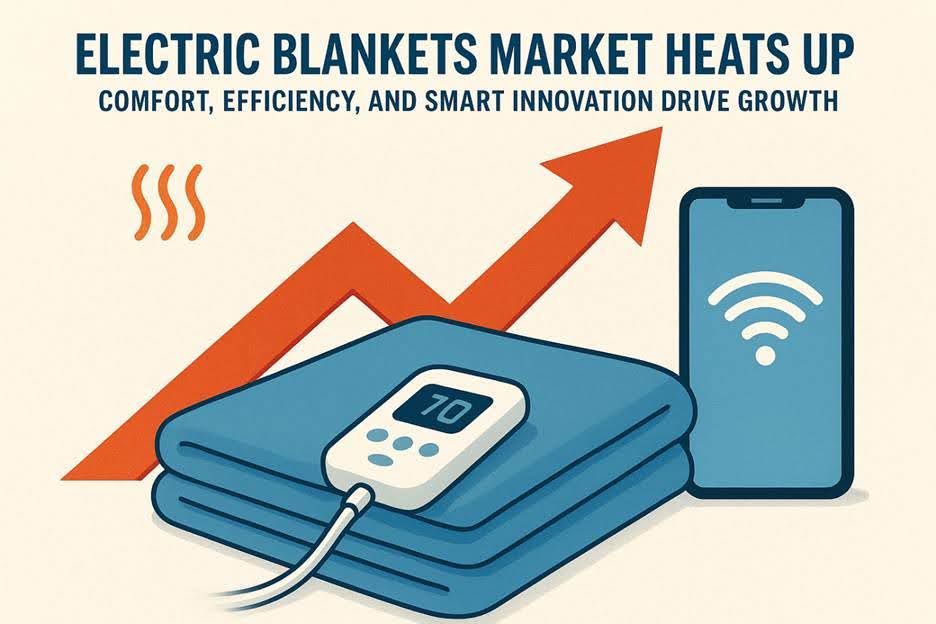
The global electric blankets market is experiencing steady expansion as consumers prioritize home comfort, energy efficiency, and wellness-driven heating solutions. Rising disposable incomes, growing urbanization in cold-climate regions, and a renewed focus on in-home comfort following extended periods spent at home have increased demand for electric blankets across residential and hospitality sectors. Product innovations from safer heating fabrics and automatic temperature controls to smart, connected blankets are broadening appeal and enabling manufacturers to move beyond seasonal sales toward year-round positioning.
Market Drivers and Consumer Preferences
Key drivers include energy-conscious purchasing behavior and the cost savings electric blankets can offer compared with whole-home heating. Consumers show heightened interest in personalized comfort: dual-zone and multi-heat settings, pre-heat timers, and washable designs that balance convenience with hygiene. Health and wellness trends are pushing adoption among older adults and people with chronic pain who benefit from consistent, localized warmth. In hospitality and short-stay lodging, electric blankets are increasingly used to improve guest experience while reducing heating bills, supporting commercial demand.
Emerging Trends and Technological Advances
Smart electric blankets represent one of the fastest-growing product categories. Integration with home automation ecosystems, smartphone apps, voice assistants, and sleep-tracking features lets users schedule warm-ups, monitor energy use, and receive safety alerts. Advanced materials, breathable, antimicrobial fabrics, and phase-change materials that store and release heat improve comfort and safety. Safety innovations such as overheat protection, automatic shutoff, low-voltage designs, and reinforced wiring have reduced consumer concerns and expanded potential use cases, including baby-safe models and pet-warming solutions.
Opportunities for Manufacturers and Retailers
Brands that combine smart features with sustainable materials and transparent energy-efficiency claims can capture eco-conscious buyers. Subscription models and extended-warranty packages represent new revenue streams, while collaborations with bedding and mattress brands create bundled offerings that increase average order values. Emerging markets in Eastern Europe, parts of Asia, and cold-climate pockets in Latin America present untapped demand, especially where winter electrification and improving retail infrastructure coincide.
Challenges and Regulatory Considerations
The market faces challenges, seasonal demand volatility, price sensitivity in some regions, and regulatory scrutiny over electrical safety standards. Manufacturers must navigate divergent certification requirements across geographies and invest in robust quality control to avoid recalls, which can damage brand trust. Environmental concerns around disposable electricity use and end-of-life textile waste are pushing stakeholders to consider recyclable or long-lifecycle designs.
Market Segmentation and Channel Dynamics
The market is segmented by product type (electric blankets, heated mattress pads, throw blankets), by technology (wired, wireless, low-voltage, carbon-fiber heating), by distribution channel (e-commerce, specialty retailers, mass merchandisers, direct-to-consumer), and by end-user (residential, hospitality, healthcare). E-commerce continues to gain share due to convenience, rich product information, and subscription/aftermarket services, however, in-store demonstrations and certifications remain important in trust-sensitive categories.
Future Outlook and Forecast Drivers
The electric blankets market is expected to transition from a predominantly seasonal commodity to a feature-rich lifestyle category. Continued adoption of IoT-enabled products, expansion into adjacent use cases (therapeutic heating, pet care, outdoor leisure), and rising retrofit demand in regions upgrading household electrification will support growth. Energy pricing dynamics and climate patterns will influence regional trajectories, manufacturers that emphasize energy-saving performance and strong safety features will be best placed to capture sustained market share.
Sustainability, Safety, and Brand Differentiation
Sustainability will be a competitive axis that is durable construction, recyclable components, and lower standby power draw will increasingly influence purchasing decisions. Brands that can demonstrate independent safety certifications, transparent energy consumption metrics, and circular-design commitments will build consumer trust. Clear communication about washability, durability, and warranty terms will differentiate premium offerings in a crowded market.
Recent Developments in the Electric Blanket Market
In October 2025, Xiaomi introduced the Mijia Smart Electric Blanket. The blanket features advanced safety protections, dual-zone temperature control, and can be controlled via remote, mobile app, or voice commands. It also includes a “mite-removal” and disinfection cycle that claims to eliminate up to 99% of dust mites. The heating element uses double-helix wires for even heat distribution, and retail shipments began in late October 2025.
In October 2025, UK energy suppliers Octopus Energy and OVO launched programs to provide free electric blankets to vulnerable households, including the elderly and people with health conditions. The initiative aims to help customers save on energy bills by offering a cost-efficient alternative to heating the entire home, with operating costs as low as 2–4 pence per hour.
In June 2025, the U.S. Consumer Product Safety Commission recalled approximately 8,560 MaxKare electric blankets due to overheating and fire hazards. The blankets, sold between 2021 and 2024, were linked to several incidents, including burn injuries and fires. Consumers were advised to stop using the blankets immediately and request a full refund.
Conclusion
As consumer expectations evolve, the electric blankets market offers robust opportunities for innovation-led brands, retailers, and service providers to deliver safer, smarter, and more sustainable warmth. Stakeholders that balance technological differentiation with regulatory compliance and sustainability will shape the industry’s next phase of growth and make year-round comfort an achievable standard for households globally.
About Author:
HTF Market Intelligence Consulting is uniquely positioned to empower and inspire with research and consulting services to empower businesses with growth strategies, by offering services with extraordinary depth and breadth of thought leadership, research, tools, events, and experience that assist in decision-making.
