
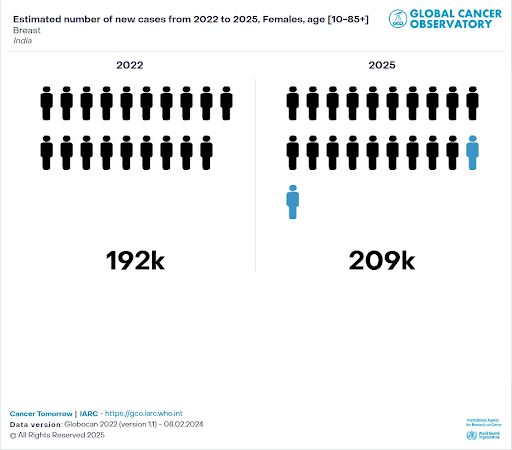
According to GLOBOCAN, breast cancer is one of the most common cancers affecting women worldwide.
Many cases are successfully treated when detected early. The challenge is that early signs are often subtle, painless, and easy to dismiss.
Most women delay seeking help because they assume changes are “normal” or temporary.
Others wait due to fear or lack of awareness. Understanding early warning signs can make a real difference. Early detection improves treatment options, recovery, and long-term outcomes.
In this blog, you’ll obtain expert insights from a breast specialist doctor in Nagpur and come to know about the early signs of breast cancer and why timely evaluation matters. Here’s how you should do a self-breast examination, and then decide whether you need to consult a doctor for tps://youtube.com/shorts/HiQMLgv9kCA?si=enFxZKViY2ihjzvQ
1. A lump in the breast or underarm
A new lump is the most widely known sign of breast cancer. Not every lump is cancerous, but any new or unusual lump should be checked.
Cancerous lumps are often:
- Hard or firm
- Irregular in shape
- Painless
- Fixed to the surrounding tissue
Lumps may appear in the breast, near the armpit, or along the collarbone. Even if the lump is small or not painful, it should not be ignored.
2. Changes in breast size or shape
Changes in the breast that can be seen due to age or weight changes are regular. But a sudden change in size, shape, or appearance of one breast needs attention.
Warning signs include:
- One breast is becoming noticeably larger
- Swelling without an apparent reason
- Uneven appearance that was not present before
These changes may occur gradually, which is why regular self-observation is essential.
3. Skin changes on the breast
Breast cancer can sometimes lead to visible changes in the skin. These changes are often mistaken for allergies or infections.
Watch for:
- Redness or darkening of the skin
- Thickened or dimpled skin
- Skin that looks like an orange peel
- Persistent itching or irritation
Many women ignore it. But if the condition does not improve over time, you should definitely consult a doctor.
4. Nipple changes or discharge
The nipple area can show early warning signs that many women overlook.
Signs to watch for:
- Inward turning or retraction of the nipple
- Crusting or scaling around the nipple
- Nipple pain without injury
- Discharge that is bloody or occurs without squeezing
Now this is a red flag. Any unusual nipple change should be assessed, even if it seems minor.
5. Breast pain that does not go away
Most breast pain is linked to hormonal cycles and is usually harmless. However, persistent pain in one area of the breast that does not improve should not be ignored.
Pain related to breast cancer:
- It is often localised to one spot
- Does not follow menstrual cycles
- Persists over time
Pain alone does not confirm cancer, but combined with other symptoms, it needs attention.
6. Swelling or warmth in the breast
Some types of breast cancer cause swelling or a feeling of warmth. This can sometimes resemble an infection.
Seek evaluation if you notice:
- Continuous swelling in part or all of the breast
- Warmth in the breast that does not go away
- Skin tightness or heaviness in the breast
Inflammatory breast cancer, although less common, often presents this way and needs urgent care.
Why early detection matters
Breast cancer detected at an early stage is easier to treat. Early diagnosis often means:
- Less extensive surgery
- Better treatment response
- Higher survival rates
- Faster recovery
Delays can lead to cancer spreading to nearby lymph nodes or other organs, making treatment more complex.
When should you see a doctor?
You should consult a doctor if:
- A new lump appears and lasts more than two weeks
- Skin or nipple changes persist
- Pain or swelling does not improve
- There is unexplained nipple discharge
Regular self-breast awareness and age-appropriate screening help identify problems early.
Understanding breast cancer treatment options
Treatment depends on the type, stage, and spread of cancer, as well as the patient’s overall health. Standard treatment approaches include:
- Surgery
- Chemotherapy
- Radiation therapy
- Hormonal or targeted therapy
With advances in medicine, Breast Cancer Treatment in Nagpur is now more structured, personalised, and focused on both survival and quality of life. Treatment planning often involves a team approach to ensure accurate diagnosis and appropriate care.
The role of a specialist in breast cancer care
Breast cancer management requires expertise and experience. A trained specialist understands not just the disease but also the emotional and physical impact on patients.
A breast specialist plays a key role in:
- Early diagnosis
- Planning the proper treatment sequence
- Offering breast-conserving options when possible
- Guiding patients through recovery and follow-up
| “Breast cancer care is not just about treating a tumour. It is about understanding the person behind the diagnosis, planning treatment carefully, and supporting patients through every stage of recovery.” — Dr. Arundhati Marathe Lote, Breast Specialist Doctor in Nagpur |
Specialist care ensures decisions are based on evidence and tailored to individual needs.
A message for women and families
Many women worry about the diagnosis itself, treatment side effects, or the impact on family life.
Due to this fear, they avoid contacting a doctor. However, ignoring symptoms only increases risk.
Breast cancer is treatable, mainly when found early. Awareness, timely consultation, and proper medical guidance save lives.
If something feels different, trust your instinct and seek medical advice.
Final thoughts
Breast cancer does not always announce itself loudly. The early signs can be quiet and easy to miss. Paying attention to changes in your body is an act of self-care.
Access to timely Breast Cancer Treatment in Nagpur and guidance from an experienced breast specialist doctor in Nagpur can significantly improve outcomes. Knowledge, awareness, and early action remain the strongest tools in the fight against breast cancer.
Author BioDr. Arundhati Marathe Lote is a breast oncologist, known for her work in early diagnosis and patient-focused breast cancer treatment in Nagpur.