
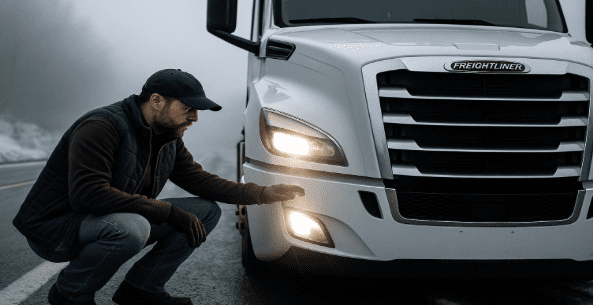
When winter approaches, visibility becomes one of the biggest challenges for long-haul and regional drivers. Shorter days, heavy fog, snow flurries, and wet highways make reliable headlights a must. For owners and operators of the Freightliner Cascadia, headlight issues become more noticeable as temperatures drop.
Ignoring these problems can lead to dangerous driving conditions, citations, and costly downtime. This guide covers the most common Freightliner Cascadia headlight problems—and how to fix them before winter roads turn treacherous.
1. Dim or Weak Headlights
This is one of the most common complaints among Cascadia owners. If your headlights look noticeably dull, faded, or aren’t illuminating far enough down the road, several issues may be to blame.
Possible Causes:
- Aging halogen bulbs
- Fogged or oxidized lens covers
- Failing ballast (HID systems)
- Weak electrical output
- Voltage drops from worn wiring
Fixes:
- Upgrade to brighter LED Freightliner Cascadia headlights for better winter visibility
- Replace old bulbs before cold weather hits
- Restore or replace fogged lenses
- Test voltage to ensure proper power delivery
2. Moisture or Condensation Inside the Headlight Housing
Moisture buildup is especially common as temperatures drop and humidity rises.
Causes:
- Cracked lenses
- Failed seals
- Improper installation of aftermarket bulbs
- Damaged venting system
Fixes:
- Replace cracked or leaking housings
- Re-seal the assembly with automotive-grade sealant
- Ensure bulbs are properly seated with no gaps
- Upgrade to better-sealed aftermarket Cascadia headlight assemblies
Moisture is not just annoying—it significantly reduces output and increases the chance of total failure in freezing weather.
3. Flickering Headlights
If your headlights flicker while driving—especially on rough or cold roads—this signals an electrical problem.
Causes:
- Loose connectors
- Failing alternator
- Worn wiring harness
- Low-voltage output
Fixes:
- Inspect and tighten all headlight connectors
- Test alternator performance
- Replace corroded wiring
- Upgrade to LEDs that require less power
Flickering becomes worse in winter because cold weather exposes weak electrical components.
4. One Headlight Not Working
This seems simple, but winter increases the likelihood of single-sided headlight failure.
Causes:
- Burned-out bulb
- Damaged socket
- Wiring corrosion
- Fuse failure
Fixes:
- Replace bulbs in pairs (recommended)
- Clean or replace corroded sockets
- Check fuse box for blown headlight fuses
- Inspect wiring to the headlight assembly
If the issue keeps coming back, it could be time for a complete headlight assembly replacement.
5. Headlights Aimed Too Low or Too High
Winter driving requires precision. Misaligned headlights can reduce visibility or blind oncoming drivers.
Causes:
- Rough roads knocking alignment off
- Replacing headlight assembly without adjusting aim
- Weight distribution changes in cargo
Fixes:
- Adjust headlights according to OEM spec
- Use a flat-surface aiming test
- Re-check aim after installing new headlights or bumpers
If you’ve recently upgraded your Freightliner Cascadia bumper, alignment becomes even more important.
6. Complete Headlight Failure
This is worst-case scenario and needs immediate attention—especially when winter roads are already hazardous.
Possible Causes:
- Blown fuses
- Failed headlight switch
- Wiring harness failure
- Complete assembly burnout
- Faulty DRL module
Fixes:
- Replace blown fuses
- Test the headlight switch
- Inspect wiring harness for damage
- Replace the entire headlight assembly with a high-quality aftermarket version
Winter accidents increase dramatically when visibility is compromised—so handling this early is a must.
7. Yellowed, Foggy, or Cloudy Headlight Lenses
UV exposure and summer heat wear down plastic lenses. By winter, they may be too cloudy to be safe.
Fixes:
- Wet-sand and restore lenses using a restoration kit
- Apply a UV-resistant clear coat
- Replace the assembly for maximum clarity
Newer LED Cascadia headlights come with UV-resistant materials designed to stay clear longer.
Conclusion: Prepare Your Cascadia for Clear Winter Visibility
Your Freightliner Cascadia headlights are one of the most critical components for winter safety. Dimming bulbs, fogged housings, electrical issues, and misalignment can all put drivers at risk—especially during icy or low-visibility conditions.
The good news? Most of these issues are simple to diagnose and even easier to fix before the cold weather sets in.
By upgrading your headlights, performing a full inspection, and replacing worn assemblies early, you’ll dramatically improve safety, reduce downtime, and keep your Cascadia ready for winter hauling.