
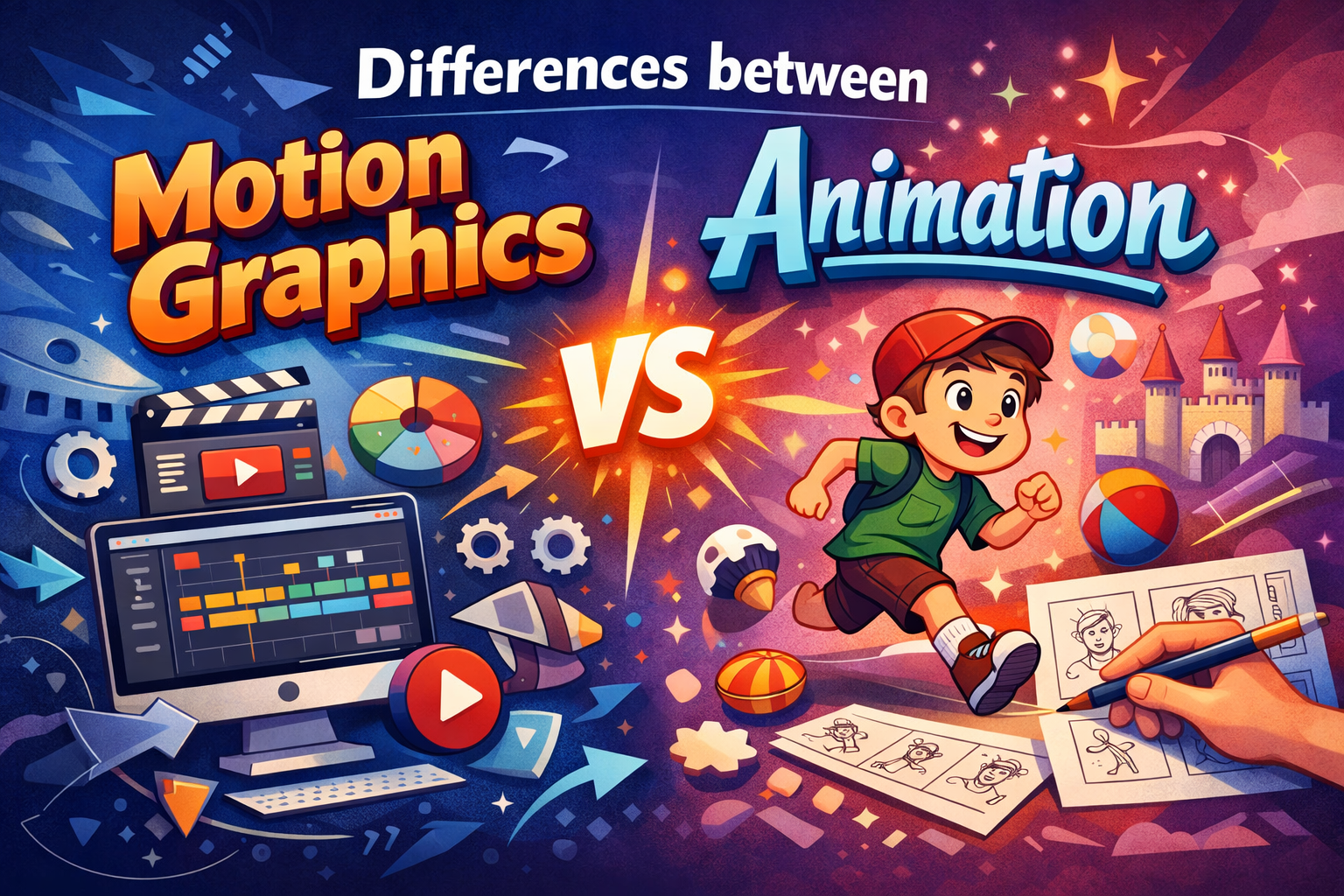
People in the world of digital visuals use terms that they cannot distinguish from each other. Many people want to know how motion graphics and animation differ from one another. The two fields create animated content that attracts viewers, but their functions remain separate. Businesses need to understand the difference between motion design and animation because it helps them select the most suitable method for their work. At Synaryverse, an AI-driven digital agency in the USA, provides advanced visual solutions that transform concepts into real, operational results.
What is Motion Graphics
What is motion graphics animation? Motion graphics bring static graphic elements into dynamic life. Think of animated text logos, icons, charts, and shapes moving fluidly. This style focuses on visual communication. It explains concepts, presents data, or effectively highlights brand messages. Motion graphics often feature clean designs, bold colors, and geometric patterns. They add energy to videos without deep narrative threads.
Professionals use tools like After Effects to craft these pieces. The result feels modern, sleek, and informative. Motion graphics excel in explainer videos, title sequences, social media ads, and corporate presentations. They turn complex information into engaging visuals quickly.
Understanding Animation
Animation serves as the broader category. The technique uses successive picture frames to produce the effect of movement. The range of this category includes all forms of animation which begin with traditional hand-drawn cartoons and end with computer-generated images that achieve photorealistic results. The purpose of animation lies in its ability to tell stories while developing characters who create emotional bonds with viewers. Viewers follow characters through adventures, feel their struggles, and celebrate their triumphs.
Animation encompasses various styles. 2D Animation Services bring flat illustrations to vibrant life with expressive movements. 3D Animation adds depth, realism, and immersive worlds. Stop-motion clay figures and more fall under this umbrella. The focus remains on narrative-driven experiences that captivate audiences over time.
Key Differences between Motion Graphics and Animation
While motion graphics are a subset of animation, the distinctions are clear. Motion graphics prioritize information delivery. They support messages with visuals rather than drive plots. Animation dives into stories, building empathy through characters and arcs.
The design of motion graphics serves three functions, which include informing viewers, educating them, and helping them to understand promotional content. The animation medium provides entertainment while creating emotional responses and guiding viewers to different experiences. The motion graphics piece uses animated statistics to demonstrate growth trends through animated graphical elements. The animated short film depicts a character who faces obstacles and ultimately achieves victory over those obstacles.
Complexity varies, too. Motion graphics tend toward simpler production. They animate graphic elements with keyframes, transitions, and effects. Full animation often requires detailed rigging, modeling, and frame-by-frame work, especially in 3D Animation. This makes animation more resource-intensive yet rewarding for immersive tales.
Visual effects and motion graphics sometimes overlap. Motion graphics incorporate effects to enhance graphics. Broader animation uses VFX for seamless integration in films. Yet motion graphics stay rooted in design principles while animation explores lifelike motion.
Motion Design vs Animation in Practice
Many confuse motion design with animation because both involve movement. Motion design often refers to the creative process behind motion graphics. It blends graphic design with timing, easing, and composition. Animation demands performance skills like timing, weight, and anticipation for believable character actions.
Businesses benefit from both. Use motion graphics for quick marketing content. Opt for animation when building brand stories or engaging entertainment.
Choosing Between the Two
The decision needs to consider the goals of the project. The motion graphics provide immediate understanding of product features that need explanation. The animation process creates characters that build long-term connections with the audience. The decision depends on two factors, which are budget requirements and audience expectations.
The field includes hybrid approaches as well. The projects use both animated characters and motion graphic elements to create more valuable results. The combination uses the best features of both methods to achieve optimal results.
Why These Distinctions Matter
Grasping the differences between motion graphics and animation ensures effective communication. It avoids mismatched expectations and delivers targeted results. In digital marketing, education, entertainment, and beyond, the right visual style amplifies messages.
Synaryverse stays ahead by mastering these nuances in visual storytelling. The team crafts motion graphics that inform and animations that inspire. Whether enhancing a brand video or telling a compelling story, ideas are brought to life through movement.
In the evolving landscape of visuals, these tools shape how audiences connect with content. Explore the possibilities and see how motion transforms ideas into powerful experiences.