
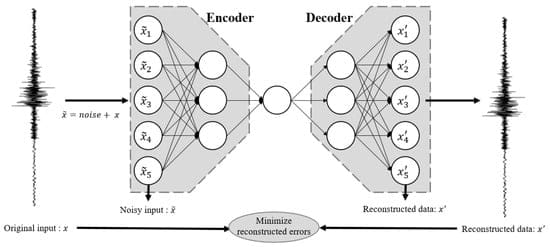
In the world of Artificial Intelligence, imagine trying to restore an old photograph. The picture is blurry and covered with static, yet hidden beneath the distortion lies the original image—clear, crisp, and full of detail. Denoising Score Matching (DSM) works like the expert restorer who doesn’t just clean the picture but learns the pattern of the noise itself. It’s an elegant principle that allows models to recover structure from chaos by predicting the gradient, or the “direction,” in which clarity lies.
Just as a sculptor visualises the statue within a block of marble, DSM helps models understand how to move from noise toward meaningful data.
Understanding the Concept: The Art of Following Gradients
At its core, Denoising Score Matching teaches a model to estimate the gradient of the log probability of data—a technical way of saying the model learns which direction to move in to find cleaner, more accurate data.
Imagine standing in a foggy valley and trying to climb toward the highest point. You can’t see the peak, but you can feel the slope beneath your feet. Step by step, following the gradient, you rise. In DSM, the machine does the same—it follows the direction that leads to higher probability regions of clean data.
This technique has become vital in many generative models, particularly diffusion models, which rely on learning how to reverse the process of noise addition. Those exploring deep learning through a generative AI course in Chennai often find DSM at the heart of today’s cutting-edge image and sound generation techniques.
The Journey from Noise to Structure
When a model trains using DSM, it is exposed to intentionally corrupted data—images with added noise, distorted audio, or incomplete signals. The challenge is for the model to learn the transformation required to reverse this corruption.
It’s like training your brain to recognise your friend’s face in a foggy mirror. Over time, you stop noticing the distortions and intuitively reconstruct what’s missing.
This “learning through noise” creates resilience. Instead of memorising clean data, the model understands the deeper relationships between variables. It begins to recognise what truly defines the data’s identity.
Mathematical Intuition Behind Denoising
The mathematical beauty of DSM lies in its simplicity. It replaces the need for computing complex probability distributions with a focus on the score function, the gradient of the log-likelihood.
In practical terms, instead of teaching the model what the data looks like, we teach it how to move toward regions where the data is more probable. This makes the model lightweight yet powerful, able to capture structure without requiring enormous computational resources.
For example, DSM helps generative models create sharper, more realistic outputs in tasks like super-resolution and image synthesis. Professionals pursuing advanced AI learning paths, such as a generative AI course in Chennai, often implement DSM to understand how generative models like diffusion or score-based frameworks achieve life-like results.
Applications Across AI Systems
Beyond theory, Denoising Score Matching has broad practical value. It has been instrumental in advancing diffusion-based generative models, where noise is gradually added to data and then removed in a reverse process.
In speech enhancement, it helps clean audio signals by learning to “listen through the noise.” In image restoration, it reconstructs fine details that were never explicitly taught. In anomaly detection, it helps identify outliers by learning what normal data should look like even when it’s hidden under distortion.
In short, DSM helps AI systems become more perceptive, allowing them to infer meaning even when the world presents messy, imperfect information.
The Broader Perspective: Learning from Imperfection
There’s a poetic dimension to DSM—it reflects a universal truth in learning: clarity often comes through engaging with imperfection. Models trained through noise become more robust, just as people who face challenges develop deeper understanding and intuition.
In data science and AI, this principle translates into systems that generalise better, adapt faster, and deliver more accurate predictions. DSM reminds us that noise isn’t an obstacle—it’s a teacher.
Conclusion
Denoising Score Matching sits at the intersection of mathematics, intuition, and creativity. It teaches AI models not just to remove noise but to understand it—to find patterns where others see randomness. By following gradients rather than direct instructions, models become explorers, uncovering the hidden structure within uncertainty.
As AI continues to evolve, concepts like DSM will power the next generation of intelligent systems—ones capable of perceiving nuance, reconstructing reality, and generating data indistinguishable from the real world.
For learners and practitioners alike, mastering this concept marks a significant step toward becoming architects of clarity in the noisy landscape of modern data.