

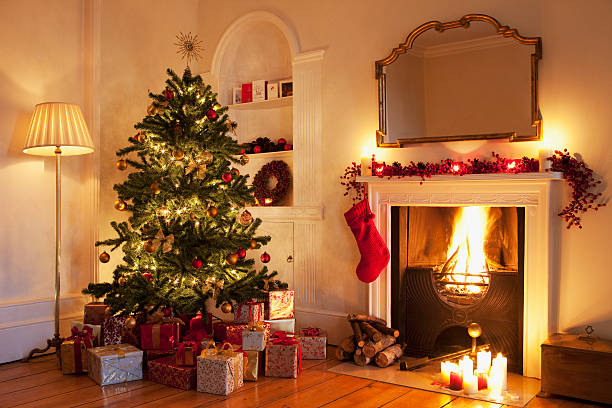
The festive season has a special magic to it. Every year, we dust off the decorations, untangle the lights, and bring the centrepiece of Christmas – the tree – into our homes. There’s nothing quite like the warm, glittering glow of a beautifully decorated room on a dark winter’s night.
However, alongside the joy and cheer comes a hidden, yet very real, danger. Every year, fire services across the UK report a surge in house fires directly linked to festive decorations, primarily Christmas trees and electrical lighting. These fires can spread rapidly, driven by the highly flammable nature of dried-out trees and the abundant fuel provided by decorations, paper, and overloaded electrical systems.
The good news? Almost all of these fires are preventable. By following a few practical safety tips for preventing fires, many of which are simple and quick to implement, you can ensure your decorating brings warmth and joy, not disaster.
Here is your comprehensive guide, aimed at keeping your home and loved ones safe this Christmas.
Part 1: The Christmas Tree – A Ticking Time Bomb?
Whether you opt for a traditional real tree or a well-loved artificial one, the tree itself is often the starting point for a house fire.
Real tree safety
A dry Christmas tree is incredibly flammable. A fire started by faulty lights or a nearby candle can engulf a dried-out tree in less than 60 seconds.
- Choose freshness wisely: When buying a real tree, check its needles. They should be vibrant green and difficult to pull off. If they snap easily or if the tree sheds a lot of needles when you tap it on the ground, it’s already too dry.
- Keep it hydrated: Treat your tree like a large, thirsty plant. Cut an inch off the trunk before placing it in the stand, and ensure the stand is filled with water. Check and top up the water level daily. A well-watered tree is far more resistant to ignition than a dry one.
- Placement is key: Position the tree well away from any heat source. This is critical. The 1-Metre Rule should be strictly followed: keep the tree at least one metre (three feet) away from fireplaces, radiators, portable heaters, candles, and even heat vents.
Artificial tree safety
While artificial trees don’t dry out, they still present a fire risk, often from faulty integrated lights or proximity to heat.
- Check for certification: Ensure your artificial tree, especially if it’s new, carries a British Standard (BS) or UK Conformity Assessed (UKCA) mark, which indicates it meets necessary safety standards.
- Look for “Fire Retardant”: Most modern artificial trees are manufactured with fire-retardant materials. If you have an older tree, be extra cautious with where you place it and what kind of lights you use.
Part 2: Inspecting and Using Your Lights Safely
The lights are the heart of the tree’s display, but faulty wiring is a prime cause of electrical fires. Before you even drape a single strand, a thorough inspection is non-negotiable.
Inspecting old light strands
Old light sets that have been packed away for eleven months are particularly vulnerable to damage from storage and movement.
- Check for damage: Unwind your lights carefully and inspect the entire length of the cable. Look for:
- Frayed or split wires: These expose the live inner wires, creating a short circuit risk.
- Cracked or damaged bulbs/lenses: Exposed filaments can overheat.
- Loose connections or plugs: Make sure the plug casing is intact and the pins are straight.
- Test before hanging: Plug the lights in briefly to ensure they work. If you notice any flickering, hear buzzing, or smell a burnt plastic odour, dispose of them immediately. Do not attempt DIY repairs with electrical tape. It’s not worth the risk.
- Opt for LEDs: If you’re buying new lights, switch to Light Emitting Diode (LED) sets. They run much cooler than old incandescent bulbs, significantly reducing the risk of fire due to heat transfer to the tree or decorations.
The right lights for the right place
- Indoor vs. outdoor: Never use indoor lights outside, and vice versa. Outdoor lights are made with waterproof seals and robust cabling to withstand the damp UK weather. Indoor lights are not. Check the rating on the packaging!
- Never overload: Do not use more than the maximum number of light strands recommended by the manufacturer. If you need more lights, use a separate socket.
Part 3: Preventing Electrical Overload – The UK Plug Point Peril
This is one of the most common mistakes made during the festive season. Suddenly, standard twin sockets are being asked to power tree lights, external displays, inflatable snowmen, and new electronic gifts, often all via a single extension lead.
Extension Cord and Socket Rules
- Avoid “Daisy-Chaining”: Never plug one extension lead into another. This is known as “daisy-chaining” and it significantly increases the risk of overload, which can melt the lead’s casing and ignite nearby materials.
- Don’t Exceed the Max Current: Every socket and extension lead has a maximum current rating, usually 13 amps. It is surprisingly easy to exceed this with a combination of lights, an electric fire, and a television. If an extension lead feels warm to the touch, unplug some items immediately.
- Use Fused Leads: Ensure any extension lead you use is fully unrolled (to prevent overheating) and is appropriately fused. Never use an adaptor to plug multiple high-current appliances (like heaters) into one socket.
- Unplug Decorations at Night: Make it a strict habit to turn off and unplug all lights and illuminated decorations before you go to bed or before leaving the house. Consider using a timer switch for guaranteed safety.
Part 4: Keeping Flammable Materials Clear of Heat
While we often focus on the tree and lights, many festive fires are started by the seemingly innocuous presence of other flammable items near heat.
- Mind the Mantelpiece: The mantelpiece is a popular spot for candles, fairy lights, and paper decorations. Ensure these are all well clear of the heat rising from a fireplace or log burner, even if the fire is contained behind a guard.
- Be Careful with Wrapping Paper: Wrapping paper, ribbons, and cardboard packaging are highly flammable. Never leave discarded wrapping paper near an open fire, portable heater, or even a stove top. Dispose of it safely and promptly.
- Candle Caution (A Gentle Reminder): While modern battery-operated LED candles look increasingly realistic and are a safer alternative, if you must use traditional candles, follow the “3-Foot Rule” (keep them 1 metre away from anything that can burn) and never, ever leave them unattended.
Part 5: The Non-Negotiable Backup—Your Fire Alarm System
All the prevention in the world is essential, but it cannot guarantee absolute safety. That’s why the final, most important layer of protection is a robust, working fire alarm system. This is your family’s escape mechanism.
- Test Your Alarms: This is the most critical check. Test your smoke alarms at least once a month, and absolutely before you put up your Christmas decorations. Press the test button and ensure you hear the siren loudly and clearly.
- Strategic Placement: Ensure you have working smoke alarms on every level of your home, and ideally in hallways outside sleeping areas. If you have an integrated system, ensure all units communicate correctly.
- Battery Check: If your alarms rely on batteries, replace them now. Don’t wait for the low-battery chirp – it always seems to happen at 3 AM on Christmas Eve!
- Carbon Monoxide Alarms: Given the increased use of heating appliances, gas fires, and fireplaces, now is also the time to check your carbon monoxide detectors. This silent killer is a serious winter threat.
Preventing Fires: Embrace a Fire-Safe Christmas
This festive season, don’t trade safety for spectacle. The joy of Christmas is in the gathering of family and friends in a warm, safe home. By dedicating an hour to inspect your lights, check your electrical limits, hydrate your tree, and test your smoke alarms, you are taking the most important step to secure that joy.
Are you based in the South of England and concerned that your fire alarm systems are not up to scratch? Visit the First Contact Fire & Security website.
Let the glitter glow brightly, but safely. Have a wonderful and fire-safe Christmas!