

Data-Centric Security Market Scope and Overview
In an age where data is the new currency, protecting that data has become paramount. The Data-Centric Security Market revolves around solutions and strategies designed to protect information itself, rather than focusing solely on securing networks or systems. Unlike traditional security models that emphasize guarding perimeters, data-centric security takes a more granular approach, ensuring that sensitive data remains protected, regardless of where it travels or resides. With increasing cyber threats and stringent regulatory requirements across industries, the demand for data-centric security solutions is growing rapidly.
The data-centric security market focuses on protecting data itself rather than securing networks or devices. This approach ensures that sensitive data remains protected even if it is transferred or accessed outside the network. As organizations manage increasing volumes of data, especially in sectors like finance, healthcare, and government, ensuring the security of the data at its core is crucial. The rise of cloud computing, remote work, and regulatory compliance requirements like GDPR and CCPA have significantly contributed to the growth of this market. Key solutions include data encryption, tokenization, and identity-based access control.
Competitive Analysis: Key Players Shaping the Market
The data-centric security market is highly competitive, with major players constantly innovating to stay ahead. Companies like Broadcom, IBM Corporation, Micro Focus, and Informatica are well-known for their extensive portfolios of data protection and encryption solutions. These tech giants have built their reputations on delivering robust solutions capable of addressing the complex needs of large enterprises.
Forcepoint, a subsidiary of Raytheon Technologies, has made significant strides in developing insider threat protection and data loss prevention (DLP) technologies. Their solutions are popular in sectors such as defense, government, and BFSI (Banking, Financial Services, and Insurance), where safeguarding intellectual property and sensitive financial data is critical.
Imperva and Varonis focus heavily on data protection, governance, and analytics, offering cutting-edge software that not only protects sensitive information but also provides valuable insights into potential threats. Netapp, a data management and storage company, has diversified its portfolio to include data-centric security features that integrate seamlessly with its storage solutions.
European-based Orange Cyberdefense and Talend S.A provide tailored data security solutions to their clients, often with a focus on compliance with GDPR (General Data Protection Regulation) and other European data protection laws. Other players in the market include a mix of legacy security firms and emerging startups, all competing to provide the most effective and scalable data-centric security solutions.
Market Segmentation: Understanding the Dynamics
The data-centric security market can be dissected based on four primary dimensions: component, deployment, organization size, and vertical.
On The Basis of Component
The market can be divided into software and professional services.
- Software: This segment includes data encryption, data masking, tokenization, and access control software designed to protect sensitive information. The software tools offered by companies such as IBM, Varonis, and Informatica provide robust capabilities for securing data across various platforms, ensuring compliance with data protection laws.
- Professional Services: Many companies lack the in-house expertise to fully deploy and manage data-centric security solutions. As a result, professional services provided by firms like Micro Focus and Orange Cyberdefense play a pivotal role in helping organizations design, implement, and maintain security infrastructures tailored to their unique needs.
On The Basis of Deployment
Organizations can choose between on-premise and cloud deployment models, each with its advantages and challenges.
- On-Premise: This option is often preferred by large organizations in highly regulated industries like government and defense, where security concerns are paramount, and control over data is critical. On-premise solutions, such as those offered by Broadcom and Netapp, provide greater control but can be more costly and complex to maintain.
- Cloud: Cloud-based data-centric security solutions are gaining traction due to their scalability and cost-efficiency. Companies such as Informatica and IBM are investing heavily in cloud-native data protection solutions that can secure data in dynamic, multi-cloud environments. The cloud segment is particularly attractive to SMEs (small and medium enterprises), which require robust security without the overhead of on-premise infrastructure.
On The Basis of Organization Size
Data-centric security solutions are tailored to meet the needs of both large enterprises and SMEs.
- Large Enterprise: Large organizations often have diverse and complex IT infrastructures that span multiple locations and platforms. They require highly customizable and scalable solutions, and they invest heavily in cybersecurity to protect their vast amounts of data. Players like IBM and Forcepoint cater to this segment with comprehensive security suites that provide end-to-end data protection.
- SME: Small and medium-sized enterprises (SMEs) face unique challenges in the data-centric security market. While they deal with smaller volumes of data, they often lack the resources and expertise of larger organizations. As a result, they prefer easy-to-deploy, cloud-based solutions that offer strong protection without breaking the budget. Cloud-based services from Talend and Varonis are gaining popularity in this segment.
On The Basis of Vertical
Different industries face distinct challenges when it comes to securing their data. The key verticals in the data-centric security market include:
- BFSI: The banking, financial services, and insurance sectors are among the most data-sensitive industries. Financial institutions store vast amounts of personal and transactional data, making them prime targets for cybercriminals. Companies like Forcepoint and IBM provide specialized solutions that ensure compliance with financial regulations and protect against insider threats.
- Government and Defense: In this vertical, the security of confidential and classified information is paramount. Broadcom, with its extensive security portfolio, offers high-assurance data protection solutions for government agencies and defense contractors, ensuring that sensitive data is protected both at rest and in transit.
- Healthcare and Pharmaceuticals: Data protection is critical in healthcare, where patient information must be kept private and secure in accordance with regulations like HIPAA. Companies like Informatica and Varonis specialize in securing healthcare data, offering solutions that ensure both compliance and security.
- IT and Enterprise: As enterprises move towards digital transformation, the protection of intellectual property and customer data becomes essential. Netapp and Talend offer scalable solutions that protect enterprise data across different environments, including hybrid and multi-cloud setups.
- Telecommunication: The telecom sector is increasingly reliant on data-driven operations, making data protection essential to ensuring customer trust and regulatory compliance. Orange Cyberdefense provides tailored solutions that address the specific needs of telecommunications companies.
- Retail: With the rise of e-commerce, retail organizations face increasing challenges related to customer data protection. Data-centric security solutions from Varonis and Talend help retailers secure transaction data and protect against fraud.
- Others: Other industries, such as education, media, and manufacturing, are also increasingly adopting data-centric security measures to protect their critical information and maintain compliance with emerging data protection regulations.
Key Growth Drivers of the Data-Centric Security Market
Several factors are driving the growth of the data-centric security market:
- With the increasing sophistication of cyberattacks, organizations are investing more in data-centric security solutions to safeguard sensitive information against breaches and ransomware attacks.
- Stringent regulations like GDPR, HIPAA, and CCPA mandate robust data protection measures. Companies must implement data-centric security solutions to comply with these laws and avoid heavy fines.
- As more businesses migrate to the cloud, the demand for cloud-native data protection solutions has skyrocketed. Cloud environments require specialized security solutions that protect data both at rest and in transit.
- With the rapid growth of big data and IoT devices, the volume of sensitive information that organizations need to protect is increasing exponentially, driving the need for advanced security solutions.
Strengths of the Data-Centric Security Market
The data-centric security market boasts several strengths:
- Unlike traditional perimeter-focused security, data-centric security provides granular protection, ensuring that data remains secure even when it moves across different environments.
- Many solutions in the market are highly scalable, making them ideal for organizations of all sizes, from SMEs to large enterprises.
- The growing focus on regulatory compliance ensures sustained demand for data-centric security solutions, as organizations strive to meet evolving legal requirements.
Key Objectives of the Market Research Report
A comprehensive market research report on the data-centric security market seeks to:
- The report aims to provide insights into the latest trends and innovations shaping the data-centric security landscape.
- Identifying key growth drivers and emerging opportunities within the market is a crucial objective of the report.
- Understanding the strategies and market positions of leading players is essential for stakeholders to make informed decisions.
- Detailed analysis of market segmentation helps organizations tailor their strategies to different components, deployment models, organization sizes, and verticals.
Conclusion
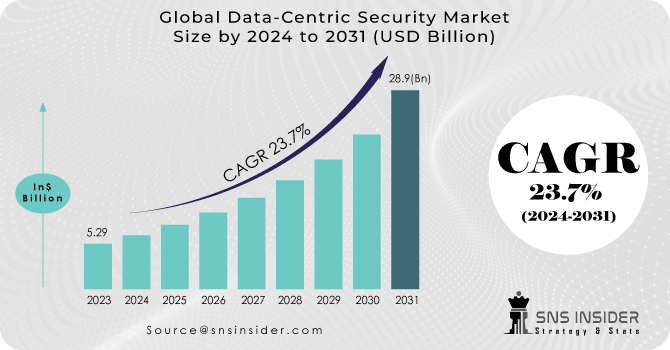
The data-centric security market is on a growth trajectory, driven by increasing cyber threats, regulatory pressures, and the proliferation of data. As organizations recognize the importance of protecting their data, demand for advanced solutions from key players such as Broadcom, IBM, and Varonis is expected to rise. The market’s strengths, including its scalability and compliance-driven nature, ensure its relevance in today’s data-driven world. Looking ahead, the continuous evolution of cloud technologies and stringent data protection regulations will further fuel the adoption of data-centric security solutions across industries.
Table of Contents
- Introduction
- Industry Flowchart
- Research Methodology
- Market Dynamics
- Impact Analysis
- Impact of Ukraine-Russia war
- Impact of Economic Slowdown on Major Economies
- Value Chain Analysis
- Porter’s 5 Forces Model
- PEST Analysis
- Data-Centric Security Market Segmentation, by Component
- Data-Centric Security Market Segmentation, by Deployment
- Data-Centric Security Market Segmentation, by Organization Size
- Data-Centric Security Market Segmentation, by Vertical
- Regional Analysis
- Company Profile
- Competitive Landscape
- USE Cases and Best Practices
- Conclusion
Contact Us:
Akash Anand – Head of Business Development & Strategy
info@snsinsider.com
Phone: +1-415-230-0044 (US) | +91-7798602273 (IND)
About Us
SNS Insider is one of the leading market research and consulting agencies that dominates the market research industry globally. Our company’s aim is to give clients the knowledge they require in order to function in changing circumstances. In order to give you current, accurate market data, consumer insights, and opinions so that you can make decisions with confidence, we employ a variety of techniques, including surveys, video talks, and focus groups around the world.
Read Our Other Reports:
Cloud Supply Chain Management Market Report
Time and Attendance Software Market Research
Project Portfolio Management Market Outlook
Team Collaboration Software Market Overview