
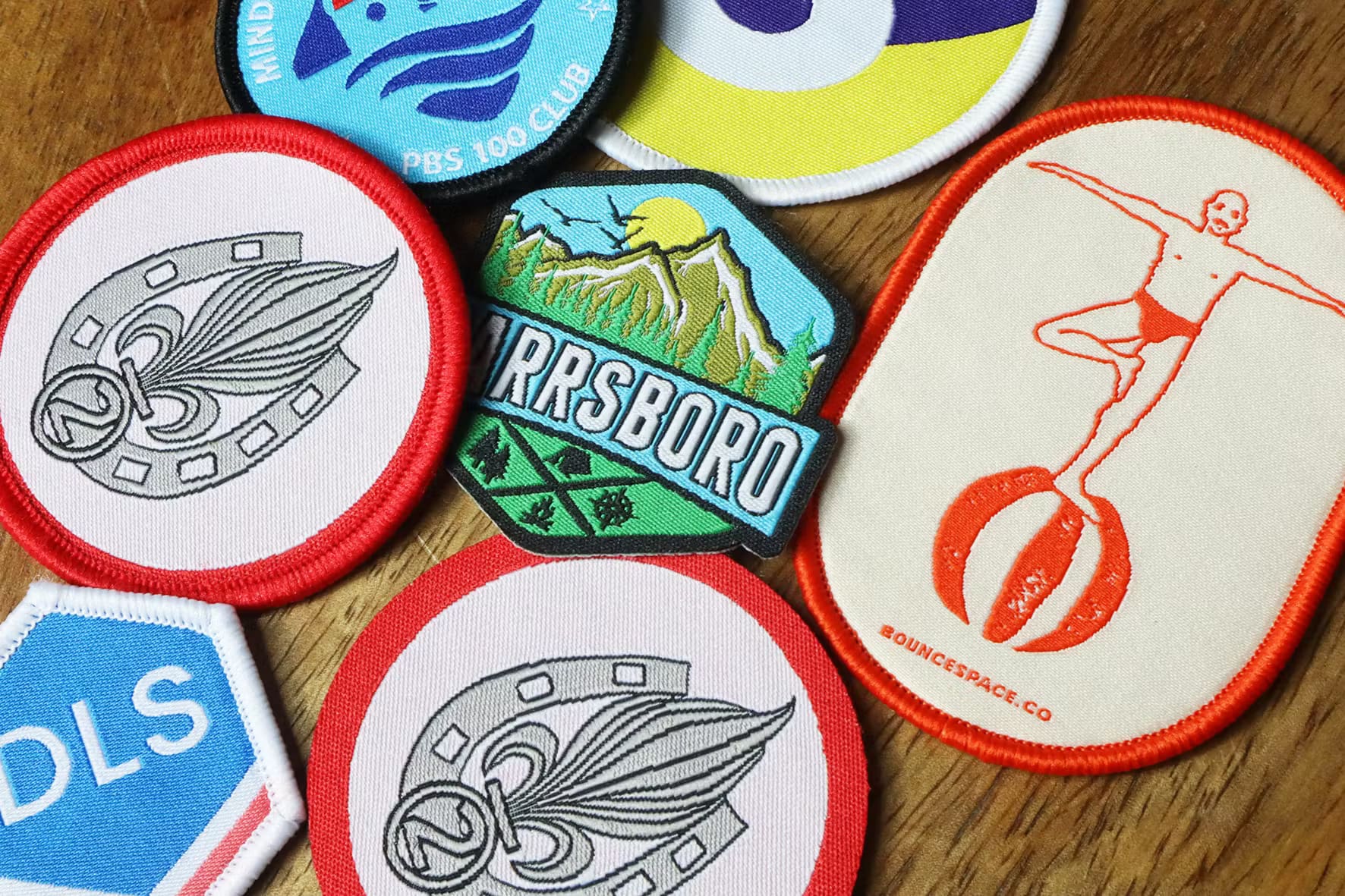
There’s a quiet debate happening in workshops, design studios, and back offices across Britain.
It doesn’t make headlines. No one’s arguing about it on Question Time. But if you run a brand, a club, a security firm, or even a festival crew, you’ve probably faced it:
Do we stitch it on for good… or make it removable?
In the world of custom patches UK businesses rely on, that choice says more about you than the logo itself.
Let’s slow this down and look at what’s really at stake.
Sew-On: Commitment in Thread Form
A sewn patch isn’t casual.
You don’t slap it on five minutes before heading out. You sit down. Thread the needle. Or you hand it to someone who knows what they’re doing. There’s a small ritual to it. That ritual matters.
Across the UK—especially in heritage workwear circles, motorcycle clubs, and traditional trade industries—sew-on patches carry weight. They feel established. Solid. Permanent. Once attached, they’re part of the garment’s story.
And permanence does something subtle to perception.
If you see a builder’s jacket with a properly stitched emblem that’s clearly survived rain in Manchester and wind in Newcastle, you instinctively read it as legitimate. Established. Not temporary.
Sewn patches age alongside the fabric. The edges soften slightly. The thread relaxes. They don’t look “new” forever—and that’s often the point.
But permanence cuts both ways.
If your branding shifts frequently, or you’re experimenting with short-run designs, committing every garment to one stitched identity can become restrictive. Rebranding isn’t as simple as peeling and replacing. It’s unpicking.
So the question becomes: is your identity fixed, or is it fluid?
Velcro: Practicality with Intent
Now we move into a different territory.
Velcro-backed patches—especially personalised velcro patches used by security teams, cadet groups, airsoft players, and event staff—are built around adaptability.
You can remove them in seconds. Swap names. Change roles. Update branding without replacing entire uniforms. In industries where function matters, that’s not a convenience. It’s operational efficiency.
Across the UK, particularly within private security and tactical-style apparel markets, removable patches have become standard for a reason. They allow uniforms to evolve with roles. A staff member can shift from “Steward” to “Supervisor” without buying a new jacket. A company can update logos mid-contract.
There’s also a visual language attached to Velcro.
It looks structured. Organised. Purpose-driven. It suggests modularity. Not heritage pub vibes—more modern logistics firm.
But here’s where people get it wrong.
Not all hook-and-loop systems are created equal. Poor-quality backing loses grip—the patch tilts. Corners lift. After a few damp British winters, it barely clings on. That small failure makes a bigger impression than you think.
Removable doesn’t mean disposable. It still needs to feel solid in the hand.
British Context Changes the Equation
Weather matters.
That might sound obvious, but it’s often ignored. The UK isn’t exactly gentle on clothing. Rain. Humidity. Sudden temperature swings. A jacket worn in Birmingham in October will experience very different conditions than a hoodie worn indoors at a summer event.
Sewn patches handle washing cycles predictably. Once stitched correctly, they’re not going anywhere. Velcro, however, relies on the condition of both hook and loop panels. If the loop panel sewn onto the garment degrades, you’re replacing more than just the badge.
So durability isn’t just about the embroidery. It’s about the system as a whole.
And then there’s culture.
British branding—generally speaking—leans understated. We don’t always shout. A stitched emblem on workwear often feels aligned with that quiet confidence. Meanwhile, removable patches feel more contemporary, slightly tactical, sometimes more corporate.
Neither is better. They simply signal different things.
Identity: Fixed or Flexible?
Let’s strip this back.
Is your organisation stable and long-established, with little intention of altering its visual identity anytime soon?
Sew-on probably fits.
Are you managing rotating staff, changing roles, or running time-limited campaigns?
Removable makes sense.
This is where many businesses searching for “patch makers in the UK” get stuck. They focus on price per unit instead of the broader implications. But the backing choice influences how your brand lives in public spaces.
A motorcycle club in Leeds with stitched back patches projects unity and permanence. A security team in London using personalised hook-backed name tapes signals structure and flexibility.
Both are deliberate. When done thoughtfully.
Cost Isn’t Just About Upfront Price
It’s tempting to reduce the decision to numbers.
Velcro can appear more expensive initially because you’re effectively working with two components—the patch and the loop panel. Sew-on patches might seem simpler and therefore cheaper.
But cost over time shifts depending on usage.
If staff turnover is high and names change frequently, stitched name badges become impractical. You’re replacing garments or paying for alterations. Removable identifiers suddenly look economical.
On the other hand, if the branding remains constant for years, stitching once and forgetting about it might be the more sensible long-term route.
Think lifespan. Not an invoice.
Aesthetics: Subtle but Powerful
Let’s talk appearance.
A sew-on patch sits flush against the fabric. It integrates. It blends into the garment’s silhouette.
Velcro-backed designs often sit slightly raised. That lift can look purposeful—especially in tactical or industrial settings—but it’s visually different. Slightly more assertive.
For fashion-led brands or independent labels exploring embroidered detailing, that aesthetic distinction matters. A raised patch on a minimalist jacket can feel out of place. Conversely, a removable patch on a utility vest can enhance the look.
Texture communicates. Even if the viewer can’t articulate why.
You Don’t Have to Pick a Side Forever
Some UK organisations mix both.
Permanent company logos stitched onto outerwear. Removable name or role badges attached via hook-and-loop. Fixed identity. Flexible function.
That hybrid approach works well in environments where brand stability matters but staff roles change.
It’s not about loyalty to a method. It’s about suitability.
The Real Question
Forget “Which is better?”
That’s too blunt.
Instead, ask: How often will this need to change? And what do we want it to say about us?
Stitched patches speak of commitment.
Removable ones speak of adaptability.
In the landscape of custom patches businesses commission every year—from trades and clubs to security firms and independent brands—the smartest choice is rarely the trendiest. It’s the one aligned with how the organisation actually operates.
Because once that patch is out there, stitched tight or firmly hooked on, it becomes a small public declaration. And small details, in Britain especially, tend to say quite a lot.