
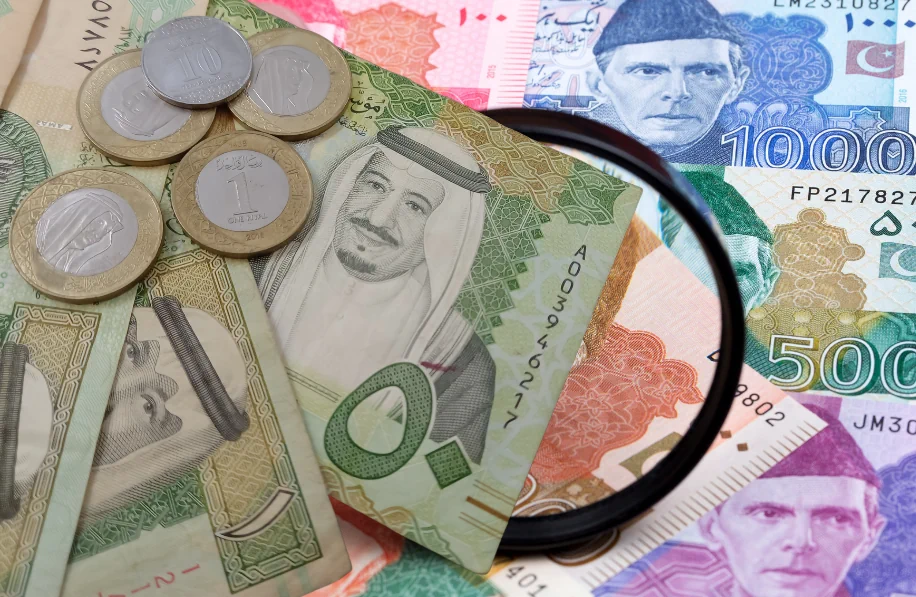
Understanding Currency and Exchange Rates in Pakistan is crucial for businesses, travelers, and overseas Pakistanis who send or receive money regularly. Among all currencies, Saudi Riyal to PKR conversion is one of the most commonly monitored rates due to the large number of Pakistani expatriates in Saudi Arabia. This article explains the differences between the interbank market and the open market, how rates are determined, and tips to get the best conversion rates.
What Are Currency Exchange Rates?
Currency exchange rates define how much one currency is worth in terms of another. For example, the Saudi Riyal to PKR rate tells you how many Pakistani Rupees you get for one Saudi Riyal. Exchange rates fluctuate daily due to factors like economic conditions, trade balance, inflation, political stability, and demand for foreign currencies.
Interbank Market vs Open Market
In Pakistan, currency trading primarily occurs in two major markets:
1. Interbank Market
The interbank market is where banks and financial institutions trade currencies among themselves. This market is regulated, and rates are typically lower and more stable than the open market.
Features of the Interbank Market:
- Rates are updated frequently and reflect real-time economic conditions.
- Primarily accessible to banks, businesses, and large investors.
- Highly regulated by the State Bank of Pakistan (SBP).
- Less risky due to oversight and transparent transactions.
Example:
If the interbank rate for Saudi Riyal to PKR is 78.50, it means banks exchange 1 SAR for 78.50 PKR. Small variations may occur for different banks’ customers due to service charges.
2. Open Market
The open market, also called the parallel or informal market, is where currency is traded among general public, money changers, and exporters/importers outside the banking system.
Features of the Open Market:
- Rates are usually higher than interbank rates due to demand and supply pressures.
- More accessible to individuals.
- Less regulated, which can lead to fluctuating rates.
- Offers flexibility but may include hidden fees or charges.
Example:
If the interbank rate for Saudi Riyal to PKR is 78.50, the open market may offer 79.00 due to demand or market speculation.
Factors Affecting Currency and Exchange Rates in Pakistan
Several factors influence Currency and Exchange Rates in Pakistan, whether in the interbank or open market:
1. State Bank of Pakistan (SBP) Policies
SBP sets monetary policies and interventions that directly affect exchange rates. For example, adjusting interest rates or foreign reserves can stabilize the rupee against currencies like the Saudi Riyal.
2. Trade Balance
If Pakistan imports more than it exports, there is higher demand for foreign currency, pushing up rates for Saudi Riyal to PKR in the open market.
3. Inflation Rates
High inflation in Pakistan reduces the value of PKR, making foreign currencies more expensive.
4. Political Stability
Political uncertainty often causes fluctuations in both interbank and open market rates.
5. Remittances
Pakistani workers abroad, especially in Saudi Arabia, send remittances that affect Saudi Riyal to PKR. High inflows usually strengthen PKR, while lower inflows weaken it.
How to Check the Best Rates for Saudi Riyal to PKR
- Compare Interbank and Open Market Rates:
Use online tools or bank apps to see the latest rates. Interbank rates are more stable, but sometimes open market rates offer better short-term deals. - Monitor Daily Fluctuations:
Exchange rates can change daily. Tracking rates over a week can help you pick the right day to convert. - Avoid Rush Hours:
Banks and money changers may offer slightly higher rates during high demand days, such as during Ramadan or Eid. - Use Trusted Sources:
Only exchange money with reputable banks or certified money changers to avoid fraud.
Impact of Exchange Rate Differences
The difference between interbank and open market rates can impact:
- Business Transactions: Companies importing goods from Saudi Arabia may pay more if using open market rates.
- Remittances: Families receiving Saudi Riyal to PKR conversions benefit from timing and market choice.
- Travelers: Tourists exchanging SAR to PKR can save money by comparing rates.
Tips for Getting the Best Conversion Rates
- Always check the official interbank rate and compare with the open market.
- Consider digital platforms offering competitive rates for Saudi Riyal to PKR transfers.
- Avoid exchanging money at airports or informal setups where rates are usually lower.
- Plan transfers around stable economic periods to minimize loss from currency fluctuations.
Conclusion
Understanding Currency and Exchange Rates in Pakistan is essential for maximizing your money’s value, whether sending remittances, trading, or traveling. The interbank market offers stability and transparency, while the open market provides flexibility but can be unpredictable. Monitoring the Saudi Riyal to PKR rate regularly and choosing the right time and market for conversion ensures you get the most value for your money